The Pole issues its rulings regarding the issue of changing the water channels in Bashar
father-in-law
Expressiveness
Prosecution: A waste of public money and a serious harm to the national economy
Two years for the irrigation director, committee members, and Algerian Water Company employees
Sentences ranging from one year in prison to acquittal for a group of defendants
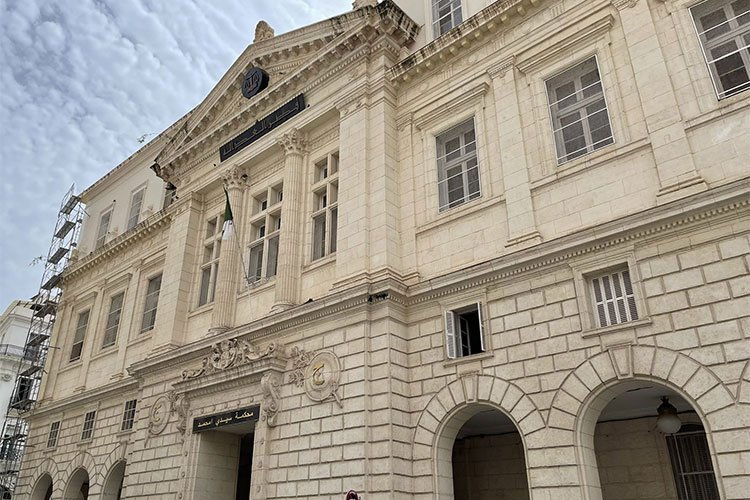
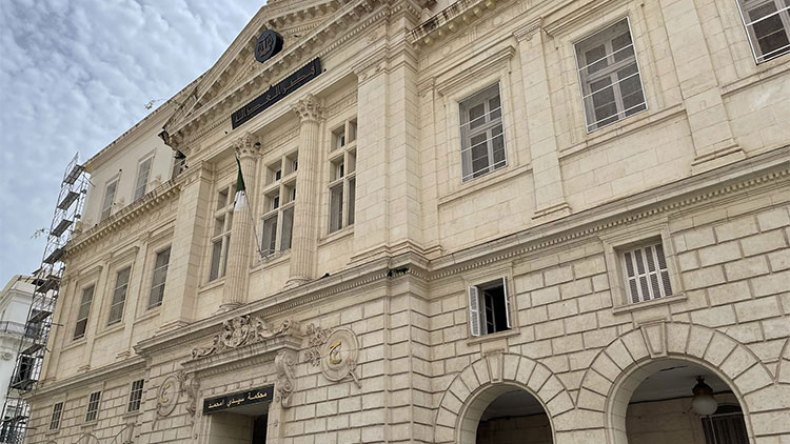
The Economic and Financial Criminal Court of Sidi M’hamed issued its rulings in a corruption file that affected a project to change water channels in the state of Béchar, and the follow-up is the director of irrigation and employees of the Algerian Water Company at the state level and the head of the committee for opening envelopes and evaluating bids with a number of its members, in addition to local contractors and investors.
Regarding the details of the rulings pronounced by the judge of the Second Branch at the Pole, on Tuesday, July 7, at exactly ten thirty o’clock, the session opened by reading out the proven misdemeanors against each accused, in presence, in presence, and in the first instance. Then penalties were imposed that ranged from one year in effective imprisonment to 7 years in effective imprisonment, with financial fines that ranged between 100 thousand and 8 million Algerian dinars.
In the details, the court imposed a sentence of 7 years imprisonment and an effective fine of 8 million dinars against the arrested businessman and the investor called “B.B.”, in addition to the conviction of each of the defendants called “A.A.,” a member of the envelope-opening committee at the level of the state of Bashar, and the defendant called “K.S.,” the former director of irrigation in the state of Bashar, in addition to the defendant “B.M.H.”, head of the committee for opening and evaluating bids and opening envelopes, and the defendant “Q.S.,” an employee. In the Algerian Water Authority at the level of Bashar Province, he was sentenced to two years imprisonment, including 6 months ineffective.
While the court imposed a one-year prison sentence and a fine of 100,000 Algerian dinars against the accused, “B.A.” The matter concerned a contractor in the construction field, while imposing the same penalty against the technical director called “H.T.”
On the other hand, Al-Qutb issued varying rulings that ranged from acquittal to a year in prison for the remaining defendants.
These rulings came after the defendants were prosecuted in the case of Al-Hal, on charges of forgery in administrative documents and forged use, embezzlement and squandering of public funds, and requesting an undeserved advantage, in addition to misdemeanors of abusing one’s position in order to perform work and exercising functions in a manner that violates laws and regulations and granting unjustified privileges to others for the purpose of intentionally obtaining undeserved benefits when concluding an agreement or deal in violation of legislative and regulatory provisions, and a misdemeanor of failing to report a corruption crime, while a number of defendants were charged with a misdemeanor. Theft, participation in the squandering of public funds, and misuse of office for the purpose of obtaining undeserved benefits, are acts punishable in the Anti-Corruption and Prevention Law 01/06, and the Penal Code.
In a strong plea to the Public Prosecutor, he described the facts of the situation as “dangerous,” and considered them a systematic attack on the national economy, stressing that the case was investigated by the investigating judge of the Seventh Chamber of the Pole, where it became clear during the preliminary and judicial investigation and the results of the judicial experience, that the contractor, along with a businessman who owns the “B. Najma” company, were on a search for intermediaries to reach employees in order to sell or assign private water channels at the cheapest prices, by granting them undeserved benefits, in exchange for Their submission of a technical file that lacks the necessary standards and standards included in the book of conditions.
The public rights representative explained that in addition to that, the contractor, along with his actual partner, a businessman who owns the “B. Najma” company, do not have certificates of good performance, and what is more dangerous than that is that they committed falsification operations of fictitious and incorrect facts in collusion with employees of the Algerian Water and State Departments, to deceive the concerned authorities, which led to the embezzlement of funds belonging to the public sector, and the waste of more than 60 billion centimes, incurred by the public treasury, as proven by judicial experience completed by investigators. The general outbreak of finance, which revealed the imbalances and abuses that marred this deal.
During the defendants’ appearance before the judge to answer the questions directed to them, they insisted on denying the charges and the facts followed, as a number of them stated regarding the incident of approving the contracts of the “B. Najma” Foundation agreement, that the deal was concluded on the basis that it had a certificate of good implementation. They also argued that the contractor submitted a file in accordance with the law and was chosen from among 5 offers, as the best offer for the project to change the water canal in Bashar.
The defendants added during the trial that the offer submitted by the contractor, who benefited from the deal, was the best in terms of the financial aspect. In addition, they maintained during their statements that the technical file met the legal conditions that relate to a certificate of good execution with a work certificate.
For his part, the second contractor, called “B.A.,” denied the charges against him, and refuted his relationship with the agreement concluded with the accused, the arrested businessman, “B.H.A.”
On the other hand, the legal representative of the public treasury demanded compensation worth 60 million Algerian dinars, as the legal representative raised the facts of the case, saying that the defendants had sold water canals between the “Korba Dam” and Bashar for about 860 kilometers, and they also later sold them in ways outside the legal frameworks, and that their sale was supposed to take place through a public auction, adding that the Irrigation Directorate did not inform the State Properties Directorate of the procedures for selling them.