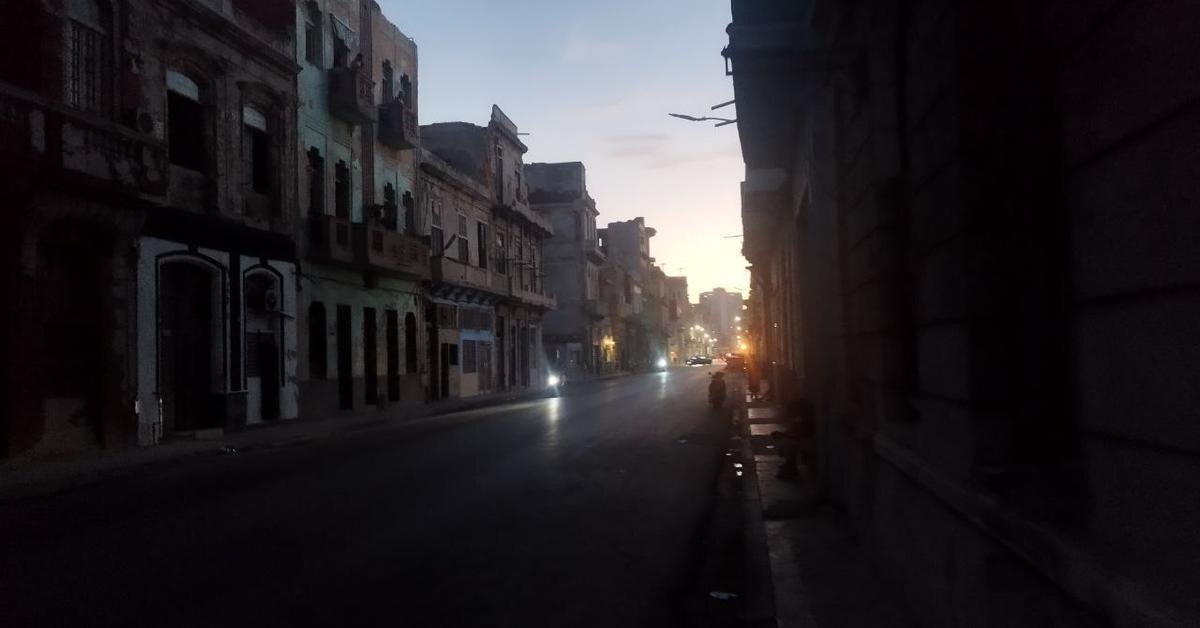
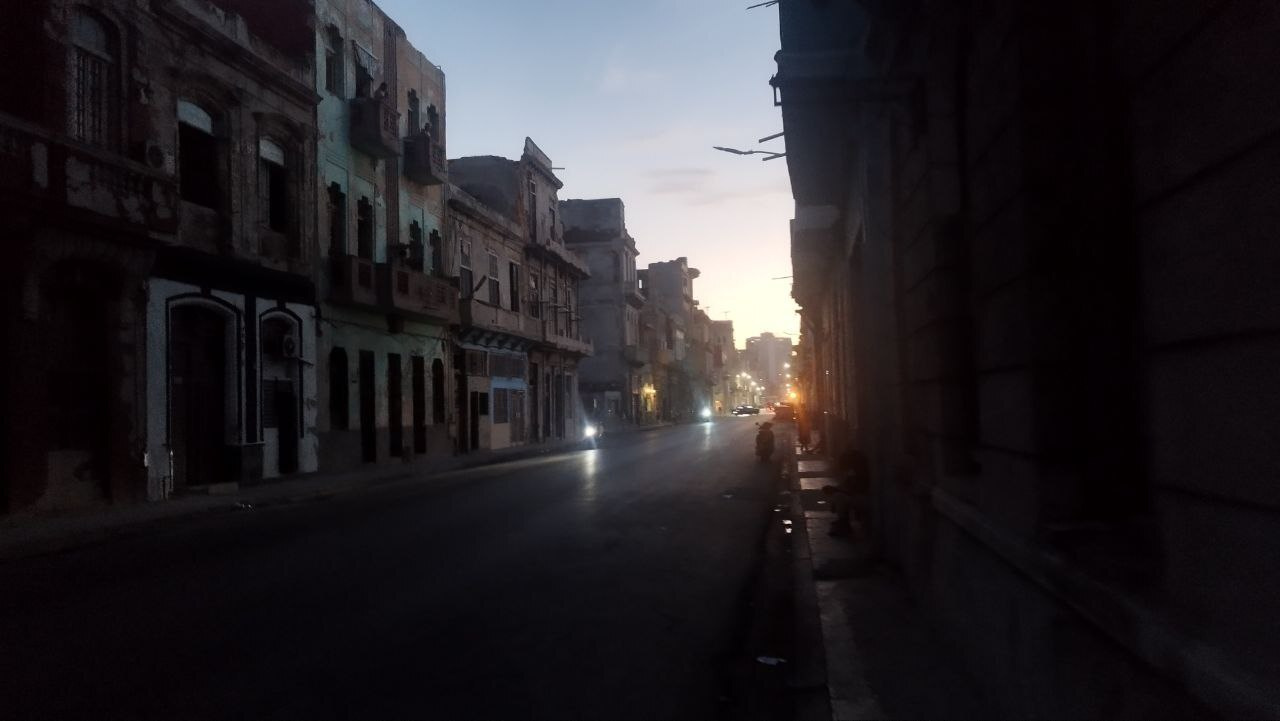
Havana/Malmö (Sweden)/For the casual observer or the macroeconomic analyst, the collapse of the Cuban electrical energy system and the endless lines to get food are the unequivocal symptoms of a failed and inefficient State. However, when you descend to the scale of everyday life and listen to the experiences of those who survive days of up to 30 consecutive hours in the dark, a much more sinister reality emerges.
The shortages and blackouts in Cuba should not be read only as technical accidents or cyclical crises; They constitute, in their deepest dimension, a mechanism of ordinary political control: governance through deprivation.
I experienced this reality first-hand during the months of January and February of this year (2026), in the middle of a particularly critical period for the stability of the Island. When doing my ethnographic fieldwork on the ground, jumping from blackout to blackout, I understood that the daily suffocation is not a failure of the system: it is the system itself.
Modern authoritarian power is not limited to punishing or dictating laws; specializes in managing the lives, bodies and rhythms of the population. In Cuba, this management is not carried out from abundance, but from the surgical administration of lack. By institutionalizing precariousness, the regime displaced the axis of citizen existence: people’s horizon stops being self-realization, political participation or dissidence, and becomes, necessarily, pure daily biological survival.
This systemic absorption of vital energy produces a deeply exhausted subject.
The prolonged blackout operates as a violent physical and mental emptying device. An individual who spends more than an entire day without electricity sees his temporal sovereignty immediately annulled. Time – which under normal conditions is used for leisure, public debate, community organization or critical thinking – is confiscated by absolute contingency. How to preserve the little food you have? How to mitigate the sweltering heat or protect children from pests? What time will the power come back on?
During my recent ethnographic research on the Island, the testimonies collected agreed on a painful certainty: blackouts and planned shortages are not isolated failures, but rather a mechanism that consumes the time and energy of the population, forcing it into dynamics of absolute dependence.
This systemic absorption of life energy produces a deeply exhausted subject. Chronic fatigue is not just a physiological discomfort; It is an ideal political buffer. A body physically exhausted by the dynamics of scarcity and mentally drained by uncertainty does not have the energy surplus necessary to articulate protest or sustain a robust collective response. Resistance requires energy and time, two variables that the Cuban governance apparatus deliberately extracts from the citizenry through planned deprivation.
The State thus becomes the only, although inefficient, provider: an entity that takes away your electricity and bread and then rations the crumbs, forcing you to be grateful for the alms.
Far from being a dysfunction of the model, scarcity acts as the umbilical cord that ties the individual to the State from which he would like to emancipate himself. By dismantling autonomous markets and concentrating distribution in rationed or directly and discretionally controlled mechanisms, the regime forced the population to permanently orbit around its allocation channels.
Instead of fostering horizontal solidarity or civil cohesion, extreme survival economics pushes individuals to compete with each other for severely limited resources. Mutual distrust and competition for access to subsistence erode the social fabric, fracturing the possibility of generating collective responses to the oppressor. The State thus becomes the only, although inefficient, provider: an entity that takes away your light and bread and then rations the crumbs, forcing you to be grateful for the alms that temporarily mitigates the suffering that that same State caused.
This “biopolitical” control is evident when it clashes with the reality of international tourism. While the Cuban who does not have access to remittances is confined to the devalued local peso and chronic shortages, the regime manages a parallel and armored infrastructure in dollars and euros. Shops, restaurants, hotels and transportation often exclusive to foreigners operate as a bubble of abundance immune to 30-hour blackouts. This economic segregation not only refutes the narrative of inevitable scarcity, but adds a layer of structural humiliation: the tourist consumes in his oasis what is forbidden to the native in his own land, showing that in Cuba the management of misery is, above all, a political decision.
The oppressor corners the individual until he takes away his sovereignty over his own skin.
This institutional asymmetry not only confiscates the citizen’s time and space; It also penetrates into the most intimate sphere of the human being: his own flesh. The surgical administration of deficiency inevitably pushes the most vulnerable sectors of the population towards dynamics of exploitation within the informal sexual market.
When the state apparatus deliberately blocks any legal, dignified and autonomous means of economic mobility, the individual body becomes the last resource available for biological subsistence. In the Cuba of the double economy, sexual exploitation cannot be read as a free commercial choice, but as a symptom of systemic asphyxiation. The oppressor corners the individual until he takes away his sovereignty over his own skin, instrumentalizing extreme necessity to supply the tourist bubble and turning intimacy into another trench subordinated to foreign currency.
By forcing the Cuban citizen to concentrate one hundred percent of his or her cognitive faculties on solving lunch the next day or surviving a hot night of forced wakefulness, the system also operates a planned regression of human freedoms. The human being is reduced to his merely biological functions.
Understanding the crisis from this perspective radically changes the reading of the sporadic but profound protests that have shaken the Island in recent years.
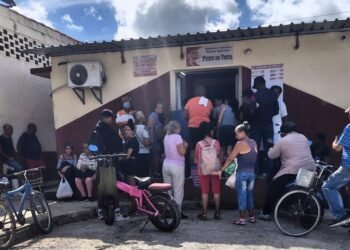
The perverse genius of this mechanism lies in its institutional invisibility. It does not require a police deployment on every corner or open physical repression every minute to keep a society tamed; It is enough to cut off the electricity supply for 30 hours and make access to food more complex. The very design of everyday life becomes the jailer. Repression is internalized in the form of fatigue, endless queues and dull minds.
Understanding the crisis from this perspective radically changes the reading of the sporadic but profound protests that have shaken the Island in recent years. When the Cuban people take to the streets shouting “Homeland and life!”, they are not formulating a simple demand for material improvements or technical maintenance. It is an eminently political cry: it is the rebellion of the exhausted body against the device that drains it; It is the demand to recover ownership of one’s own time, one’s own energy and one’s own destiny.
Denouncing the nature of this deprivation is an indispensable step to dismantling the official narrative. The collapse of the system is neither a climatic fatality nor the mere fruit of an external blockade; It is a model of domination that requires the fragility of the citizen to ensure its own permanence. Only by making the blackout visible for what it really is – a weapon of social control – will the Cuban people be able to turn on the lights of their own freedom.
————————————-
Editor’s Note: In June 2026, the author presented an academic research titled Losing the Fear of the Dark: Ethnographic Fieldwork on Digital Resistance and Structural Exploitation in Post-9/11 Cuba.