Matanzas/“Last week I bought the mortadella right here for 550 pesos. Today they are selling it for 680, and when I come again it may already be above 700,” Silvia protests without taking her eyes off the refrigerator where the sausages rest. Cubans had become accustomed to the price cap, decreed in 2024 for six essential products, and now they are stunned by a dance of figures more typical of high inflation than of the free market.
With 500 pesos more in her wallet than usual, Silvia left her home in Pueblo Nuevo (Matanzas) this Tuesday determined to face a new shopping trip. It was not optimism that drove her, but prevention. “Prices have become completely out of control by allowing everyone to impose their law. Every time they add or remove a measure, the people who lose out are the people, even if they say otherwise in their speeches,” he laments.
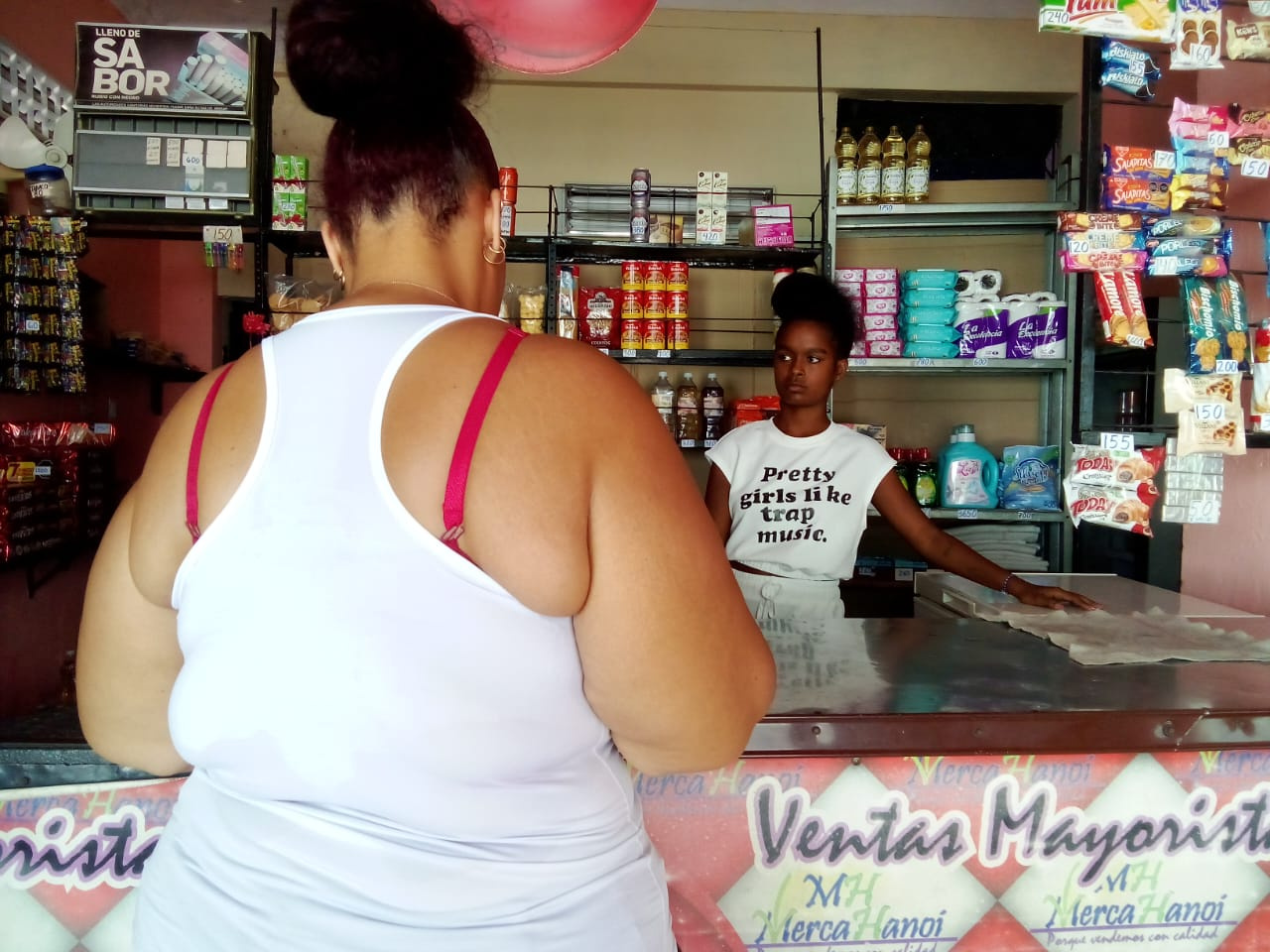
The first stop on their route to get the best price before it changes was a local establishment where the shelves were well stocked with cookies, preserves, personal hygiene products and drinks. However, the small handwritten labels on display showed figures that seemed to have changed just hours before. Behind the counter, a young saleswoman waited for customers while a long row of packages of sausages hung next to jams and detergents.
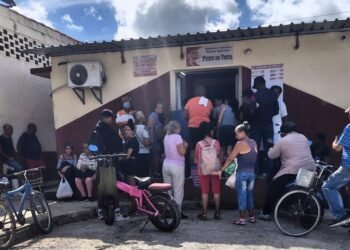
The routine is repeated in numerous Matanzas neighborhoods: the customer asks, listens to the price, pauses, calculates mentally and, many times, continues walking to the next business.
After leaving without buying, Silvia enters another small store just across the street. From the sidewalk you can see a simple counter, several boxes of eggs stacked next to the entrance and shelves loaded with imported products. The routine is repeated over and over again in numerous Matanzas neighborhoods: the customer asks, listens to the price, pauses, calculates mentally and, many times, continues walking to the next business.
“The problem is that each product increases by 50 or 100 pesos and when you add up, you have to choose between buying half a carton of eggs or three pounds of rice. No one can handle it like this,” Silvia summarizes as she puts the money back in her wallet.
Where the prices of refrigerated meat remain relatively stable is in those stores that are still fully suffering from blackouts and do not have solar panels or power plants. The need to quickly sell merchandise that may spoil sometimes forces increases to be contained.
“I just bought a package of sausages for 680 pesos. In the store next door they were for 640, but according to the saleswoman they had been without power for more than 48 hours,” says Ignacio after leaving a MSME where a fan powered by a small battery barely worked. For weeks, he admits, before asking about a product he checks to see if the establishment has the lights on. “That already tells you a lot about how they may be handling the merchandise.”
For this man from Matanzas, holding entrepreneurs exclusively responsible for the new price increase overly simplifies a much more complex reality. “Customers only see that a liter of oil yesterday was 1,300 pesos and today it costs 1,500. But we don’t know how much it costs the business owner to put that knob there, with blackouts, expensive transportation, scarce fuel and a dollar that doesn’t stop rising,” he reflects.
Ignacio also does not completely absolve the private sector. He believes that some merchants take advantage of the new scene to increase its profit margins, but insists that doing so is only part of the problem. “The Government is the first factor that causes losses to individuals, directly or indirectly. Even if many entrepreneurs wanted to maintain competitive prices, they would end up going bankrupt.”
“I find it difficult to understand that a package of cookies has different prices in a matter of a few days”
The elimination of the limits on the six products until now protected – sausages, powdered milk, pasta and oil – has infected the rest, causing those that did not have a state limit to also rise, such as drinks, cookies, jams and other items of daily consumption.
“It’s hard for me to understand that a package of cookies has different prices in a matter of a few days,” says Damaris in front of a kiosk on Calzada de Tirry, evidencing the shortcomings of ordinary Cubans in terms of the law of supply and demand. From the window protected by thick bars he observes the well-stocked shelves, but also the changing labels. “I live next to a MSME and I see how everything continues to rise, even when new merchandise has not arrived. It seems to me that some MSMEs are contributing in some way to this disorder for fear of losing their investments.”
His six-year-old daughter had asked him for some sweet cookies before leaving the house. Damaris looks at the price again, sighs and decides to leave them for another time.
“I have to stretch the food as much as possible and leave the little piece of meat or the egg for the girl,” he confesses. “It breaks my heart when he asks me for any candy and I can’t give him the pleasure. With this unstoppable inflation, the rich get richer and the poor get poorer. I don’t even remember the last time I had a cola drink because buying it means giving up money for something more important.”