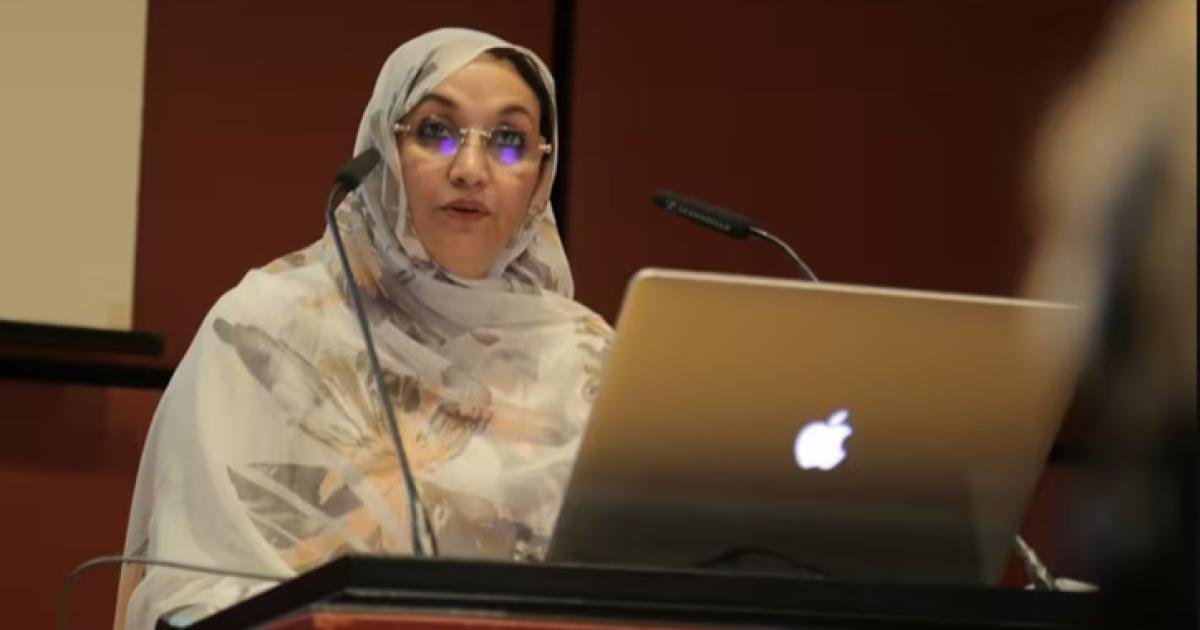
Geneva (Switzerland) June 28, 2026 (SPS)The head of the Sahrawi Committee against the Moroccan Occupation and Sahrawi human rights defender, Aminatou Haidar, participated in an extensive program of workshops and meetings aimed at strengthening international advocacy mechanisms and defending Sahrawi human rights defenders, within the framework of a working visit she led last week to the Swiss city of Geneva, and at the invitation of the Right Livelihood Foundation, which had previously awarded her its award for the year 2019.
The Sahrawi human rights activist participated in a specialized workshop on the criminalization of women human rights defenders by authoritarian regimes and under occupation, where she reviewed the experience of Sahrawi women human rights defenders and the targeting and persecution they are subjected to because of their peaceful human rights activity in the occupied Sahrawi territories.
It also benefited from training courses that focused on enhancing capabilities in the field of advocacy and influence, which contributes to developing tools for human rights work and advocacy at the international level.
On the sidelines of the visit, the President of the Commission held a series of meetings with a number of diplomatic missions accredited to the United Nations in Geneva, in addition to a meeting with the Office of the High Commissioner for Human Rights, especially the North Africa and Middle East Department.
During the various meetings she held with representatives of diplomatic missions and United Nations human rights mechanisms, the Sahrawi human rights defender raised a number of urgent human rights issues, most notably the critical situation of Sahrawi political detainees inside Moroccan prisons, and the ongoing violations of their basic rights to which they are exposed.
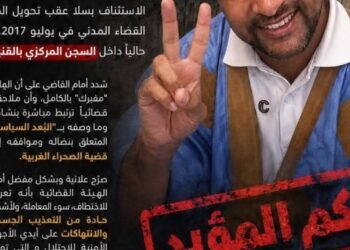
It also drew special attention to the deteriorating health condition of Sahrawi political detainee Naama Asfari, who is on a hunger strike, warning of the serious risks threatening his physical safety, and calling for urgent intervention from UN mechanisms and competent international bodies in order to ensure his protection and put an end to what he and the rest of the Sahrawi political detainees are exposed to.
The head of the Sahrawi Authority Against the Moroccan Occupation also touched on what she described as systematic policies targeting the social fabric in the occupied Sahrawi territories, most notably the flooding of the region with drugs and the resulting dangerous effects on the youth group, in addition to the political, social and economic restrictions imposed on Sahrawi youth through limited job opportunities, discrimination and exclusion, as well as encouraging immigration conditions and pushing young talents to leave their homeland, in a policy that she said aims to empty the occupied territories. It diminishes its vital energy and weakens its ability to withstand and preserve its national identity.
The visit program also included a meeting with the working group on violence against women and girls, in addition to a meeting with the team of the Special Rapporteur on the situation of male and female human rights defenders, where views were exchanged on the conditions of human rights defenders and the challenges they face under the occupation.
This participation falls within the framework of efforts aimed at strengthening the presence of the Sahrawi issue within United Nations mechanisms, highlighting the reality of human rights in the occupied Sahrawi territories, and introducing the challenges facing Sahrawi defenders, male and female, in carrying out their human rights mission. (Was)
0909/500/60 (WAS)