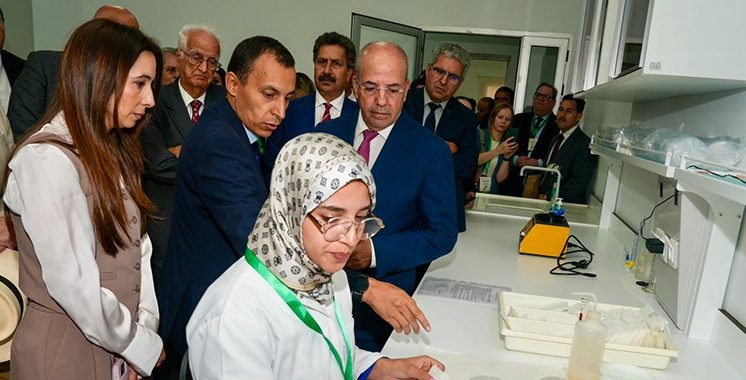
The mission of the National Center for Genetic Resources is to ensure the conservation, security, characterization and valorization of the Kingdom’s plant, animal and microbial genetic resources.
Biodiversity: With the inauguration of INRA’s National Center for Genetic Resources (CNRG), Morocco is strengthening its system for preserving agrobiodiversity. This strategic infrastructure, equipped with cutting-edge scientific equipment, aims to ensure the conservation and valorization of the Kingdom’s genetic resources, while supporting research, innovation and the resilience of the agricultural sector in the face of the challenges of food security and climate change.
Morocco is strengthening its international cooperation in favor of sustainable agriculture. Several partnership agreements and letters of intent were concluded on Tuesday in Rabat, creating synergies between the Green Providence Group (GPV), the regional agricultural directorate of Rabat-Salé-Kénitra, the Food and Agriculture Organization of the United Nations (FAO) and the International Center for Agricultural Research in Arid Zones (ICARDA). The aim is to strengthen research, innovation, sustainable agricultural development, the preservation of genetic resources and scientific and technical cooperation. These connections were established on the sidelines of the inauguration in Rabat of the National Center for Genetic Resources (CNRG) of INRA under the presidency of Ahmed El Bouari, Minister of Agriculture, Maritime Fisheries, Rural Development and Water and Forests. A project carried out as part of the Food Systems Transformation Program with financial support from the World Bank. This strategic infrastructure aims to ensure the conservation and valorization of the Kingdom’s genetic resources, while supporting research, innovation and the resilience of the agricultural sector in the face of the challenges of food security and climate change.
CNRG: A strategic infrastructure serving biodiversity
Designed as a national reference infrastructure, the National Center for Genetic Resources’ mission is to ensure the conservation, security, characterization and valorization of the Kingdom’s plant, animal and microbial genetic resources. It will contribute to the development of scientific research, innovation and the development of solutions adapted to the challenges linked to food security, climate change and the preservation of agrobiodiversity. This achievement, equipped with cutting-edge scientific equipment, is fully in line with the orientations of the Generation Green 2020-2030 strategy and contributes to the implementation of the Kingdom of Morocco’s commitments in terms of preserving biodiversity, sustainable development and the resilience of agricultural systems. “This structuring project significantly strengthens national capacities for conservation and sustainable management of genetic resources,” indicates the authority in this regard. And to specify: “The Center has facilities allowing the conservation of more than 200,000 accessions of plant, animal and microbial genetic resources.
It is therefore among the most important integrated platforms on the African continent in this field. Beyond its conservation mission, the CNRG will also play a central role in organizing access to genetic resources, their traceability, their scientific documentation and their mobilization in the service of research and development, in compliance with international commitments and the national regulatory framework in force.
Irrigation: The Ain Kouachia project reaches a decisive milestone
On the sidelines of the CNRG inauguration ceremony, the minister paid a visit to the hydro-agricultural development project of the perimeter associated with the Ain Kouachia dam. Located in the Skhirate-Témara prefecture, this structuring project, which is entering its final phase of implementation, will ensure an additional supply of approximately 3 million m³ of irrigation water for the benefit of agricultural operations in the area over an area of nearly 1,000 hectares. “As part of the efforts deployed in favor of sustainable management of water resources and strengthening the resilience of the agricultural sector in the face of climate change, the project will contribute to securing the supply of irrigation water, consolidating agricultural production and improving the socio-economic conditions of farmers in the region,” recalls the authority. And added: “It will also make it possible to strengthen the agronomic research activities carried out at the El Koudia experimental station, particularly in the areas of sustainable production and the development of cereal seeds, thus contributing to the preservation of plant genetic resources and the strengthening of food sovereignty.”
Note that the work has reached an advanced stage and the project is taking an important step towards the commissioning of its various infrastructures.