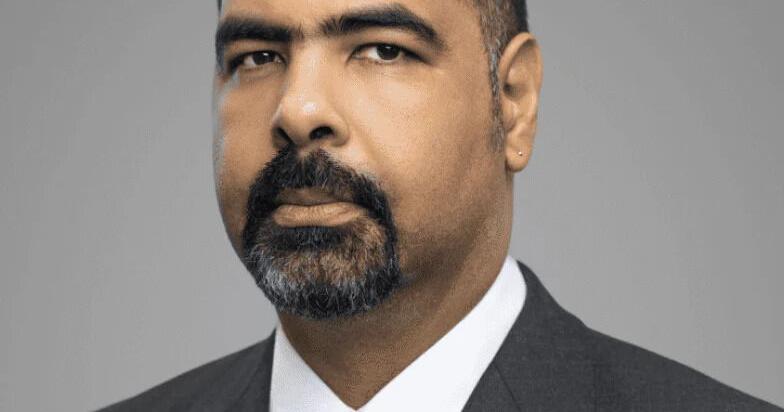
While the government is projecting successive budget surpluses, Fidelity Bank and Trust International Limited Group Chief Executive Officer Gowon Bowe said the more important challenge will be proving surpluses can be achieved consistently while demonstrating that public spending is delivering measurable results, rather than simply presenting favorable headline figures.
Bowe told the press recently that the national conversation should shift away from projected surplus figures and toward whether government programs are generating returns on investment and supporting long-term economic development.
“I think sometimes, to be very candid, we get too caught up in what I’m going to call headline numbers, and we need to get more into the principles and what I’m going to call the mechanisms that are being put in place in order to achieve something that is sustainable and consistent,” said Bowe.
“I think when we look at the budget surplus, there are a lot of challenges that present themselves in order to be able to achieve that. And so from that perspective, I would be one to say that we’ve not yet demonstrated we can achieve the surplus, and so from that perspective, we still have to prove it first. So, as they say, the proof of the pudding is in the eating.”
The government is wrapping up its 2026/2027 budget presentation in Parliament, still touting a budget surplus, though smaller than was announced last year.
Bowe said achieving a one-year surplus should not be the government’s primary objective if it cannot be sustained over the longer term.
“I’m not concerned about whether we have a surplus of that level or not,” he said.
“We could always get a surplus one year, and then have significant deficits in the next. We need to show that it’s a sustainable and perennial surplus projection that we have in the budget.”
The government is projecting another surplus for fiscal year 2026/2027 even larger than 2025/2026.
Bowe also argued that the government should better connect spending to the objectives outlined in its National Development Plan, allowing Bahamians to judge whether specific initiatives are producing results.
“We haven’t heard enough about the national development plan in its specificity,” he said.
“If we are going to truly have perennial surpluses, we have to change the course of the way the country does business, meaning we have to be focused on program-based spending… What we need to get to is exactly what are the programs we’re doing, so that we can measure has it worked, has it not worked.”
He criticized the traditional presentation of budget allocations by line items, saying it provides little insight into whether government spending is effective.
“The average person doesn’t understand what that means. And I would consider myself a little bit more informed than the average, and I don’t know what it means,” said Bowe.
He also questioned whether current capital spending is sufficient to address the country’s infrastructure needs, noting that public infrastructure appears to be deteriorating despite periodic major projects.
“Capital expenditure needs to be spoken about when we talk about our infrastructure in the country,” he said.
“I think everyone would say, it appears to be deteriorating right in front of our eyes… the budget is only saying about 2.5 percent of GDP [gross domestic product], and they say developing nations need at least five percent.”
He warned that government revenue forecasts remain vulnerable because they are linked to economic growth projections that can be disrupted by hurricanes or recessions.
“I think it all comes back to grounding our budget conversations in what are we going to do for the next 25 years, not the next five years or the next single year.”