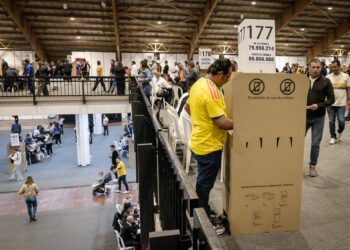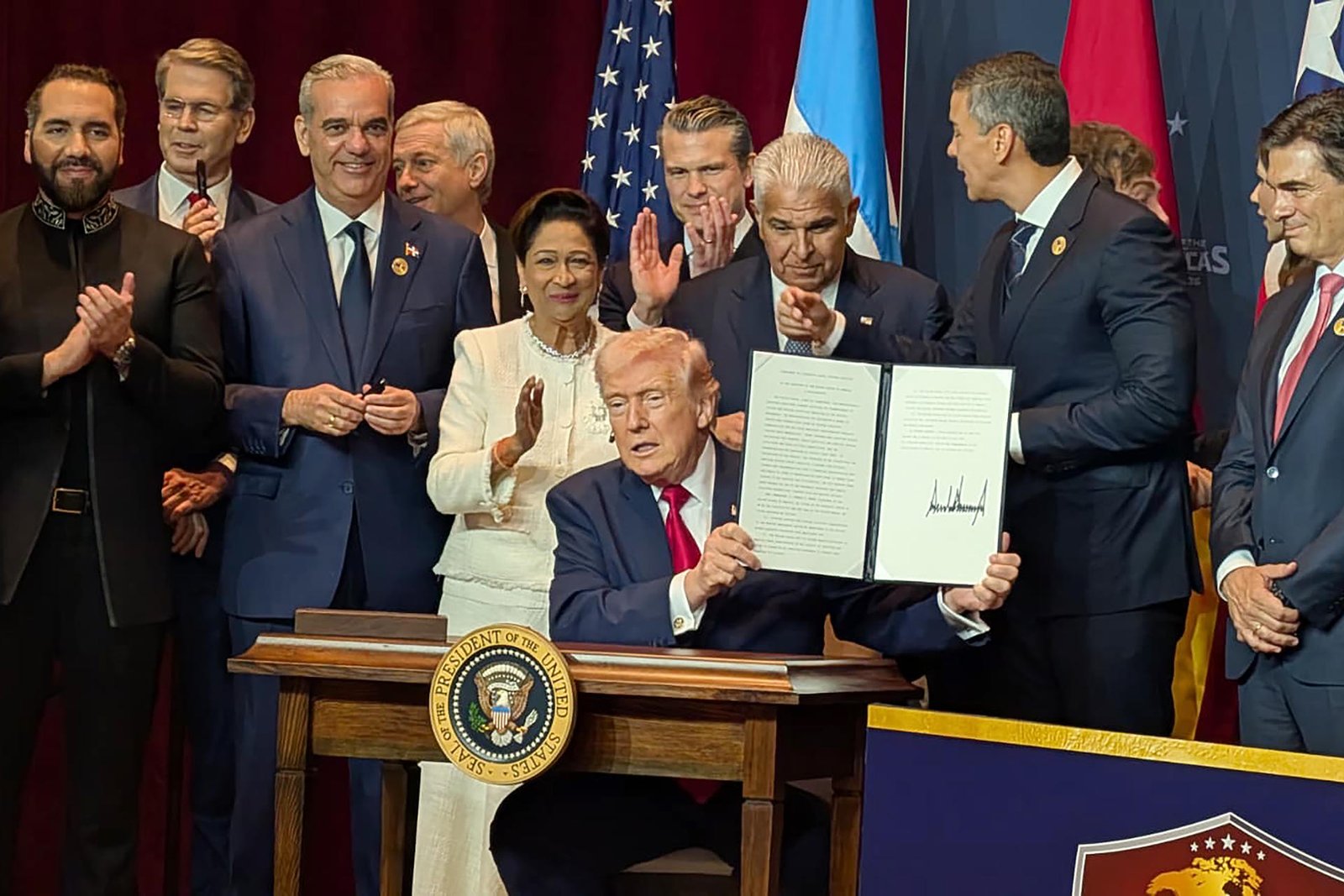
With the victories of Keiko Fujimori in Peru and Abelardo de la Espriella in Colombia, however tight they may be, the Donroe Doctrine enters an accelerated phase of application in Latin America and the Caribbean. Within this doctrine, the defensive alliance called Shield of the Americas occupies a central place, which was launched in Miami in March 2026, and which has been resumed at the recent OAS meeting in Panama.
The core of both things, the doctrine and the shield, is what Washington understands today as “hemispheric security.” Two of the targets of this new strategy are the drug cartels and money laundering, whose combat the United States privileges in its bilateral or regional relations with almost each and every one of the Latin American governments, including those that still minimally resist it, such as those of Cuba and Nicaragua.
As we have mentioned in this column, Donald Trump’s support for Keiko Fujimori’s candidacy was not as explicit as for other leaders of the new right, such as Nasry Asfura in Honduras or Abelardo de la Espriella in Colombia. However, before the Shield of the Americas meeting in March in Miami, the United States strengthened its defensive ties with Peru through NATO.
Trump invited De la Espriella to join the defensive alliance and the candidate of the extreme right in Colombia agreed. As soon as the closeness between De la Espriella and the president of Ecuador, Daniel Noboa, begins to be projected in the Andean region, pressure will most likely grow on the Fujimori government to also join the new bloc.
With Colombia, Ecuador and Chile within that defensive scheme in the Pacific, it would be very difficult for Peru not to end up joining. For Fujimori, the great challenge would be to prevent his alignment with Trump on matters of hemispheric security from affecting his priority trade relationship with China. In the final stretch of the presidential campaign, Fujimori maintained that it was essential for Peru to preserve China as the main investor and that the membership of both countries in APEC facilitated that continuity.
Mexico and Brazil would be two of the few governments that were not invited to the founding meeting of the Shield of the Americas and that could pose some obstacle to the progress of that project. But each one, in addition to maintaining foreign policies inscribed in the inter-American framework and good diplomatic relations with Trump, has different emphases on regional security.
Neither Brazil nor Mexico, as seen between late 2025 and early 2026, opposed U.S. naval operations in the Pacific and Caribbean too strongly. For Mexico, furthermore, bilateral security collaboration with the United States is a condition of its highest priority in foreign policy, which is integration with North America, as stated in Plan Mexico and other official documents.
*This article was originally published in The reason.