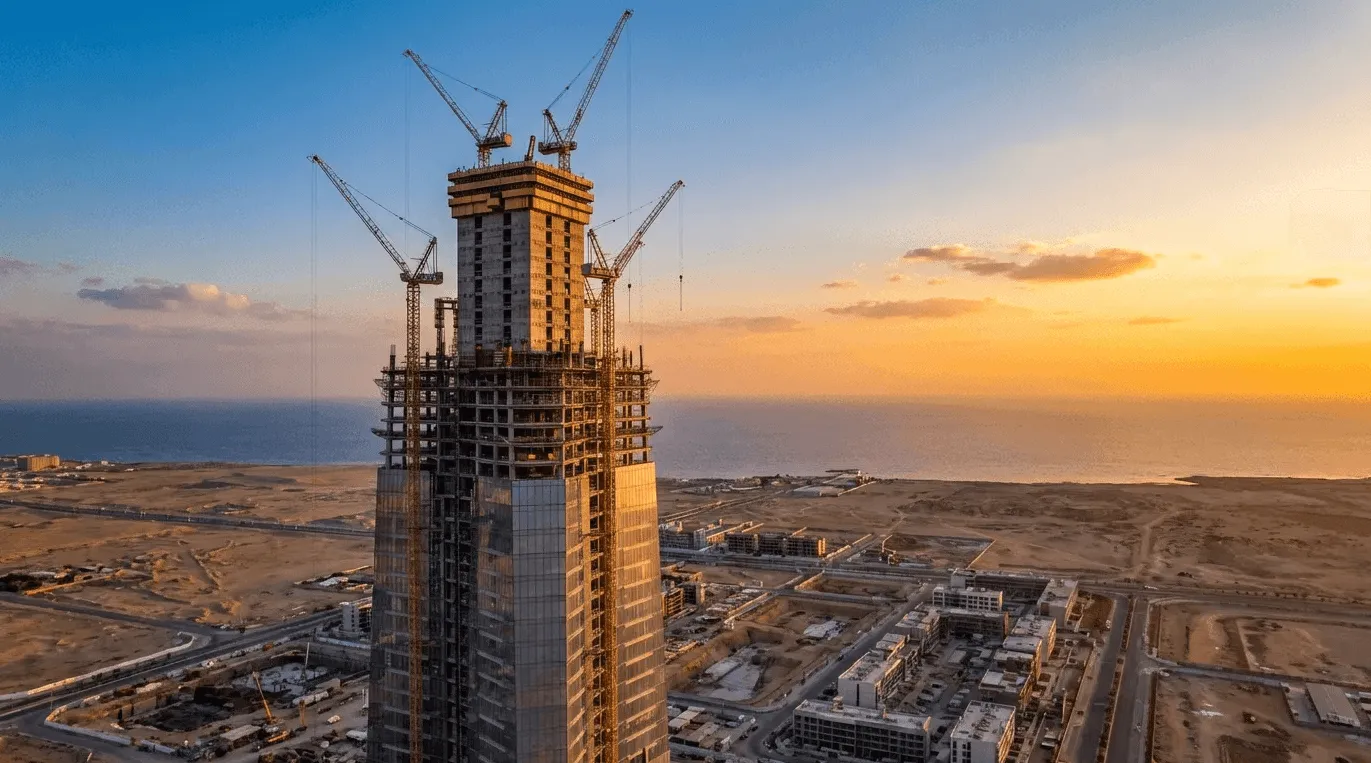
The future of architecture, according to Gordon Gill, does not lie exclusively in the construction of ever-higher buildings, but in a different approach to what already exists. Gill is one of the architects of the Jeddah Tower project in Saudi Arabia, which, according to plans and reports by the Dezeen portal, could become the tallest building in the world by 2028 – and the first to cross the one kilometer mark.
The architect, co-founder of the Chicago firm Adrian Smith + Gordon Gill Architecture, points out that the key space for innovation today is not only in new megaprojects, but in the transformation of existing cities and buildings.
“The greatest opportunities for innovation in the US are in the programming of cities,” Gill said, noting that the real challenges are largely already built—into the existing urban fabric.
Although he is behind a project that could surpass previous record holders such as the Burj Khalifa, Gill claims that height is no longer a key priority of contemporary architecture.
“Sustainability is the most important thing. Buildings must contribute to the environment and not just consume resources,” he said.
In the United States, there is an increasingly pronounced trend of adaptive reuse of existing buildings and their adaptation to new functions. According to the American Institute of Architects (AIA), almost half of America’s 125 million buildings are older than 50 years, which opens up a huge space for reconstruction and conversion.
This trend is further encouraged by environmental reasons. Experts warn that up to 75 percent of carbon emissions generated in the process of new construction could be avoided through the adaptation of existing buildings.
According to data from the World Green Building Council, buildings today account for almost 40 percent of global energy-related emissions, with a significant portion falling on consumption during use, but also on the production of building materials itself.
For this reason, more and more attention is focused on the so-called “upfront” emissions – emissions that occur in the early stages of construction, before the building even begins to operate. Experts warn that these emissions could account for up to half of the total carbon footprint of new construction by 2050.
Gill emphasizes that the future lies in preserving and extending the life of existing buildings, instead of tearing them down and replacing them with new ones.
“We need to look after existing buildings and work to ensure they remain relevant and functional. Maintaining their lifespan is key to sustainability,” he said.
As an example, he cites the renovation of the Willis Tower in Chicago, the former tallest building in the world, which through renovation received significant improvements in energy efficiency and sustainability and LEED Platinum certification.
According to him, the future of architecture lies precisely in such projects – in a combination of technology, conversion and smart management of the existing space.
“We often look for new opportunities, and they already exist around us – we just don’t recognize them,” Gill concluded.