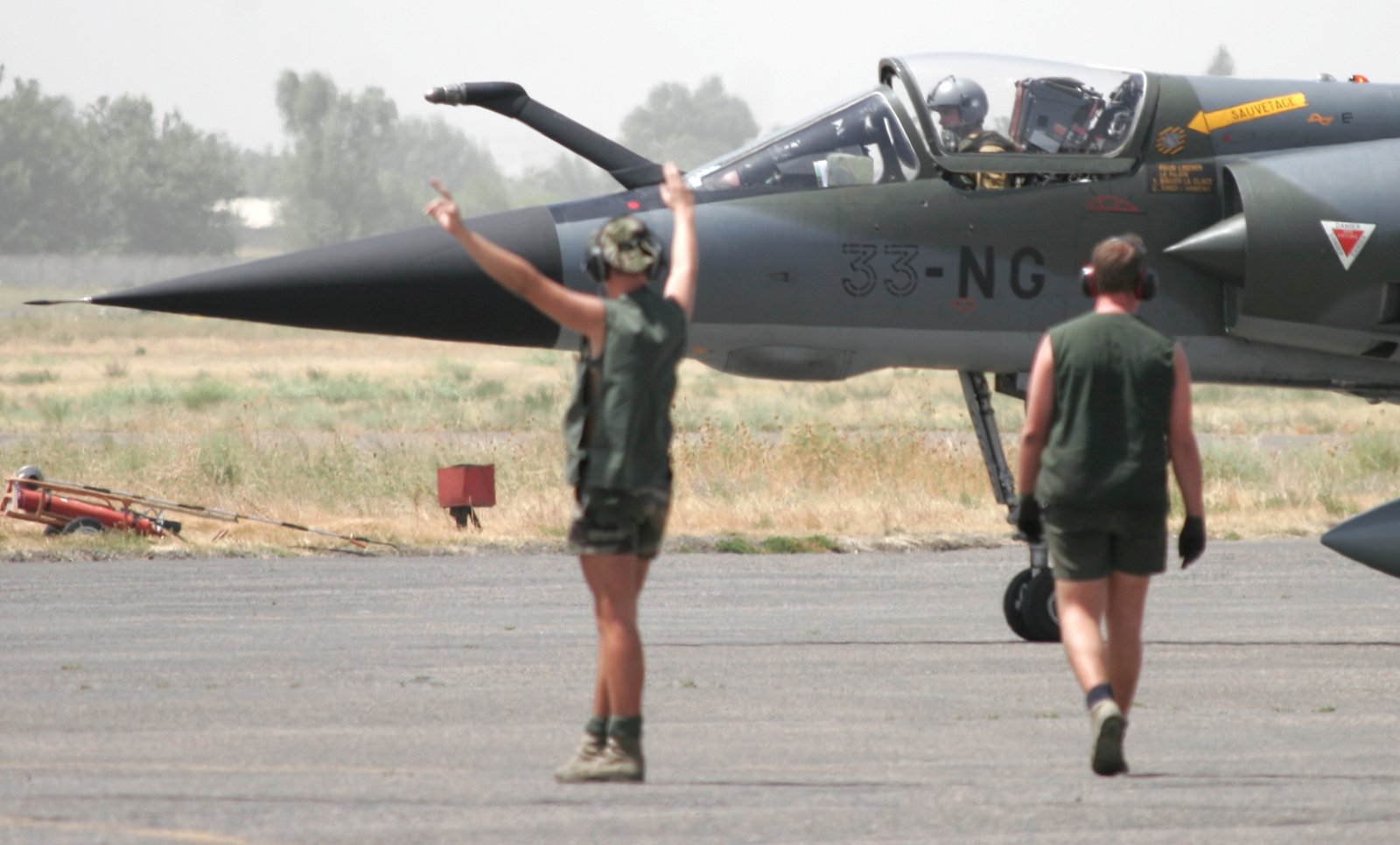
This report came out in 2002, when French troops were based at Dushanbe airport, participating in the international operation in Afghanistan after the September 11 terrorist attacks.
Journalist Marat Mamadshoev received rare permission to visit the French military base at Dushanbe airport and saw how French peacekeepers lived and served.
Special Purpose Tour
The wind caused by the September 11 terrorist attacks and which scattered the Taliban to smithereens brought French peacekeepers to Dushanbe along the way. They have been based at the capital’s airport for almost a year.
Breaking into the French military base was not an easy task. Resort to the usual methods of real spies – night digging, hidden cameras, etc. it would be too simple and… dangerous.
After consulting with the editor, we decided to stun the enemy with an unexpected maneuver, and directly turned to the military attaché of the French Embassy in the Republic of Tatarstan, Philippe Sidos, with a request for permission to visit the base.
Our maneuver fully justified itself. After intensive consultations with his leadership in Paris, Sidos agreed. So there was no hacking…
And so, assistant military attaché Jean François Holler and I are driving a Mitsubishi Pajero jeep to Dushanbe airport, where the French military base is located. Jean speaks Russian very well – he studied the language at school, so during the excursion around the base he becomes my personal translator.
There is alarm on his face – the flood has flooded Europe and is approaching his homeland. He is from Strasbourg, the capital of the French province of Alsace, the city where the headquarters of the Council of Europe is located. This is very close to Germany, whose reputation has already been fairly tarnished.
“The weather is bad, but for now there is hope that it will pass,” says Jean. He sadly agrees with my gloomy joke that if things continue like this, then soon Tajikistan will have to provide humanitarian assistance to Europe.
Meanwhile, we are approaching the military airport checkpoint, fenced off from the “civilians” by a steel cable. A Tajik military man in camouflage at the table, after a short negotiation, generously lifts the improvised barrier, and we enter the camp of the French peacekeepers.

“Hercules”, strict security and Tajik flatbreads
Let’s say right away that I didn’t see anything remarkable here. This is probably how it should be on a military base.
On the left there is an even row of tents and trailers, carefully camouflaged with camouflage and camouflage nets. On the right, on very small, round legs, a green, oblong, oval-shaped airplane “buried” into the ground. This is the famous transport aircraft – S-130 or in other words – “Hercules”. It was on this plane that the former head of Pakistan, Zia-ul Haq, crashed in 1988.
I saw this plane up close for the first time in my life, and for some reason it seemed to me like either a boa constrictor or a penguin resting after a very hearty lunch.

Near the plane, on the hot asphalt under the scorching sun, two hefty security guards in camouflage uniforms without hats were languishing in the heat. In the hands of one of them was a “famas” – an assault rifle used by the French army, the other – a “redgan” – a 12 mm caliber gun.
I asked in what cases they might use weapons. According to Jean Francois, according to special instructions, French soldiers in Dushanbe can open fire in any case if their lives or military property are in danger.

Near the tents we were met by a group of military men, including Philippe Sidos, Canadian military attaché Norm Couturier, who had arrived in Dushanbe for a week, and the head of the local French peacekeepers, Colonel Daniel Gantin. The Colonel generously allows us to film everything that moves and moves. But, he immediately adds: “Only from the outside”…
Soon, citing urgent matters, he entrusted us to his deputy, Major Yves Leclerc. We found the major in one of the trailers, turned into a command post. By the way, a very comfortable room: with washbasins, air conditioners and other amenities of life.

Yves tells us about the life of the French in Dushanbe. In total, there are now about 150 people at the capital’s airport. The first French soldiers to set foot on Tajik soil last winter were soldiers of the Foreign Legion, special forces in our opinion. Now all the legionnaires have left, only the pilots remain, who are changed every three to four months.
According to the major, the Dushanbe detachment in a reduced form is an exact copy of its main unit in France. It has paratroopers, doctors, financiers, repair teams, a kitchen, a first aid station, a post office, etc. There are also mountain rescuers – gendarmes from Chamonix, a town in the French Alps.

The main tasks of the “French limited contingent” in Tajikistan are to facilitate the transit of goods from France to Afghanistan, rescue pilots who have suffered a disaster, remove wounded and sick peacekeepers, and, if necessary, receive aircraft from allies in the anti-terrorist coalition. Transport planes mainly arrive from Kabul. For example, over the past month, about 50 Hercules aircraft arrived from there, and only ten from France.
Europeans buy almost all their products from Dushanbe bazaars. In general, the French have this principle: bring with you only what cannot be found locally. For example, even the trailer in which we were sitting was purchased in Tajikistan. In addition, according to Major Leclerc, Tajik fruits and vegetables are much better than their European counterparts. There is no chemistry in them, he explained. And Europeans really liked Tajik flatbreads.
Yves Leclerc himself came to us recently. Previously, he participated in peacekeeping operations in Yugoslavia, Saudi Arabia, etc. According to him, it was the hardest in Yugoslavia. “There was a real war there, where peacekeepers were shot in the back,” says the major. “It’s calm here in Dushanbe, and the local population treats us very kindly.”
Ordinary life of an unusual garrison
The descendants of Asterix live in two hotels – “Dushanbe” and “Tajikistan”. In their free time, they can do whatever they want. Naturally, within the limits permitted by law and the moral code of a French soldier. However, there is one restriction – they must return to the hotel no later than 12 o’clock. The French usually walk around the city in civilian clothes and without weapons. On weekends, they are taken on organized excursions to Varzob, museums, etc.

By the way, according to eyewitnesses, quite recently there was one incident in Varzob in which two French soldiers distinguished themselves. One girl from a group of vacationers stumbled and fell into the river. A stormy stream caught her and, if not for the dedication of the French, who immediately rushed after her into the icy water, the tragedy would not have been avoided. Fortunately, the girl was saved, and the military was rewarded with universal gratitude and admiration.
That day, the heroes themselves could not be found at the airport – they were at the training base in Fakhrabad…

After the “interrogation” with passion, I leave the command post and continue my carefully clandestine reconnaissance. There is a mailbox hanging near one of the trailers. Before our eyes, repairman Didier Lamorrou throws a letter. According to the command, in two days it will reach its destination in France.
I ask Didier, since there is the Internet and email, why doesn’t he use them. No, the Frenchman waves his hand indignantly, you can’t pour out your soul on a computer. Whatever you say, soulless technology does not understand people.
In addition to the French love for comfort, what also caught my eye was the liberal attitude of the base leadership towards wearing a uniform. It never occurs to anyone here that a soldier’s unfastened hook could ultimately undermine the combat effectiveness of the army. Moreover, the French form does not imply the presence of such details. The berets with which we associate French soldiers, I saw only on the head… of the Canadian attache. Some of the servicemen sported shorts and T-shirts, or even showed off their powerful naked torsos.
At a local cafe we were shown one of the rescuers, who looked like a killer from the famous film “Leon”. The camouflaged big man politely asked not to use his name. He also refused to talk about the operations in which he participated, talking only about how he recently jumped with his Tajik colleagues from the Ministry of Defense. “Leon” spoke very warmly about our military and rescuers. He also liked the Russian equipment that is in service with the Tajik army.
At the military first aid station we saw a female soldier for the first time – nurse Celine. It turned out that there are enough women here – about 15-20 people, so she does not feel lonely. Unfortunately, during our visit, almost all of them were outside the base, and we were never able to fully satisfy our curiosity.
Having made sure that the physical health of the “Tajik” French is reliably protected, we leave the first aid station and say goodbye to the hospitable “invaders”. Goodbye France! Good bye, that is, hello…