Saturday, June 27, 2026
    The GeoStrategic Consensus
    No Result
    View All Result
    • Login
    • HOME
    • AMERICAS
      • Argentina
      • Brazil
      • Canada
      • Chile
      • Colombia
      • Costa Rica
      • Cuba
      • Dominican Republic
      • Ecuador
      • El Salvador
      • Greenland
      • Guatemala
      • Honduras
      • Mexico
      • Nicaragua
      • Panama
      • Paraguay
      • Peru
      • United States
      • Uruguay
      • Venezuela
    • ASIA-PACIFIC
      • Australia
      • Brunei Darussalam
      • Cambodia
      • China
      • Federated States of Micronesia
      • Fiji
      • Indonesia
      • Japan
      • Kiribati
      • Laos
      • Malaysia
      • Marshall Islands
      • Mongolia
      • Myanmar
      • Nauru
      • New Zealand
      • North Korea
      • Palau
      • Papua New Guinea
      • Philippines
      • Samoa
      • Singapore
      • Solomon Islands
      • South Korea
      • Taiwan
      • Thailand
      • Timor-Leste
      • Tonga
      • Tuvalu
      • Vanuatu
      • Vietnam
    • CARICOM
      • CARICOM – Non-English
        • Haiti
        • Suriname
      • CARICOM Associates
        • Anguilla
        • Bermuda
        • British-Virgin-Islands
        • Cayman-Islands
        • Curacao
        • Turks-and-Caicos
      • CARICOM English
        • Antigua and Barbuda
        • Barbados
        • Belize
        • Dominica
        • Grenada
        • Guyana
        • Jamaica
        • Montserrat
        • Saint Kitts and Nevis
        • Saint Lucia
        • Saint Vincent and the Grenadines
        • The Bahamas
        • Trinidad and Tobago
    • EURASIA
      • Armenia
      • Azerbaijan
      • Balarus
      • Georgia
      • Kazakhstan
      • Kyrgyzstan
      • Moldova
      • Russia
      • Tajikistan
      • Turkmenistan
      • Ukraine
      • Uzbekistan
    • EUROPE
      • Albania
      • Andorra
      • Austria
      • Bosnia and Herzegovina
      • Bulgaria
      • Croatia
      • Cyprus
      • Czech Republic
      • Denmark
      • Estonia
      • Finland
      • France
      • Germany
      • Greece
      • Holy See
      • Hungary
      • Iceland
      • Ireland
      • Italy
      • Kosovo
      • Latvia
      • Liechtenstein
      • Lithuania
      • Luxembourg
      • Malta
      • Monaco
      • Montenegro
      • Netherlands
      • North Macedonia
      • Norway
      • Poland
      • Portugal
      • Romania
      • San Marino
      • Serbia
      • Slovakia
      • Slovenia
      • Spain
      • Sweden
      • Switzerland
      • United Kingdom
    • MIDDLE EAST AND NORTH AFRICA
      • Algeria
      • Bahrain
      • Egypt
      • Iran
      • Iraq
      • Israel
      • Jordan
      • Kuwait
      • Lebanon
      • Lybia
      • Morocco
      • Oman
      • Palestinian Territories
      • Qatar
      • Saudi Arabia
      • Syria
      • Tunisia
      • Turkey
      • United Arab Emirates
      • Western Sahara
      • Yemen
    • SOUTH ASIA
      • Afghanistan
      • Bangladesh
      • Bhutan
      • India
      • Maldives
      • Nepal
      • Pakistan
      • Sri Lanka
    • SUB-SAHARAN AFRICA
      • Angola
      • Benin
      • Botswana
      • Burkina Faso
      • Burundi
      • Cabo Verde
      • Cameroon
      • Central African Republic
      • Chad
      • Comoros
      • Cote d’Ivoire
      • Democratic Republic of the Congo
      • Djibouti
      • Equatorial Guinea
      • Eritrea
      • Eswatini
      • Ethiopia
      • Gabon
      • Gambia
      • Ghana
      • Guinea
      • Guinea Bissau
      • Kenya
      • Lesotho
      • Liberia
      • Madagascar
      • Malawi
      • Mali
      • Mauritania
      • Mauritius
      • Mozambique
      • Namibia
      • Niger
      • Nigeria
      • Republic of the Congo
      • Rwanda
      • Sao Tome and Principe
      • Senegal
      • Seychelles
      • Sierra Leone
      • Somalia
      • South Africa
      • South Sudan
      • Sudan
      • Tanzania
      • Togo
      • Uganda
      • Zambia
      • Zimbabwe
    • HOME
    • AMERICAS
      • Argentina
      • Brazil
      • Canada
      • Chile
      • Colombia
      • Costa Rica
      • Cuba
      • Dominican Republic
      • Ecuador
      • El Salvador
      • Greenland
      • Guatemala
      • Honduras
      • Mexico
      • Nicaragua
      • Panama
      • Paraguay
      • Peru
      • United States
      • Uruguay
      • Venezuela
    • ASIA-PACIFIC
      • Australia
      • Brunei Darussalam
      • Cambodia
      • China
      • Federated States of Micronesia
      • Fiji
      • Indonesia
      • Japan
      • Kiribati
      • Laos
      • Malaysia
      • Marshall Islands
      • Mongolia
      • Myanmar
      • Nauru
      • New Zealand
      • North Korea
      • Palau
      • Papua New Guinea
      • Philippines
      • Samoa
      • Singapore
      • Solomon Islands
      • South Korea
      • Taiwan
      • Thailand
      • Timor-Leste
      • Tonga
      • Tuvalu
      • Vanuatu
      • Vietnam
    • CARICOM
      • CARICOM – Non-English
        • Haiti
        • Suriname
      • CARICOM Associates
        • Anguilla
        • Bermuda
        • British-Virgin-Islands
        • Cayman-Islands
        • Curacao
        • Turks-and-Caicos
      • CARICOM English
        • Antigua and Barbuda
        • Barbados
        • Belize
        • Dominica
        • Grenada
        • Guyana
        • Jamaica
        • Montserrat
        • Saint Kitts and Nevis
        • Saint Lucia
        • Saint Vincent and the Grenadines
        • The Bahamas
        • Trinidad and Tobago
    • EURASIA
      • Armenia
      • Azerbaijan
      • Balarus
      • Georgia
      • Kazakhstan
      • Kyrgyzstan
      • Moldova
      • Russia
      • Tajikistan
      • Turkmenistan
      • Ukraine
      • Uzbekistan
    • EUROPE
      • Albania
      • Andorra
      • Austria
      • Bosnia and Herzegovina
      • Bulgaria
      • Croatia
      • Cyprus
      • Czech Republic
      • Denmark
      • Estonia
      • Finland
      • France
      • Germany
      • Greece
      • Holy See
      • Hungary
      • Iceland
      • Ireland
      • Italy
      • Kosovo
      • Latvia
      • Liechtenstein
      • Lithuania
      • Luxembourg
      • Malta
      • Monaco
      • Montenegro
      • Netherlands
      • North Macedonia
      • Norway
      • Poland
      • Portugal
      • Romania
      • San Marino
      • Serbia
      • Slovakia
      • Slovenia
      • Spain
      • Sweden
      • Switzerland
      • United Kingdom
    • MIDDLE EAST AND NORTH AFRICA
      • Algeria
      • Bahrain
      • Egypt
      • Iran
      • Iraq
      • Israel
      • Jordan
      • Kuwait
      • Lebanon
      • Lybia
      • Morocco
      • Oman
      • Palestinian Territories
      • Qatar
      • Saudi Arabia
      • Syria
      • Tunisia
      • Turkey
      • United Arab Emirates
      • Western Sahara
      • Yemen
    • SOUTH ASIA
      • Afghanistan
      • Bangladesh
      • Bhutan
      • India
      • Maldives
      • Nepal
      • Pakistan
      • Sri Lanka
    • SUB-SAHARAN AFRICA
      • Angola
      • Benin
      • Botswana
      • Burkina Faso
      • Burundi
      • Cabo Verde
      • Cameroon
      • Central African Republic
      • Chad
      • Comoros
      • Cote d’Ivoire
      • Democratic Republic of the Congo
      • Djibouti
      • Equatorial Guinea
      • Eritrea
      • Eswatini
      • Ethiopia
      • Gabon
      • Gambia
      • Ghana
      • Guinea
      • Guinea Bissau
      • Kenya
      • Lesotho
      • Liberia
      • Madagascar
      • Malawi
      • Mali
      • Mauritania
      • Mauritius
      • Mozambique
      • Namibia
      • Niger
      • Nigeria
      • Republic of the Congo
      • Rwanda
      • Sao Tome and Principe
      • Senegal
      • Seychelles
      • Sierra Leone
      • Somalia
      • South Africa
      • South Sudan
      • Sudan
      • Tanzania
      • Togo
      • Uganda
      • Zambia
      • Zimbabwe
    No Result
    View All Result
    Agentially
    No Result
    View All Result
    Home EUROPE Estonia

    Head of German defense industry federation: We are really scaling up production | News

    The Analyst by The Analyst
    June 27, 2026
    in Estonia
    Head of German defense industry federation: We are really scaling up production | News


    We’re in the fifth year of the full-scale war in Ukraine and governments in Europe, as well as the NATO secretary general, are still saying the defense industry needs to boost production. Why? What’s the situation and why isn’t production already at the level that’s needed?

    READ ALSO

    Estonia considers expanding coverage for weight-management drug | News

    Estonia’s top court limits claims for child support overpayments | News

    Well, I’m not of this opinion, actually. The German defense industry — and I can only speak on behalf of the German defense industry — has done a lot since 2022 to increase capacities and gear up production.

    Of course, there have been some setbacks due to government decisions in the meantime, but those have been overcome by the decision taken last year, when our new government decided to spend 5 percent of GDP on defense and military-related infrastructure. I think that was a breakthrough.

    From there, I think we’re now in a second wave of scaling up, which is really decisive and involves a lot of companies all over Germany. Thousands of companies that have so far been working, for example, in automotive supply now want to support the defense industry. That is a huge development, so I think we’re really moving now.

    Talking about scaling up, can you also mention what kind of things that concerns at the moment?

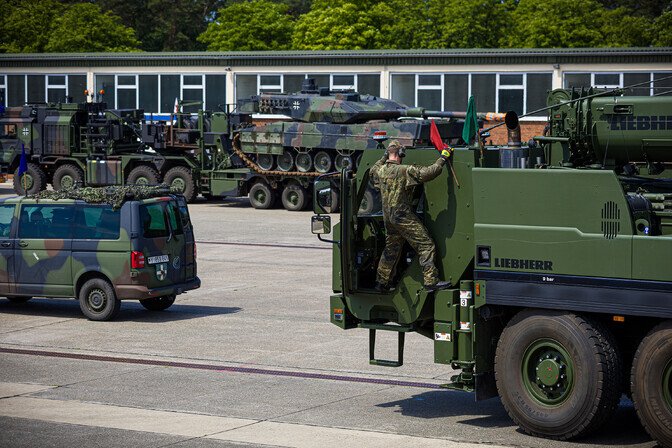
    Well, it’s, in the first place, the replication of existing products in much higher numbers and with a very rapid delivery schedule — for example, armored vehicles, trucks, certain missiles and a number of other known products that now need to be replicated in much larger quantities.

    On the other hand, it’s also about new products. It’s about drones, unmanned ground vehicles and things like that, which will be incorporated into a new sort of fighting scheme, especially in our army. High numbers of those are also needed.

    Due to the very rapid technological development, in some cases it’s more about having production capacity in place than simply producing high numbers. I think that’s true for all our countries at the moment. We have to cope with very agile technological development, especially on the software side, but both kinds of products are relevant.

    The United States has sent quite clear messages recently that it intends to reduce its defense commitment concerning Europe. There are certain capabilities that may soon be missing, which worries governments, especially those on NATO’s eastern flank. What about, for example, long-range missiles? Can the European defense industry fill that gap?

    Yeah, I think in many respects we are capable of delivering what’s needed and also of designing what’s needed in certain cases.

    I think this is a paradigm shift that has been announced for quite some time. When the Trump administration came back into office, with the new secretary of defense, or now the secretary of war, visiting NATO, it immediately announced that Europe now has to deal with its own conventional armament.

    I think it was Chancellor Friedrich Merz, when he opened the Munich Security Conference in February, who clearly said Germany has the ambition to provide the strongest conventional army in European NATO.

    So I think this is something that is not entirely new. We have to deal with it, and I think we have the capabilities, except perhaps for a few very rare capabilities where we still have to catch up.

    What kind of capabilities are you referring to and how much time would it take to develop them?

    One aspect is, of course, space-based capabilities, where we need to catch up. The other concerns our command systems.

    But I think this has been understood for quite a while, and I think we are all — and especially the soldiers inside NATO — working together to make this happen.

    For example, long-range missiles — how quickly can Europe boost production of those?

    Well, we all know that if things are desperately needed, we will be able to get them in place.

    Look at Ukraine and what it has done in terms of developing its own defense industry in recent years. I think it’s really a question of whether people understand what has to be done. And then I think we have the capabilities to do it.

    Some critics say that, yes, we’re making progress on ammunition and very advanced weapons systems, but modern warfare needs more drones and a lot of cheaper, simpler systems produced in large quantities. How would you respond to that criticism?

    I think those lessons learned have been fully understood and digested.

    I recently had the chance to listen to a presentation by our new chief of the army, General Freuding. He talked about mass, he talked about drones, he talked about modern warfare involving a lot of unmanned capabilities. So I think it’s fully understood.

    We in Germany are really strong with our industrial capabilities. Again, as I said before, the decisive issue is that in this wave of scaling up we’re seeing, thousands of companies are trying to get involved, which have capabilities from areas such as automotive supply. I think that’s a good signal, and it’s for me really encouraging.

    What has the war in Ukraine taught German manufacturers about modern warfare? And how deep is the cooperation at the moment between German and Ukrainian companies?

    Well, I don’t have a very detailed assessment of that, but I think there is already a lot of cooperation in place, and new ones will come.

    I think what we’re learning from the Ukrainian industry is how to increase the degree of automation in order to increase output.

    What do German companies in the defense industry expect from governments and politicians?

    The main point is that we have to make our armed forces really fit for the challenges they’re facing — or, to put it differently, fit for real deterrence, which is what we need.

    But on the other hand, I think what’s also needed — and I think you in the Baltics are much more aware of this — is resilience in civilian society.

    This is something where Germany has to do more. Our industry has to understand it, and our citizens have to understand it, just like Scandinavians, Estonians, people in Lithuania and Latvia all understand that they have to build more civilian resilience.

    This is something where we have to do much more, and it also requires politicians to tell people what they have to do.

    But do governments provide enough procurement orders? Are they actually doing the things they’re talking about?

    Well, in the case of Germany, money is no longer really the issue since we lifted the so-called debt brake in our Constitution for military and adjacent purposes last year.

    But people still have to understand why money is being spent on these things. That’s why, in some respects, I would like to hear clearer language explaining that we have to spend more on our civilian resilience.

    What about cooperation in Europe? Will there be a next-generation fighter jet under the Future Combat Air System project?

    You’ll have to ask Airbus or the politicians. I really don’t know. Nobody really has a clue what’s going to happen.

    Of course, cooperation remains important in the long run because we gain many advantages from it.

    However, my experience after many years in the defense business is that successful cooperation has to come together from both sides. Governments have to want the same kinds of products as customers, and the industries in the countries involved have to fit together. Both sides need to create one common project.

    Maybe that wasn’t really the case with the Future Combat Air System project. If cooperation is going to work, governments and industry have to work together to make it happen.

    More generally, do you think the European defense market is still too fragmented, with too many different national interests preventing Europe from realizing its full potential?

    Yeah, absolutely.

    We’re coming from a time when governments had an interest in supporting their own state-owned defense companies and making them successful in export markets. They didn’t necessarily want to develop the same types of systems because they were competing against each other internationally. /…/

    Times have changed in the meantime and the interests are different now. But it’s still difficult because you have to align military strategies, requirements and political interests.

    On the one hand, countries have to give up certain capabilities, and on the other hand they gain others. These are decisions that have to be made with a very long-term perspective.

    It’s not easy and requires a great deal of political determination.

    Finally, to wrap it up: do you think Europe can defend itself? What are the most important things that still have to be done?

    Absolutely. I have no doubt.

    I frequently listen to soldiers from the German armed forces and from NATO and I have no doubt at all that Europe can defend itself.

    I also have no doubt that if we were to come under even greater pressure, our capabilities — and our willingness to further gear up our armament and defense industry — would become even stronger.

    —

    Follow ERR News on Facebook and X and never miss an update!


    Source link

    Related Posts

    Estonia considers expanding coverage for weight-management drug | News
    Estonia

    Estonia considers expanding coverage for weight-management drug | News

    June 27, 2026
    Estonia’s top court limits claims for child support overpayments | News
    Estonia

    Estonia’s top court limits claims for child support overpayments | News

    June 27, 2026
    Estonian court fines plaintiffs over false AI-generated claims | News
    Estonia

    Estonian court fines plaintiffs over false AI-generated claims | News

    June 27, 2026
    Toomas Hendrik Ilves: What is Europe’s grand strategy at the end of Pax Americana? | Opinion
    Estonia

    Toomas Hendrik Ilves: What is Europe’s grand strategy at the end of Pax Americana? | Opinion

    June 26, 2026
    ‘Culture continues in a new place’: How Estonians celebrate jaanipäev far from home | News
    Estonia

    ‘Culture continues in a new place’: How Estonians celebrate jaanipäev far from home | News

    June 26, 2026
    Estonian professor: Polarization and immigration debates are reshaping U.S. politics | News
    Estonia

    Estonian professor: Polarization and immigration debates are reshaping U.S. politics | News

    June 26, 2026
    Next Post

    TELL US: How has Copenhagen changed since you moved here?

    POPULAR NEWS

    The date of the match between Egypt and Iran in the 2026 World Cup and the broadcast channels

    The date of the match between Egypt and Iran in the 2026 World Cup and the broadcast channels

    June 26, 2026
    Pema Deki Brings Bhutanese Heritage to the World of Luxury Watches

    Pema Deki Brings Bhutanese Heritage to the World of Luxury Watches

    June 27, 2026
    In tense meeting, Revanth Reddy warns Congress leaders to take SIR seriously | India News

    In tense meeting, Revanth Reddy warns Congress leaders to take SIR seriously | India News

    June 26, 2026
    “Dubai Dates” returns with the sweetness of the Emirati “Tamrat Al Bait”.

    “Dubai Dates” returns with the sweetness of the Emirati “Tamrat Al Bait”.

    June 26, 2026
    The outfits of Brazil’s female fans at the World Cup catch the eye and set trends for 2026

    The outfits of Brazil’s female fans at the World Cup catch the eye and set trends for 2026

    June 26, 2026

    EDITOR'S PICK

    Gulf News | During a meeting with His Highness, Chairman of the Armed Forces Committee in the US House of Representatives, Nasser bin Hamad: The defense and military partnership between the two countries is an advanced model of strategic cooperation.

    Gulf News | During a meeting with His Highness, Chairman of the Armed Forces Committee in the US House of Representatives, Nasser bin Hamad: The defense and military partnership between the two countries is an advanced model of strategic cooperation.

    June 26, 2026
    VW wants to save even harder – up to 60,000 more jobs will be eliminated

    VW wants to save even harder – up to 60,000 more jobs will be eliminated

    June 26, 2026
    Bank Al-Maghrib prepares the big leap towards inflation targeting

    Bank Al-Maghrib prepares the big leap towards inflation targeting

    June 26, 2026

    Lithuania’s public beaches: municipalities plan investments to expand lakeside access

    June 27, 2026

    Recent Posts

    • Damascus marks Music Day with performances across historic venues
    • The island, only 17 minutes away from the city, is up for sale: It produces its own energy entirely
    • Gulf News | Strengthening Bahraini-American cooperation economically and defensively. The King discusses with the US Secretary of State the latest developments in the regional and international situation
    • Kuwait, UAE to strengthen military ties

      © 2026 Agentially - Navigating shifting sovereignties and global risk .

      Welcome Back!

      Login to your account below

      Forgotten Password?

      Retrieve your password

      Please enter your username or email address to reset your password.

      Log In
      No Result
      View All Result

        © 2026 Agentially - Navigating shifting sovereignties and global risk .

        This website uses cookies. By continuing to use this website you are giving consent to cookies being used. Visit our Privacy and Cookie Policy.