Jeremy Bowen
International editor
The memorandum of understanding signed by US President Donald Trump and Iranian President Massoud Pezeshkian outlines the political, military and economic consequences of the ill-advised decision to attack Iran on February 28.
The human cost of that decision is already obvious.
Thousands died, many of them civilians, in Iran and Lebanon.
The United States of America, and therefore Israel, suffered a strategic defeat.
The regime in Tehran faced its own worst nightmare: a joint military operation to cripple or destroy it led by America, the world’s strongest power, and Israel, the Middle Eastern superpower.
The regime not only survived.
In the meantime, he came out of everything stronger.
His strategy of blocking the Strait of Hormuz, and with it one-fifth of the world’s supply of oil and gas as well as other vital components of the world economy, forced Trump to agree to a series of concessions that angered and worried American advocates of war with Iran and the Israeli government.
Memorandum of Understanding calls for an end to the war in Lebanon.
Israel claims that this cannot happen.
He wants to make free decisions in Lebanon, and this problem can cause an even sharper split between Israel and America, and play into the hands of the Iranian hardline, which opposes any agreement with the US.
In exchange for reopening the Strait of Hormuz, the memo said the US would lift the counter-blockade on Iran’s ports, ease sanctions allowing Iran to earn billions of dollars from oil exports and begin the process of returning billions more to Iran by unfreezing foreign assets.
And all this before moving on to the most difficult part of it all, the negotiations on the nuclear agreement.
That is the price of a return to the pre-February 27 status, the day before America and Israel launched the war.
That day, the Strait of Hormuz was open to shipping, and American and Iranian negotiators discussed the nuclear deal.
The signing of the memorandum means that there will be a negotiated return, and that ships will be able to pass freely through the Strait of Hormuz.
Anthony Blinken, Secretary of State in the Joseph Biden administration wrote on the X social network:
“The only ‘accomplishment’ of the ceasefire is likely to be the reopening of the Strait of Hormuz – which was open before the war started. And it looks like we’re going to pay Iran to do it.”
The question of what exactly the war was for is inevitable and will not be able to be ignored just like that.
It amounts to Trump’s worst foreign policy failure to date.
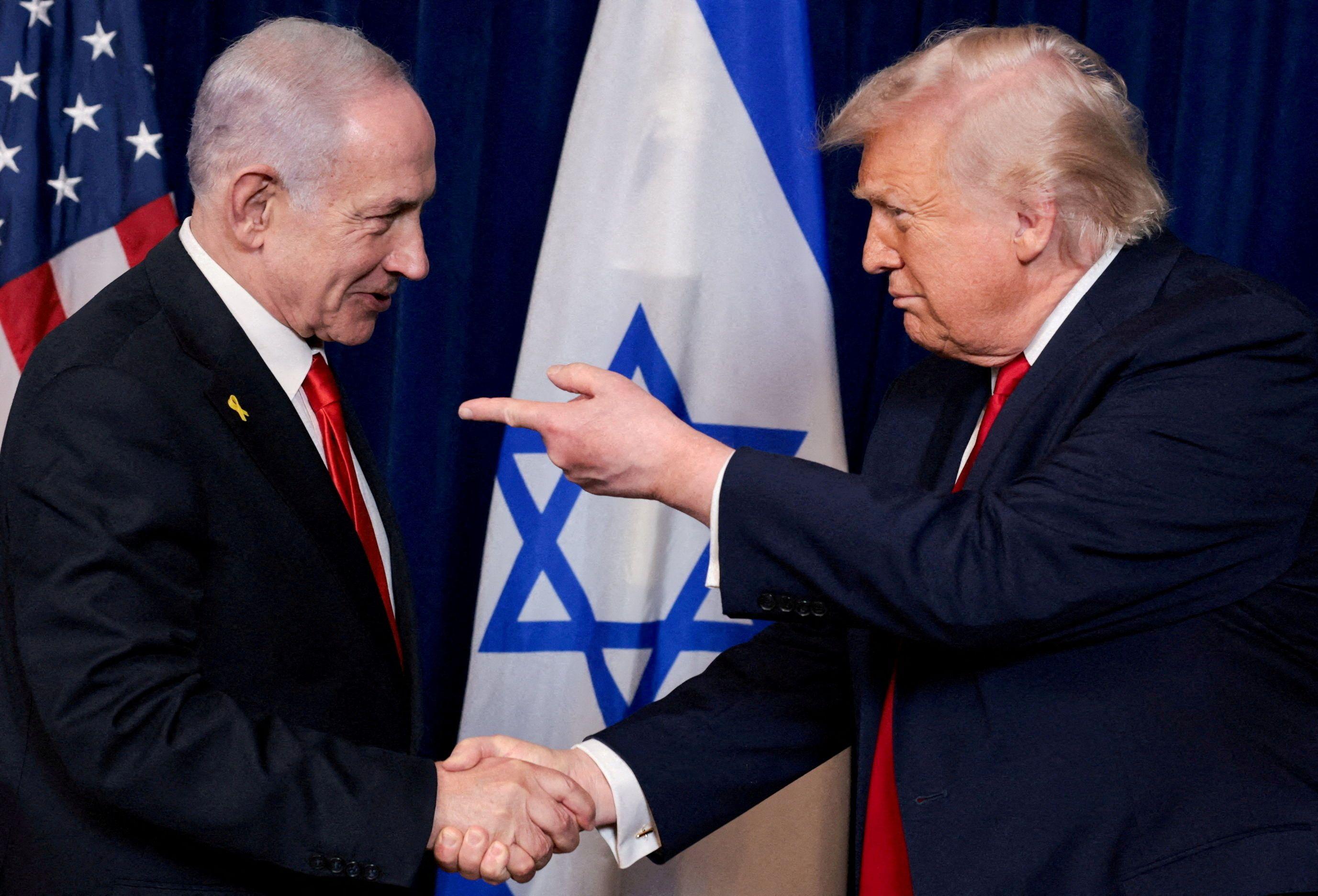
It could also spell the end of Israeli Prime Minister Benjamin Netanyahu’s long political career.
He faces elections in October, punishment by Israeli voters for his role in security oversights, the worst in Israeli history, which meant the military and intelligence services failed to recognize Hamas’ plan to attack Israel from Gaza on October 7, 2023.
Netanyahu’s hard-line military policy and rejection of diplomacy were at least partly motivated by the idea of restoring Israel’s reputation as a security master.
Tehran has always been aware of the potential power of closing the Strait of Hormuz.
Just like the US military, its diplomats and spies.
But Iran’s former Supreme Leader Ali Khamenei, a cautious older man, decided not to risk using the Strait of Hormuz as a weapon.
Having been killed by Israel, as well as his closest advisers, in the first attacks of this war, his successors felt, correctly, that they were in an existential battle and did not hesitate to imprison Moreuz.
They discovered the power of controlling the world’s economic bottleneck.
It is a much more useful and cheaper weapon than the network of allies and intermediaries Iran has spent decades and billions on in the Middle East.
Except for the Assad regime in Syria, which fell in late 2024, Iran’s so-called Axis of Resistance survives, barely.
But Israel has damaged it so much that the question of whether it can “resist” at all is completely irrelevant.
Iran has also been pouring money into a nuclear program that it continues to deny is for weapons, but has undoubtedly provided Tehran with an option and a threat.
However, he provoked a war that, despite the survival of the regime, caused enormous damage to Iran.
Closing the straits, by comparison, was easy and had swift and devastating consequences, spreading pain to the Arab oil states as much as to the rest of the world.
The power of the American and Israeli air forces has achieved a series of tactical victories.
But they were not enough to avoid a strategic defeat.
That’s because the US-Israeli regime change strategy was based on a series of superficial and flawed assumptions.
They assumed that killing the supreme leader would lead to the fall of the regime.
But for nearly half a century, the Islamic Republic’s institutions were built to withstand attempts at destruction.
It was not like Venezuela, a corrupt Latin American dictatorship that collapsed when its leader was kidnapped and brought to trial in America.
The Iranian regime is undoubtedly corrupt and extremely repressive.
His men killed thousands of protesters in Iran’s streets in January, but it is also based on ideology, religious conviction, and the concept of national security, martyrdom, and survival that stemmed from the devastating war with Saddam Hussein’s Iraq in the 1980s.
Watch the video: Trump’s harsh criticism of the Israeli prime minister
When they entered the war, President Trump claimed that the regime in Tehran would fall.
He told the Iranian people to prepare for a once-in-a-generation opportunity to reclaim their own land.
Not long after, he called for her unconditional surrender.
Netanyahu, who has repeatedly tried unsuccessfully to convince Trump’s predecessors in the White House to go to war with Iran, used biblical vocabulary to sum up the magnitude of what he believed was about to happen: “This coalition of forces allows us to do what we have longed to do for 40 years: crush a terrorist regime from head to toe.”
Neither of them fulfilled their promise.
The Memorandum of Understanding is not a final agreement.
It is an agreement to negotiate the biggest problem between them – Iran’s nuclear program.
But it is packed with key incentives for Iran.
If the talks progress, America has promised to lift the sanctions.
Everything depends on the success of the 60 days of negotiations on the nuclear deal – this can be extended, and probably will be, because the issues are complex.
Neither side trusts the other.
A lot can go wrong.
Representatives of the hard current in Washington, Tehran and Israel do not want the deal to work.
Iran could overplay, taking maximalist positions in the upcoming negotiations and potentially jeopardizing the economic gains that could save its battered economy.
But this deal is much better than a war that has killed thousands and threatened a global economic recession.
If a nuclear deal is reached, to the satisfaction of America and Iran, and if both sides keep their own promises, the Middle East could be transformed.
That is one big “if”, at the other end of long and difficult negotiations.
Follow us on Facebook, Twitter, Instagram, YouTube and Viber.
If you have a topic suggestion for us, please contact bbcnasrpskom@bbc.co.uk
Download the application and follow the news


FOLLOW US ON

News