Loading Text-to-Speech…
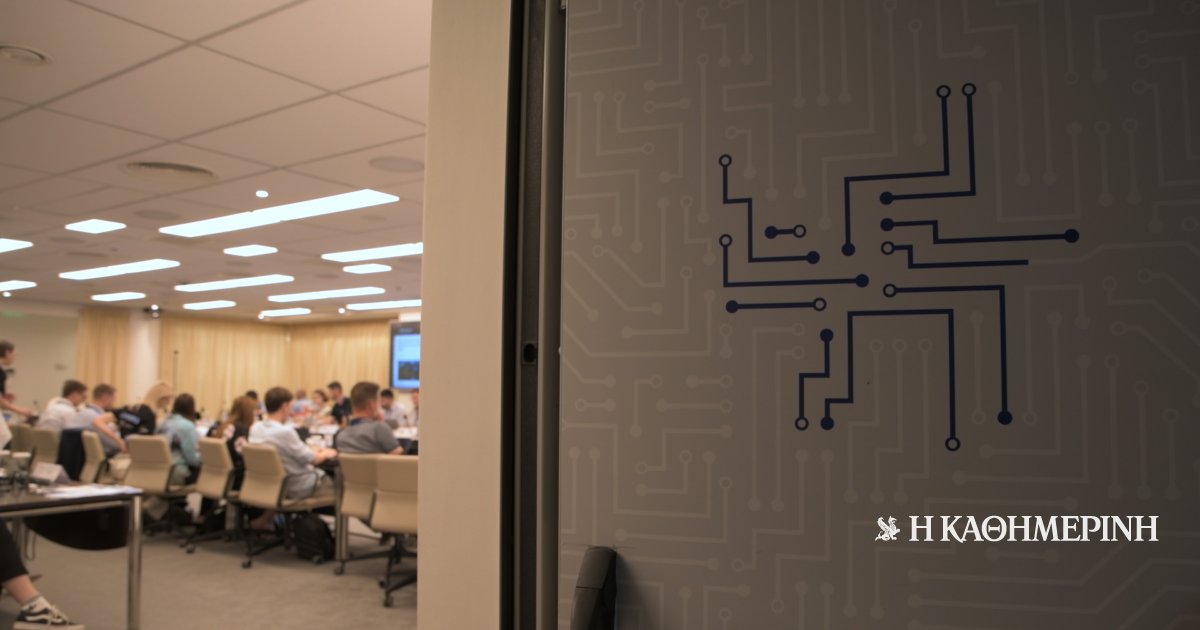
IT CAN a cyber attack to paralyze an entire port? To distort one’s position ship on the charts or cut off its communication with the port authorities and the company that manages it? “K” was at the “Acropolis” headquarters, where the annual European exercise was held cyber security Cyber Europe 2026 by the European Agency for Cybersecurity (ENISA). There more than 5,000 experts from across Europe took part in a two-day cybercrisis simulation scenario, which this year focused on transport, and in particular on ports, ships and rail infrastructure.
The more the specific sector is digitized, the more vulnerable it becomes to such phenomena.
The experts explained to “K” the ways in which modern cyber-attacks can affect critical maritime systems, but also why the increasing digitization of ships makes them more vulnerable to them. “Increasingly we see modern ships that use the Internet, satellite communications, etc. So, fatally, the more the specific sector is digitized, the more vulnerable it becomes to these types of phenomena”, stressed the Evangelos Ouzounishead of ENISA’s Capacity Development Unit, adding that it is very important to be able to manage such a crisis in order to prevent its spread. “Shipping is a special ecosystem. The ship docks here, then goes to another country, so the crisis can be transferred,” the expert explained.
RISKS EXIST
One of the scenarios of this year’s exercise recorded by “K” envisaged coordinated cyber attacks on ports, with the aim of creating a wider crisis. In this context, attacks were made against the VTS (Vessel Traffic Service), which is essentially the “control tower” of the sea. As explained by Alexander ZaharisENISA cyber security specialist, is a system used to manage ships during their entry and exit from a port. An attack on this system aims to disrupt the connection and communication between the control center and the ships.

“Generally we are creating scenarios which could lead to a major crisis. No one should be able to enter or leave a very large port, especially during peak periods, such as the summer for Piraeus,” said Mr. Zaharis, referring to existing risks. “Most of the scenarios we simulate have been done to a large extent in different environments, either in reality by attackers or in a research environment,” he noted.
For Greek shipping, there are currently several scenarios taking place in a specific region of the Middle East.
Asked about Greek shipping, Mr. Zaharis said that “there are currently several scenarios that are taking place in a specific region of the Middle East. It is exactly the scenarios that we simulated here, which mainly have to do with spoofing the location of ships, changing the name, creating ghost fleets, i.e. ships that do not exist in reality, so as to create a chaotic situation and no one knows where the location of a real ship is, for example. Which is happening right now, as we speak.”

According to ENISA, in the last two years the transport sector has been among the five sectors receiving the most cyber-attacks in Europe. The purpose of every ENISA exercise, emphasized Evangelos Ouzounis, is “to learn from it, to become better, to try in a possible similar event in the future to respond in the best possible way”.
Video: Philip Ferentinos
Reporting: Sofia Christou
Editor-in-Chief: Ioanna Bratsiakou
*Some footage of the video is part of a simulation created exclusively for the needs of the Cyber Europe 2026 exercise and does not depict actual incidents.