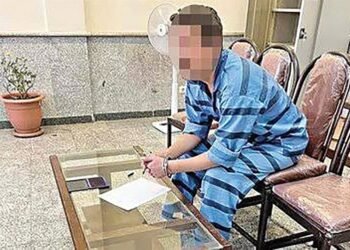
With successive revisions to the numbers of the documents at issue and with the defense arguing that some of the documents classified as secret appear at the same time blacked out, visible in the witness material or even published on the internet, the proceedings in the case of the allegedly government documents, located in the residence, continued before the Criminal Court on Friday prison guard in April 2025.
The Court had set today’s procedure in order to examine the documents which the accusing Authority still does not hand over to the defense, in order to decide whether they fall within the exceptions provided by the legislation.
At the heart of the process was the significant change in the number of documents that the prosecuting Authority considers cannot be handed over to the defense. While initially there was talk of thousands of documents falling under matters of public interest and national security, their number has gradually decreased and today stands at 392.
In particular, as said by the defense, from the initial reports of the Police for about 300,000 state, secret and confidential documents, the number was limited to the 48,432 reports of the indictment, while subsequently the accusing Authority argued that about 2,900 documents could not be given to the defense.
This number was later reduced to 1,784, then to 440 and in today’s process it was further reduced to 392 documents.
Invocation of public interest and national security by KA
The representative of the accusing Authority, Anna Matthaiou, argued that part of the documents concern medical reports, disciplinary cases and personal data.
“Name and medical history fall within the privacy of third parties protected by the Constitution,” it said, adding that where possible names and ID numbers were removed and documents were handed over to the defense without, in its view, affecting the rights of the accused.
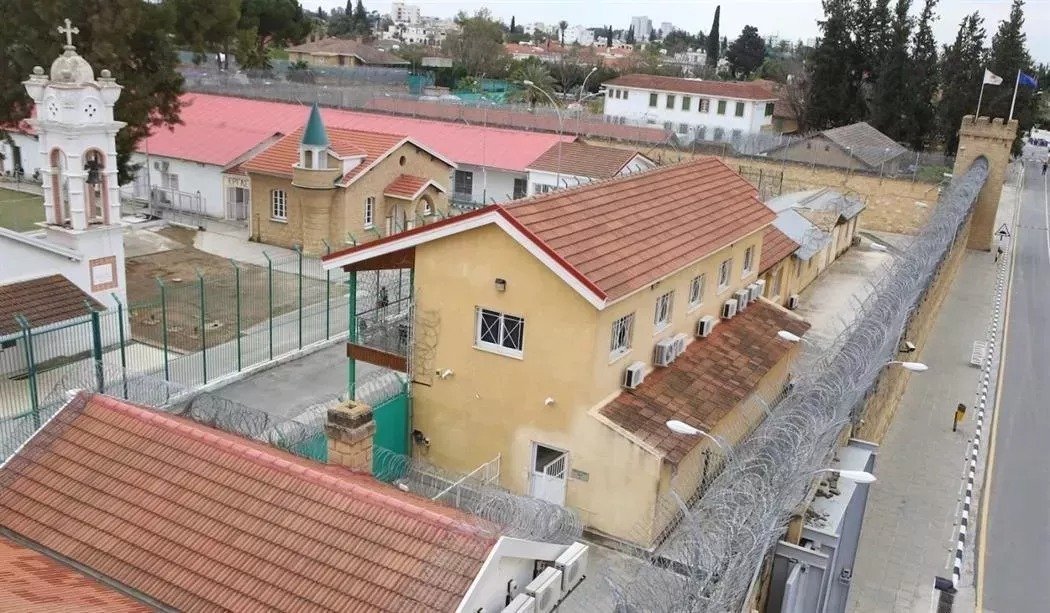
Referring to the maps and other documents concerning the Prisons, she argued that their release “affects the security of of prisons».
Regarding the 392 documents, which are still not fully handed over to the defense, Mrs. Matthaiou stated that “it is our position that these fall under the category of protecting the public interest and some of them in national security”.
According to her order, the documents include correspondence about evacuation plans, information about the witness protection program, conditions of detention of protected persons, documents about security systems of the Prisons, correspondence between the Police and Central Prisons, as well as reports and complaints which she argued were in the public interest.
“All that was found were the recipes for the croissants,” Triantafyllidis said
In response, the lawyer of the first defendant, Chris Triantafyllidis, made extensive reference to the course of the case and the gradual reduction in the number of documents.
“The only thing that was revealed are the recipes for the croissants,” he said, referring to the initial search of the prison guard’s home.
He then emphasized that “the accusing Authority said there were 2,900 classified, then it became 1,784 and then we were left with 440 out of 300 thousand”, to note that “this is the historical course of the documents in this case”.
Mr. Triantafyllidis argued that none of the documents fall under the exceptions cited by the accusing Authority and wondered on what legal basis its argument is based.
“The accusing Authority says they are covered by the exceptions. On which Normative Administrative Act does it base its argumentation?”, he said, arguing that in the previous proceedings reference was made to regulations of 2025, while the indictment refers to a different legislative framework.
Referring to the disputed documents, he argued that “the Auditor General’s reports are published”, while he wondered “how can they be covered by an exception?”.
Dimitriou: “I see an exaggeration and impressions are left”
The 2nd accused Athina Dimitriou, who is representing herself, focused on the constant variations of the numbers and the management of the documents by the accusing Authority.
“I see an exaggeration and impressions are left. This impression and exaggeration does not justify in the mind of a reasonable person how we start at 300 thousand and today we end up with 392 documents,” he said.
He further claimed that documents classified as matters of national security were eventually found to be available or published.
“I saw the documents classified as national security one by one. Most of them are online,” he said.
During her purchase she delivered to Court bundle of documents, for which he argued that the very same documents appear in some cases blacked out and in others fully visible in the evidence.
It also referred to letters, reports, parliamentary questions, evacuation plans and documents related to the witness protection program. As he argued, the documents in question are either already published, or have been given in another form without redactions.
Finally, Ms. Dimitriou stated that she considers that the burden of proving the necessity of hiding the documents is essentially transferred to the defense, instead of remaining on the Prosecuting Authority, arguing that this affects her right to a fair trial and violates her human rights.
“Other data is being protected, not my client’s,” said X. Konstantinou
The lawyer for the 3rd defendant, Chloe Constantinou, argued that many of the documents considered classified do not bear signatures, dates or security designations.
At the same time, she spoke of “selective protection of personal data”, noting that the witness material includes personal details of her client and his family without deletions, while the accusing Authority invokes the protection of personal data for other persons.
Attorneys for the remaining defendants agreed and supported the positions expressed by the remaining defense attorneys.
The Criminal Court, after hearing the positions of all sides, reserved its decision on the matter, which is expected to be announced on July 28, 2026, at 09:00.
KYPE