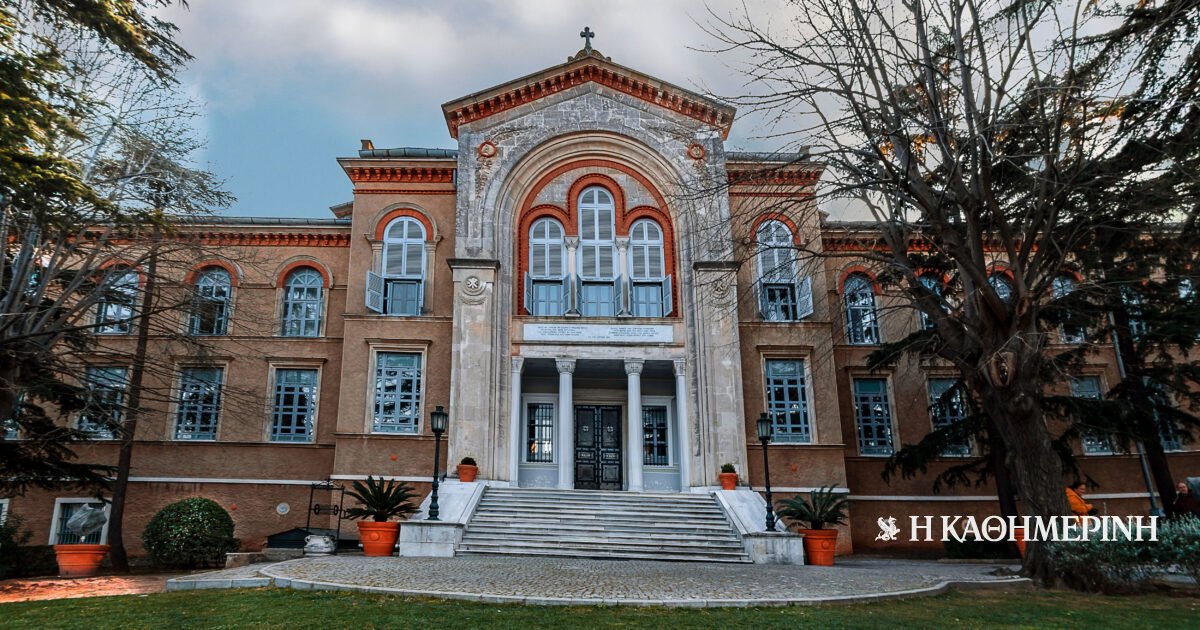
OR Turkey plans to reopen the Theological School of Halkiwhich has remained closed for decades, turning it into a university.
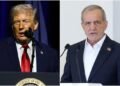
According to persons familiar with the relevant processes, cited by the Bloomberg agency, the move is partly intended to satisfy a request of the president of the USA Donald Trumpahead of his visit to Ankara for the NATO summit in July.
Tayyip Erdogan discussed the prospect of reopening the school with Patriarch Bartholomew during their meeting in Ankara this week, according to the same sources, and Turkish newspaper Hurriyet reported that during the meeting, Erdogan agreed to reopen the theological school.

Donald Trump had asked Erdogan to restore the school’s operation during their meeting at the White House last September, according to the US ambassador to Turkey, Tom Barak. Both Barack and Patriarch Bartholomew have previously hinted that the School could reopen by next September, but the sources point out that the necessary preparations are unlikely to be completed by then.
The importance of movement
This development will revive an institution of central importance to Orthodox Christianity and responds to a standing request of the USA and the EU
As the Bloomberg agency comments, if the plan is officially confirmed, it will constitute milestone in improving relations between Turkey and the US before Trump’s visit.
A decade-long US court battle weighing on Turkey’s central bank ended on Wednesday, ending a long-standing cause of “friction” between the two allies. Relations have warmed as Trump and Erdogan appear to have developed a closer personal relationship in recent months.
Turkey has long been wary of the Ecumenical Patriarchate, the administrative and spiritual center of the Orthodox Church based on the Horn of Constantinople. The leadership of the Patriarchate has repeatedly called for greater freedoms while criticizing the strict state control of religious affairs in Turkey.
The lock and perspective
Generations of leaders of the Greek Orthodox Church were educated at the Theological School of Chalki, including the current Ecumenical Patriarch Bartholomew. The school closed in 1971 when Turkey placed religious education under state control. Ankara has long defended this policy, pointing out that Muslim clerics in Turkey are also trained and paid by the state.

According to the plan, the new university will includes a theological school, which will allow for the first time in more than 50 years the training of Orthodox clergy. The same sources said the students would be admitted through Turkey’s national system and that the education ministry would oversee the study programs. The ministry declined to comment.
The reopening of the School would be an important symbolic victory for the Ecumenical Patriarchate, whose roots go back to the Byzantine Empire. In its most recent report on Turkey, the European Commission described the “lockdown” in Halki as a perennial issue of religious freedom.
Although the School’s higher education program was suspended in 1971, the institution continued to operate until 1985, when the last five students graduated. The Ecumenical Patriarchate has repeatedly argued that the School’s closure undermined its ability to train future generations of Orthodox leaders.
Source: Bloomberg