After, before the second round of the presidential elections, the PNL lined up behind the candidacy of Nicușor Dan, and he told the liberals that they would have a partner in him, the relations between the president and the prime minister Ilie Bolojan gradually deteriorated, the tensions between the two culminating in the appointment of Adrian Veștea for the position of prime minister. In this context, “Adevărul” talked with political analyst Ion Bogdan Lefter about the causes of this break and its implications for the current political crisis.
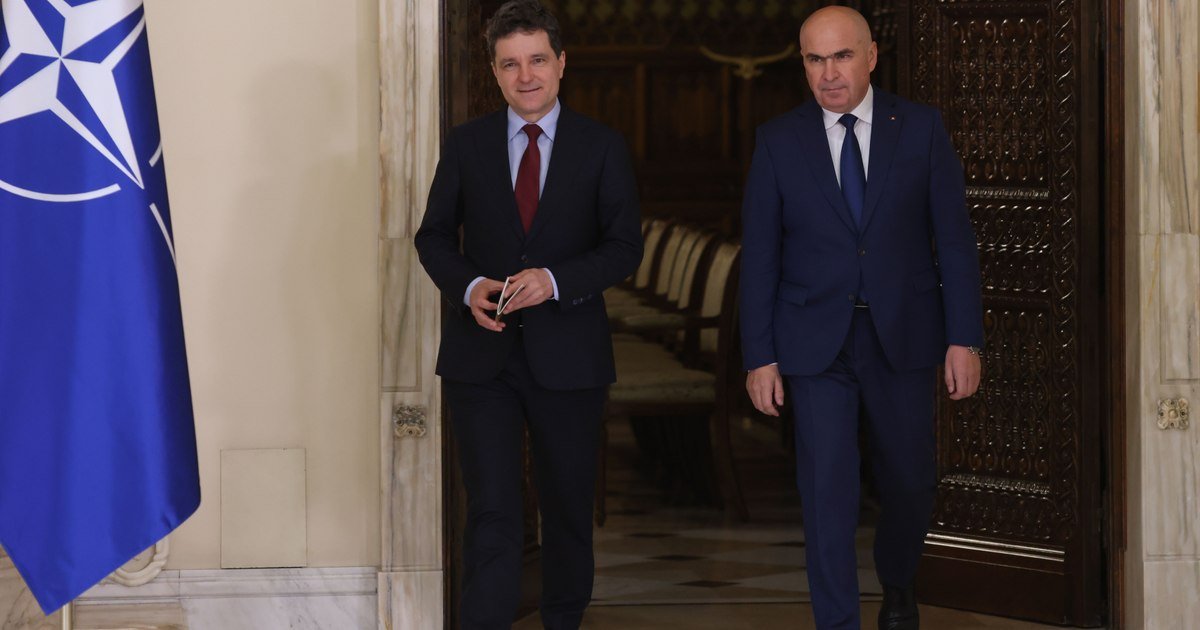
Nicușor Dan, with Ilie Bolojan, at the Cotroceni Palace. PHOTO: Inquam Photos
The first episode of tension between Nicușor Dan and Ilie Bolojan appeared even before the appointment of the prime minister. According to the information that appeared at that time in the public space, the president would have tried to condition the appointment of Ilie Bolojan on the assumption of a commitment to maintain the standard VAT rate at the existing level. During the election campaign, in a debate organized by Antena 3, Nicușor Dan had signed a commitment by which he promised that, once he arrived at the Cotroceni Palace, he would not support the VAT increase.
Bolojan agreed, according to the discussions during that period, that overcoming the budget crisis will be attempted without changing the VAT, through negotiations with the European Commission and the rating agencies, as well as through a consistent package of measures to reduce public expenses. A reassessment of the fiscal situation was only planned for the fall of the same year.
In practice, however, things evolved differently. In July 2025, the Bolojan Government quickly increased the standard VAT rate to 21%. The Prime Minister later justified the decision by the pressure of the excessive deficit, arguing that the evolution of public finances left no time for alternatives and that the increase represented “the only solution to achieve quick revenues” and to avoid the imminent risk of Romania’s relegation.
“Regarding the VAT controversy, I think the subject was amplified for political reasons. There was, on the one hand, the promise made by Nicușor Dan in the electoral campaign, in a context of public pressure. Then, after the elections, the new government was faced with the obligation to very quickly present credible measures to reduce the budget deficit, within the European negotiations. The government had very little time to demonstrate that it could control the deficit. Structural measures, such as the reform of the apparatus budget or the reorganization of the administration, could not produce quantifiable effects in a few days. Instead, fiscal adjustments and certain expenditure reductions could be presented as measures with a concrete budgetary impact. For this reason, measures such as the VAT increase and some expenditure reductions were contested by the unions, by the nationalist opposition and even by certain political groups within the coalition. They were justified by the need to convey to the European partners that capable of meeting its fiscal commitments”, explained Ion Bogdan Lefter.
Dispute for Bucharest
A second important moment of tension between Nicușor Dan and Ilie Bolojan was related to the election for the position of general mayor of the Capital. The president would have liked a candidate approved by him to lead Bucharest City Hall, in the person of Cătălin Drula. In this context, Nicușor Dan would have proposed to Ilie Bolojan that PNL offer support to the candidate supported by USR.
In parallel, however, taking advantage of the PSD’s firm position, which expressly requested that the parties in the coalition not form a common front against Daniel Băluță, the National Liberal Party decided to go on its own and nominated Ciprian Ciucu as a candidate. Mayor of Sector 6 at that time, Ciucu was not approved by the president, who did not consider him sufficiently intransigent towards the interests of real estate developers.
In the end, Ciucu prevailed, after Cătălin Drula’s position was weakened by the entry into the electoral race of some former allies of the head of state, namely Ana Ciceală, Vlad Gheorghe and Dan Trifu. Ludovic Orban, adviser to President Nicușor Dan at that time, also contributed to Ciucu’s victory, who adopted public positions in his favor, despite the direction assumed at the level of the Cotroceni Palace. In this context, President Nicușor Dan felt betrayed, both by Ludovic Orban, the one he dismissed from office, but also by Ilie Bolojan.
Ion Bogdan Lefter minimizes the impact of this event, which he considers rather natural in the logic of institutional relations between political actors, without indicating a significant break between the president and the prime minister.
“In the case of the Capital City Hall elections, it was natural for the PNL to want its own candidate, especially at a time when the party is trying to rebuild itself politically. At the same time, it was natural for the president to support Cătălin Drula, one of his close collaborators and one of his old political partners from the USR period. If someone wants to interpret these episodes as evidence of a major conflict, they are free to do so. I do not share this analysis. I think rather that we are talking about normal institutional relations between two political actors who occupy different positions and have different responsibilities. Moreover, both Ilie Bolojan and Nicușor Dan have repeatedly stated that the relations between them are correct from an institutional point of view. This is, in fact, the important thing in a democratic state. We do not need personal relations between political leaders, but institutional collaboration and respect for each function.” says Ion Bogdan Lefter.
“No Dan is unhappy about not being able to lean on parties”
In the opinion of the political analyst, the dissatisfaction of President Nicușor Dan is primarily due to the fact that he cannot rely on PNL and USR, parties considered presidential, to build a stable governing formula.
“It is quite obvious at this time that President Nicușor Dan is dissatisfied with the fact that he cannot support the parties that are closest to him politically, namely the PNL and the USR. After the no-confidence motion initiated by the PSD and adopted including the votes of the AUR, it would be very difficult for the PNL and the USR to return to a coalition with the PSD. However, in the current parliamentary configuration, without the reunion of the former coalition there is no stable majority, except of formulas that would involve collaborations between PSD, AUR and other parties in the same political area. In reality, the president does not have an obvious solution, but the PSD, although it triggered the current crisis, does not want to take over the government, even if, in theory, it could obtain parliamentary support for this coalitions, so the current situation is all the more paradoxical”, explained Ion Bogdan Lefter.