The tragedy of the German car companies China never ends. By the end of May, sales of VW, Mercedes and BMW had fallen by almost a quarter compared to the same period last year. This emerges from data from two Chinese automotive consultancies that are available to the FAZ.
“They have been hit hard by rising gasoline prices,” said Zhang Yu, head of Automotive Foresight. As a result of the Iran war and the high price of oil, gasoline prices have also risen sharply in China, and as a result, many more buyers have opted for electric and hybrid cars instead of combustion cars. These continue to make up a large part of German companies’ sales in the People’s Republic.
“I don’t see this as just cyclical weakness or a short-term price war,” said former Chrysler executive Bill Russo, founder of Shanghai consultancy Automobility. In the premium segment in China it is no longer so much about “mechanical excellence” but more about the digital user experience. And that’s where Xiaomi, Xpeng, Nio and Zeekr set the standards.
BMW still gets off lightly
Specifically, Russo estimates a decline of 24.9 percent for German car manufacturers by the end of May compared to the same period last year. Zhang sees a decline of 24.3 percent. He specifically evaluated the current sales data of German companies for the FAZ. This is where it comes BMWwhich this week lowered its margin expectations for the current year from four to six to one to three percent, is the worst of them. Automotive Foresight estimates a loss of around 12 percent for BMW. Instead of 246,000, the Munich-based company only sold 216,000 cars by the end of May. The first point BMW cited in its statement was the “negative development” in China.
VW and Mercedes are hit dramatically. According to Zhang, both recorded a decline of almost 27 percent. VW fell from just under a million cars in the first five months of 2025 to just 720,000 this year, while Mercedes fell from 223,000 to 163,000 cars.
The figures refer to sales to car dealers, not to actual sales figures to private customers and companies. Cars imported into China are also not included. However, these make up a smaller part of sales in China anyway. By the end of April, the Chinese automobile association CPCA recorded an even greater decline of around 30 percent in car imports for BMW and Mercedes.
Dependence on combustion cars
The major weakness of German car companies in China remains their dependence on combustion cars. While the Chinese car market is already weak this year, demand for pure combustion cars has literally collapsed as a result of high oil prices. In May the decline was more than 40 percent compared to the same period last year. There wasn’t a single pure combustion car left among the ten most popular models in the People’s Republic.
Overall, the largest car market shrank by a fifth in the first five months. According to Russo, demand for hybrid and pure electric cars fell by 17 percent, and pure combustion cars even lost almost a quarter. For the year as a whole, the CPCA automobile association expects a decline of more than a tenth, while William Li, CEO of the Chinese electric car start-up Nio, is expecting a decline of up to 20 percent.
But exports are booming. In the first five months of last year, China’s car companies delivered around 2.5 million cars around the world; this year there were already more than four million vehicles in the same period. Exports therefore account for more than a third of the total demand for Chinese cars.
Contrary to political efforts in Brussels and Berlin to reduce dependence on the People’s Republic, Zhang and Russo recommend that German companies intensify their efforts in China and enter into new partnerships with local companies. Zhang refers, for example, to the strategies of Japanese corporations. Toyota makes heavy use of its local partners’ platforms and has brought two popular electric cars onto the market. The situation is similar at Nissan. “Honda has nothing against that.” At 14 percent, the decline in sales by Japanese manufacturers is significantly lower than that of German manufacturers. The strategies of Japanese manufacturers also contradict the political situation: Japan and China have been in a deadlocked diplomatic conflict for months.
“I haven’t seen the same determination from Mercedes yet”
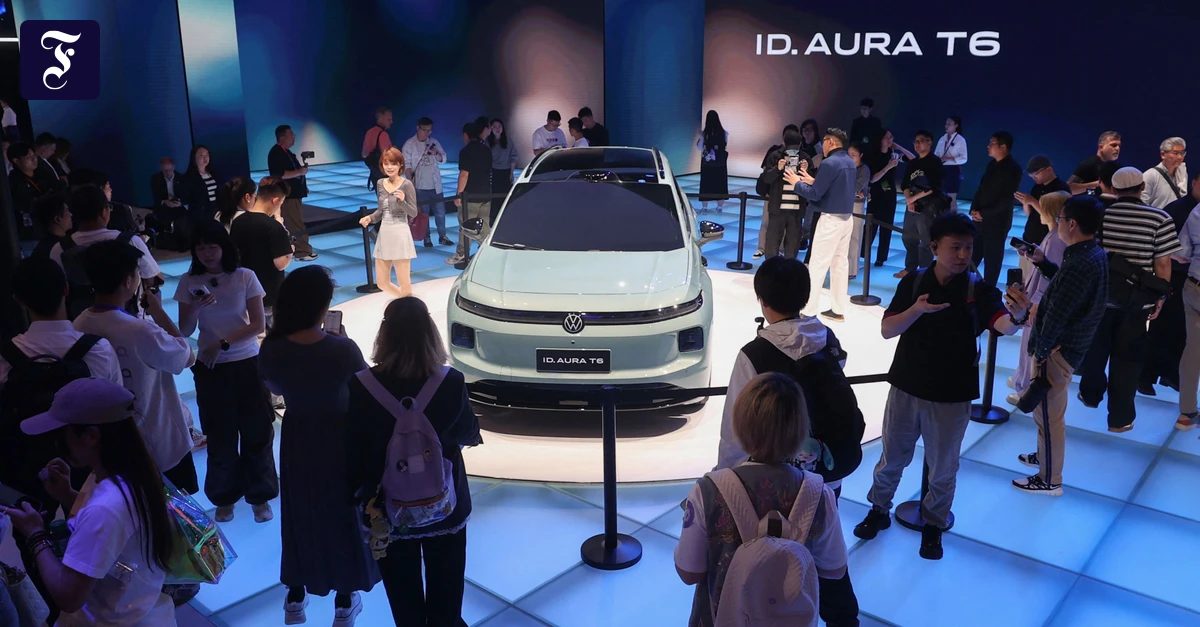
Above all, German companies need great determination to catch up in China and must be prepared to learn from their Chinese partners, says Zhang. VW is most determined with the large location in Hefei, which the partially state-owned German company has expanded into a kind of second Wolfsburg. With the ID.Era 9X there is a first hope. The model, which comes from the joint venture with the Shanghai state-owned company Saic, has recently even left behind successful Chinese brands such as the Huawei cooperation Aito in its segment.
Zhang says he is less worried about BMW given the new models in the new class. His verdict is most critical for the brand with the star: “I haven’t seen the same determination from Mercedes yet.”