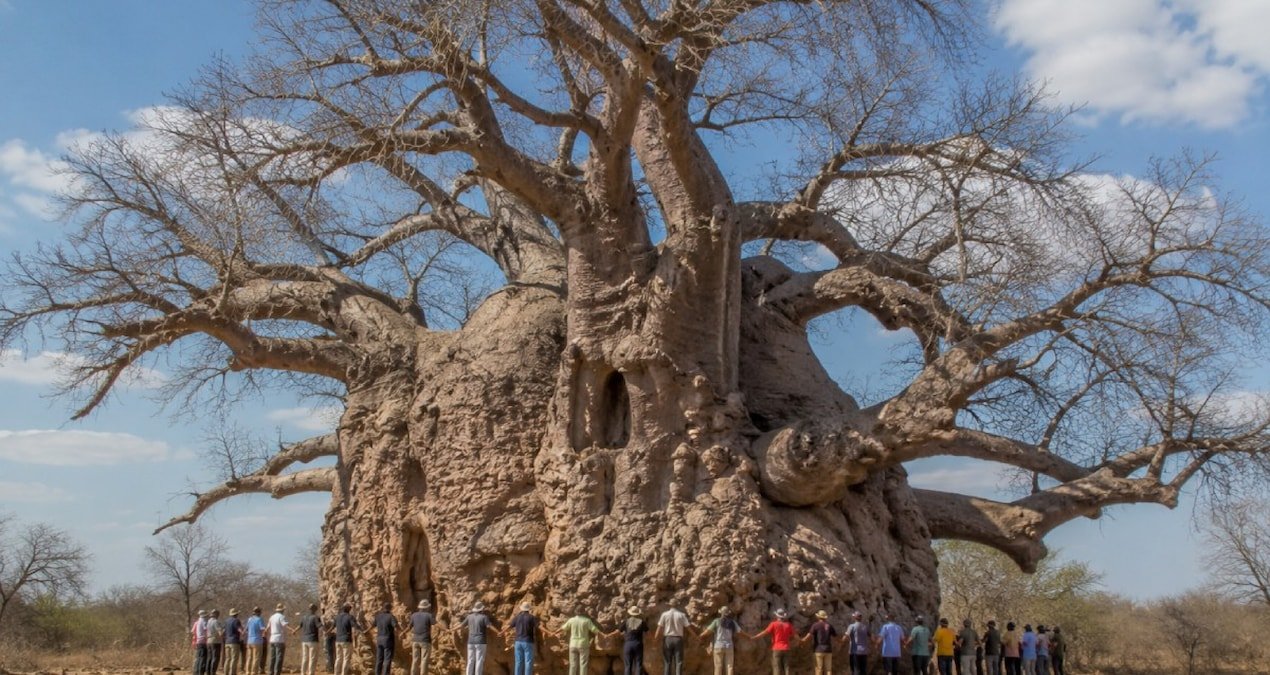
The tree, which has attracted the attention of researchers and nature enthusiasts for years, draws attention with its trunk circumference exceeding approximately 33 meters. According to experts, approximately 18 to 20 people need to come together to surround the tree by holding hands.
Baobab trees, seen as one of the symbols of the African continent, are known for their life span of over a thousand years and their huge trunks. While the Sagole Baobab stands out with these features, it maintains its title as South Africa’s largest native tree.
IT DRAWS ATTENTION WITH ITS GIANT BODY
Located in the Sagole region of northern Limpopo province, the tree reaches a height of approximately 20 meters. However, what makes it extraordinary is the width of its body rather than its height. While the diameter of the tree exceeds 10 meters, its wide crown structure spreads over tens of meters.
Experts state that baobabs can store large amounts of water in their trunks and thus survive dry periods. These trees, which live in the hot and arid regions of Africa, also create an important habitat for the surrounding ecosystem.

While the trunk of the Sagole Baobab contains natural habitats for birds and various creatures, the tree has been among the frequent destinations of visitors to the region for years.
WHILE OTHER GIANT BAOBABS FALLED, IT STANDED STANDING
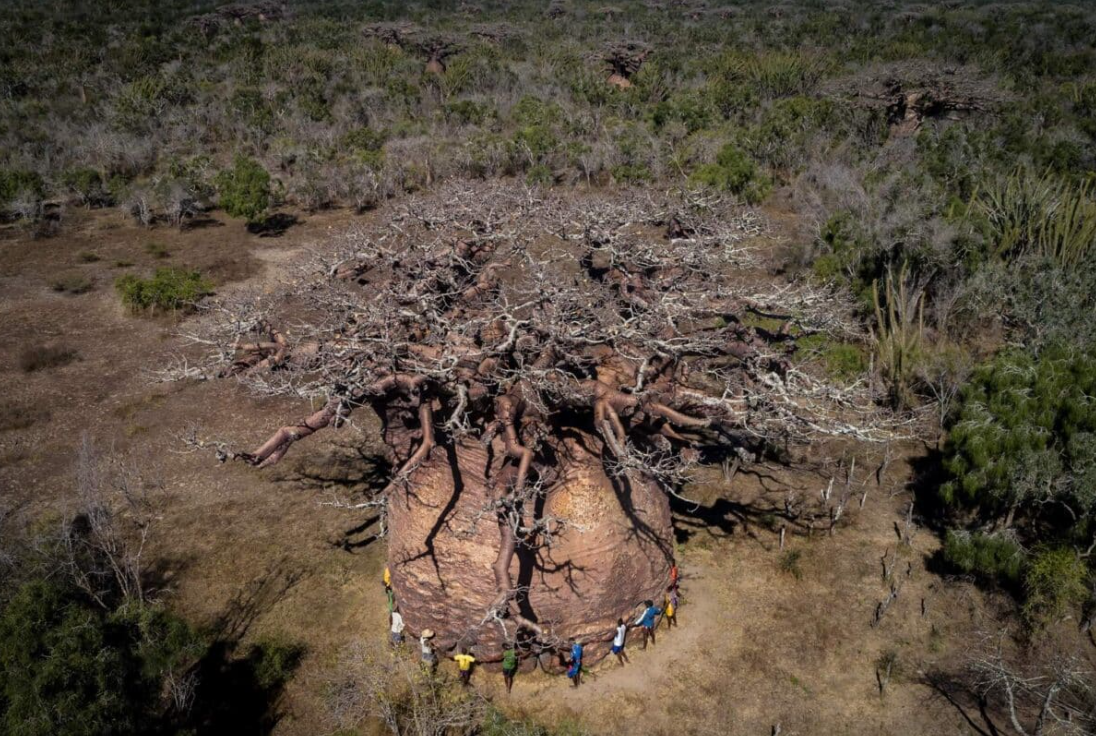
It is known that some famous baobab trees in Africa have been damaged in recent years due to aging and environmental effects. Significant sections of giant trees such as the Glencoe Baobab and the Sunland Baobab in South Africa have collapsed in recent years.
Following these developments, the Sagole Baobab began to stand out as the largest and strongest baobab tree in the country. Experts state that the tree has a special position not only because of its size, but also because it has largely preserved its natural structure.
Nature researchers state that the tree, which is thought to have survived for hundreds or even more than a thousand years, continues to be one of the most impressive natural heritage of the African continent.
All copyrights of the articles, news and photographs published on the website www.sozcu.com.tr belong to Mega Ajans and Rek. Tic. It belongs to A.Ş. It cannot be quoted without permission, even by citing the source.