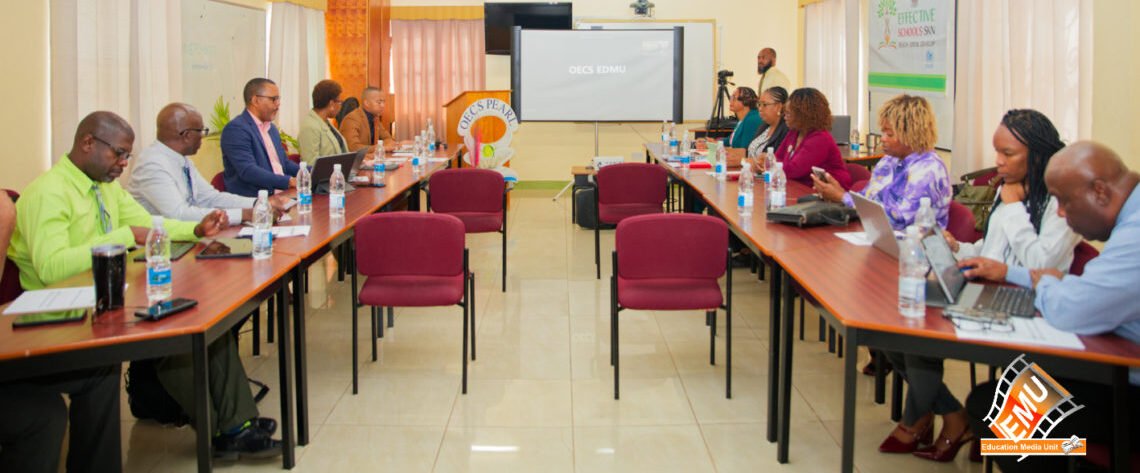

With the official project phase of the OECS Programme for Educational Advancement and Relevant Learning (OECS PEARL) set to conclude on June 30, 2026, the OECS Commission indicated that it is turning its attention to ensuring that the programme’s achievements continue to shape education systems across the Eastern Caribbean for years to come.
A press release from the organization shared that to support that transition, the Commission has launched a new Communication for Development (C4D) campaign called “The OECS PEARL Legacy.” The initiative marks a move beyond traditional project implementation and into a new phase focused on citizen ownership and community-driven action.
According to the OECS Commission, over the course of its implementation, the OECS PEARL programme delivered significant changes throughout participating Member States. These included investments in educational infrastructure, curriculum modernization, reforms to Special Education Needs (SEN) and Early Childhood Education (ECE) frameworks, and the establishment of digital learning systems designed to support teaching and learning across the region.

The new campaign is intended to build on those accomplishments by transferring responsibility from regional project managers and administrators to the people and institutions that will carry the work forward. The initiative involves the eight Member States that participated in the programme and seeks to mobilize education stakeholders to drive continued progress at the national and community levels.
As per the release, the campaign targets a wide cross-section of the education sector, including policymakers, education administrators, technical officers, school principals, teachers, parents, and caregivers. Beyond maintaining the gains achieved under PEARL, the OECS Commission says the effort is aimed at encouraging what it describes as educational regeneration—allowing education systems to continue evolving through local leadership, innovation, and participation.
Central to the campaign are six priority areas designed to strengthen the long-term impact of the programme.
The first focuses on helping education leaders translate regional education frameworks into effective national policies and practical actions. The second seeks to protect teachers and other education professionals from burnout by promoting the removal of non-essential responsibilities and activities.
Another key objective is strengthening the role of the OECS Learning Hub, which houses the OECS Harmonized Primary Curriculum. The campaign aims to position the platform as a culturally relevant educational resource tailored specifically to the needs of OECS students and classrooms, offering an alternative to more generic artificial intelligence tools and learning resources.
The initiative also advocates for sustained financial investment in Early Childhood Education, Special Education Needs programmes, and curriculum and assessment systems to help ensure all students have access to opportunities for success.
Additionally, the OECS says the campaign seeks to change perceptions surrounding national and regional diagnostic assessments. Rather than viewing them as high-pressure evaluations, stakeholders are being encouraged to see them as educational health checks that support student development and system improvement.
The sixth intervention centres on the future of the MyPD teacher professional development platform. The campaign aims to demonstrate how ongoing teacher training contributes directly to broader social and educational progress across the region.
To reach its audiences, the OECS Commission says it has developed a wide range of communication tools and outreach activities. These include posters, infographics, videos, live online broadcasts, surveys, newsletters, and press releases designed to engage stakeholders and encourage participation.

The campaign will run throughout June, July, and August 2026 and will utilize both traditional and digital communication channels. Messages will be shared through face-to-face meetings, email campaigns, social media platforms, radio and television programmes, and local newspapers to ensure broad public access and engagement.
The launch also comes as the region prepares for the OECS PEARL close-out event scheduled to take place in Saint Lucia from June 24 to 26, 2026.
The OECS Commission is encouraging stakeholders to stay informed by following its social media platforms, as well as those of Ministries of Education throughout the region. Media organizations and members of the public are also being invited to participate in what the Commission describes as an important transition from project implementation to long-term community ownership of education transformation.