Deputy Prime Minister and Minister of National Security St. Clair Leacock is urging patience amidst a “very delicate” investigation, even as he said that a light aircraft that was reported as missing after leaving Argyle International Airport for Tobago on the weekend had been found.
Speaking on “New Times”, the ruling New Democratic Party’s (NDP) programme on NICE Radio, Leacock said that the aircraft had not crashed and that there had been no loss of life, based on information provided to him by regional and international security partners.
He described the situation as a “very delicate security matter”, insisting he was constrained in what he could disclose publicly.
Leacock said he was being “very guarded in what I say”, adding that he had been in contact since Sunday with the Commissioner of Police in St. Vincent and the Grenadines.
“I have been in touch with my regional agencies, who have a responsibility for doing that.”

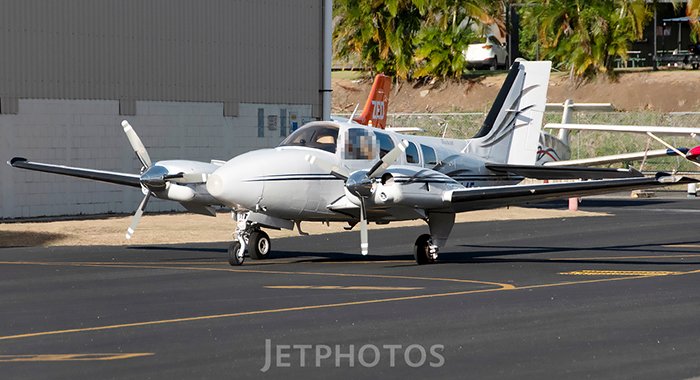
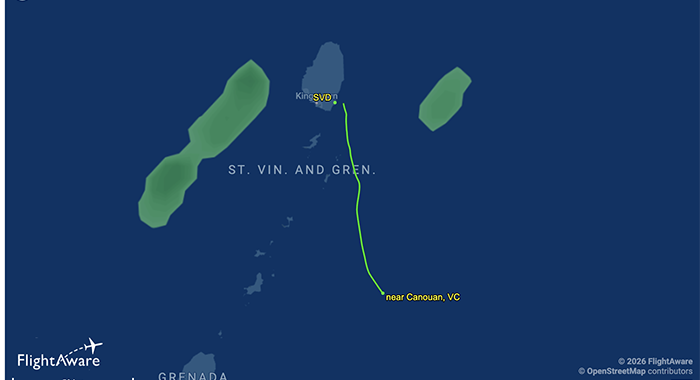
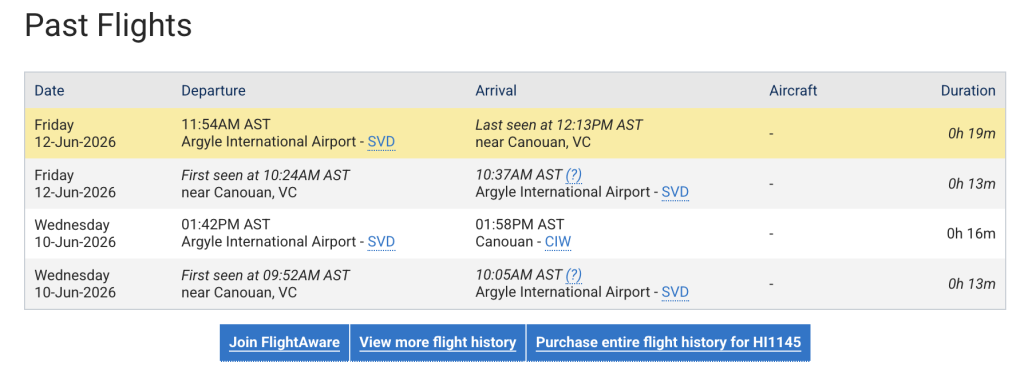
Separately on Monday, the Civil Aviation Department in the Ministry of Tourism, Civil Aviation and Sustainable Development confirmed that a Dominican Republic-registered twin-engine light aircraft, HI1145, a Beechcraft Baron, B58T, departed Argyle International Airport on Friday, June 12, at 11:52 a.m. local time.
The aircraft had a filed en route time of one hour and five minutes, bound for the A.N.R. Robinson International Airport, Tobago, with two people on board.
“The aircraft maintained normal radio contact with Argyle Air Traffic Control after departure and a transfer of communications was done at a position 40 nautical miles south of Argyle International Airport, the southern limit of St. Vincent and the Grenadines controlled airspace,” the statement said.
It is said that after the transfer, radio contact with the aircraft was lost, and it subsequently failed to arrive at its intended destination.
“This prompted an alert, followed by the initiation of a distress phase. Search and Rescue operations for the missing aircraft are currently ongoing,” the statement said.
“The Ministry takes this opportunity to offer our commitment in ensuring the safe and secure operations of flights within our airspace. Updates will be disseminated as received,” the press statement further said.
In his comments on the radio programme around midday, Leacock said that the reports he had received were “still at a delicate stage in which I cannot share the information as to the outcome.
“What I can say is that to the best of my knowledge, the aircraft has not crashed and there had not been a loss of life, and the international — and I’m speaking carefully — the international, the regional, and the national agencies are following very closely the developments of the activities of that aircraft, because aircraft don’t fly itself — there are people who flying that aircraft — so that they can take an appropriate course of action.”
Leacock said that although the public was understandably anxious for details, his office must balance transparency with operational security.
“I, out of professional duties and responsibilities, cannot at this time provide the public with more details as to what is happening in this very delicate security matter,” he said.
Second such case since 2023
The deputy prime minister confirmed that the aircraft departed St. Vincent for Tobago and “did not arrive at its port of destination”.
He also noted that this is the second incident of its kind in recent years.
On Dec. 22, 2023, a two-engine, fixed-wing, 21-seat Gulfstream aircraft, registration number N337LR, that was manufactured in 1981, departed Canouan in the Southern Grenadines at 2:27 p.m. on “a sightseeing excursion”.
The aircraft had three passengers and the pilot on board and was expected to return to Canouan at 4:27 p.m. that same day.
The pilot’s final contact with the tower occurred at 2:33 p.m, “marking the onset of an inexplicable loss of all subsequent contact”. The aircraft turned up in Africa sometime later.
Ralph Gonsalves, who was prime minister and minister of national security at the time, said information from regional and international agencies suggested that the aeroplane may have turned off its transponder.
He said that Vincentian authorities have been in touch with “two Latin American countries of relevance on the matter with certain information.
Meanwhile, Leacock said on Monday that the first concern for authorities had been the safety of those on board, followed by coordination of the search and tracking effort.
He did not give specifics on whether a full search-and-rescue deployment had been launched from St. Vincent or neighbouring states, but repeatedly stressed that multiple layers of agencies were engaged.
‘The agencies are doing their work”
Later in the programme, responding to a caller seeking an update and reassurance, Leacock reiterated that he was limited in what he could share, but emphasised that regional and international partners know the aircraft’s status and movements.
“I can tell you that no lives are lost. The international agencies know where the plane is. The regional agencies — the CARICOM IMPACS, regional security system — our own police force know where the plane is, that they know, they have names, they know the [flight] history… but they are still in an operation in which, for me to speak on the subject matter, would be to compromise the quality of work that’s taking place.”
Leacock added:
“Those who would like me to speak in more specific terms have to understand that sometimes the Minister of National Security — less said, is better.”
Social media criticism and personal safety
Leacock acknowledged criticism on social media about his handling of the situation and his public comments, saying some users had attacked him personally.
“I see people on social media call me by all kind of bad word names, and so forth, but sometimes I still got to keep a wise head,” he said.
He suggested that premature disclosures could jeopardise both operations and personal safety.
“The agencies are doing the work… I have to look at my own safety and welfare and well-being, and others as well.”
Civil aviation, tourism and national security
The missing aircraft prompted a broader question from a caller about whether civil aviation should fall under the Ministry of National Security rather than tourism, as is currently the case.
The caller argued that two unexplained departures and disappearances in a few years highlight that the matter is not just about tourism but national security.
Leacock replied that the assignment of portfolios is ultimately a decision for the prime minister, but said the issue was not as straightforward as it might appear.
“Civil aviation can have a relationship too with tourism, because [it’s] dealing with airports, dealing with aeroplanes, dealing with pilots… It can logically be placed there.
“But in the same breath, airports fall under seaports and airports… from an infrastructure point of view. But then also, wherever you have aviation and you have airport and travel matters, there’s a huge element of security… So it could also fall under national security.”
He stressed that although civil aviation is not currently in his ministerial portfolio, national security agencies are actively involved in monitoring and responding to the situation.
“It is not fixed and cast in stone… It is now not under national security, but that doesn’t mean that national security doesn’t have an interest,” he said.
Regional systems tracking movements
Without disclosing operational details on the missing plane, Leacock referenced his recent meetings in Trinidad and Barbados on regional security cooperation, including systems that track maritime and air movements across the Caribbean.
“I had the experience of seeing how, in Trinidad, we can monitor all those movements of marine and aircraft throughout the region. I had a sense and briefing of what’s happening now in the region, because now that the U.S. government is actually taking out the boats in the water, there are more strange [vessels] coming across, moving through the region. We have to monitor them… and all of those parties involved in the exercise.”
He linked this broader regional surveillance capability to the current handling of the missing aircraft, suggesting that the same network of agencies and technologies is being applied.