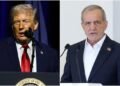
The president of the United States, Donald Trump, on Wednesday downplayed the rise in inflation, which reached its highest level in three years in May due to the increase in energy prices caused by his war in Iran, representing a key challenge for Republicans ahead of the midterm elections.
“The numbers were great… I love inflation,” Trump responded to reporters who asked if he was worried about Wednesday’s data.
Later, House Speaker Mike Johnson insisted that the president’s statements had been taken out of context.
The consumer price index (CPI) increased 4.2% year-on-year, compared to 3.8% in April, the US Bureau of Labor Statistics reported on Wednesday.
This was the highest figure since April 2023, according to official data, although it was in line with analysts’ forecasts.
This rebound is largely explained by the rise in gasoline due to the war in the Middle East, which began on February 28 with the attack by the United States and Israel against Iran.
In retaliation, Iran blocked maritime transit through the Strait of Hormuz, through which 20% of the world’s oil transits.
Inflation data for May shows energy prices rose 23.5% from the same period last year, with gasoline up 40.5%.
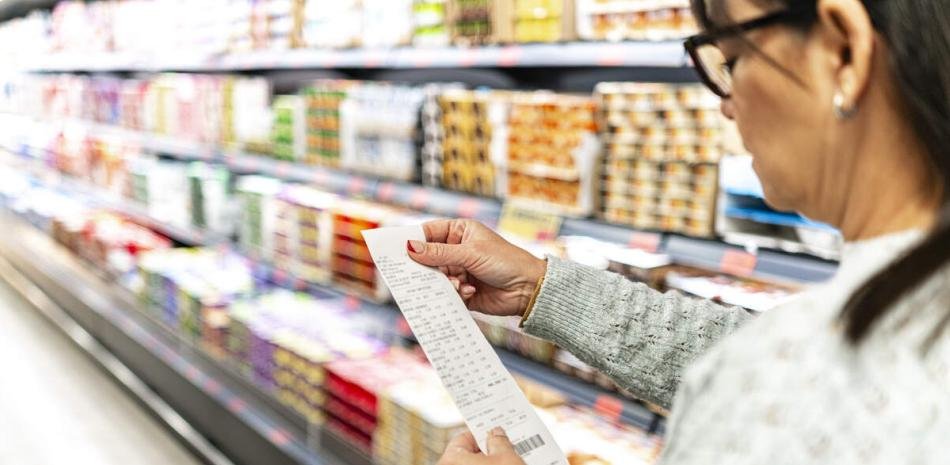
Food prices increased significantly for the second consecutive month, by 2.7%.
Trump has insisted that the impact on prices will be temporary and that a peace deal will be signed soon, but rising costs are a key issue for voters as the November midterm elections approach.
Trump’s Republican Party aims to maintain control of both houses of Congress, but will face a tough test as high prices hit American households.
If Democratic lawmakers take back one or both chambers, they will limit Trump’s ability to advance his policies in Congress as he has done throughout his second term.
“I love inflation”
“The numbers were great… I love inflation,” Trump responded to reporters who asked if he was worried about Wednesday’s data.
In the Oval Office of the White House, he insisted that “inflation is going to drop like a stone” when the war ends.
Several analysts estimated that the situation should improve in the coming months.
“We believe inflation has peaked and should slow during the second half, provided a deal is quickly found with Iran to reopen the Strait of Hormuz,” Nationwide economist Kathy Bostjancic said in a note.
Other prices that rose in the United States in May were medical care, airfares and entertainment.
Americans have been dealing with higher-than-expected prices for years, with inflation that has remained elevated long after the pandemic.
Core inflation – excluding energy and food – also increased in May to 2.9% year-on-year, compared to 2.8% in April.
At the beginning of the year, inflation in the United States remained stable, at 2.4% in both January and February.
The United States Federal Reserve (Fed) has a long-term inflation goal of 2%, and the committee in charge of setting the central bank’s main interest rate will meet next week.
Markets expect him to keep rates unchanged at this meeting, but are now pricing in rate hikes for later in the year, worrying equity investors.
Before the war, markets had priced in interest rate cuts for later in the year, with the expectation that inflation fueled by Trump’s tariff policy would begin to subside.
The Fed’s preferred inflation gauge, the Personal Consumption Expenditures (PCE) price index, also hit a three-year high in its latest reading.
“The Fed will not be in a position to cut rates if this continues,” said Chris Zaccarelli, chief investment officer at Northlight Asset Management.
“The stock market has been climbing a wall of worry and has been able to rebound thanks to stronger earnings and stable interest rates, but a rising rate environment is something else entirely,” he added.