Wreck poses a danger to shipping
It is really going to happen and the story that a whirlpool will arise when the wreck of the sunken German warship ‘Goslar’ is removed is being investigated before it is salvaged. The wreck has been lying on its side in the Suriname River since 1940. Preparations for the salvage have now started. The Maritime Authority Suriname (MAS) already held a stakeholder session with consultant Ilaco last month as part of the environmental impact study (MER process) that must legally precede the salvage operation.
Text Euritha Tjan A Way
Image presentation Ilaco
Bernice Mahabir, Nautical Management Manager of the MAS, states that removal of the ‘Goslar’ is not a new idea, but the need has increased in recent years due to changes in the location and condition of the wreck. “We monitor the ‘Goslar’ annually. We not only look at its location, but also at the condition of the wreck. It is located in the middle of the river and ships pass by on both sides. If something goes wrong with the ‘Goslar’, it could have major consequences for shipping traffic and therefore for our economy,” says Mahabir.
“If Suriname wants to have a competitive position in the region, we must ensure good maritime infrastructure“
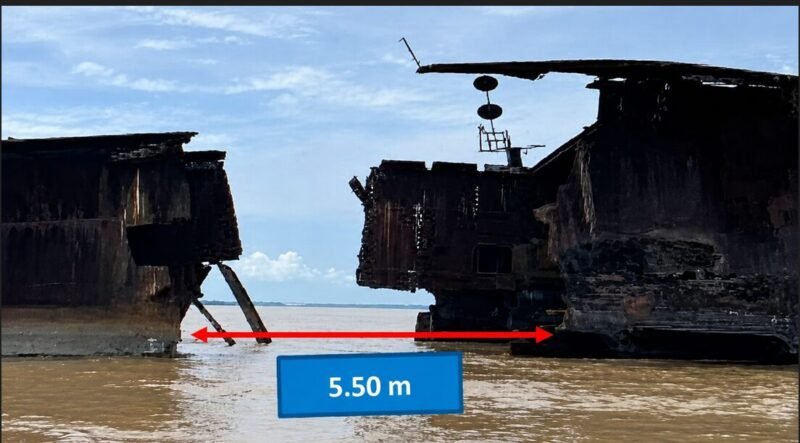
The wreck lies between two important shipping channels. On the western side, ships sail towards the bridge passage, while on the eastern side vessels maneuver towards the Nieuwe Haven. Currents create deep scour channels at both ends of the wreck. This means there is a risk that the wreck will shift further. “The wreckage is moving towards those deep parts. We cannot have that because it increases the risk of problems,” Mahabir explains.
The physical condition of the part of the ‘Goslar’ that protrudes above water is also a concern for MAS. Deterioration of the steel, especially around the waterline, causes corrosion, which can cause parts to come loose. “These are large steel plates. They can pose a hazard.”
Planning
The ‘Goslar’ was a large cargo ship with a length of approximately 135 meters and a width of 17.5 meters. The ship sank in 1940 during the Second World War and has since become a well-known part of the history of the Suriname River. The removal is part of wider plans to make the river more accessible to larger vessels with a view to further development of the port and the future oil and gas sector. MAS is also working on the preparation of phase 3 of the dredging project in the Suriname River. The first phase was completed in 2021 and phase 2, which involved deepening the river, was completed in 2022.
A maintenance contract is currently being worked out to keep the channel at a depth of 5.5 meters at low tide. In the next phase, the goal is to deepen further to 6.5 meters. “If Suriname wants to have a competitive position in the region, we must ensure good maritime infrastructure,” says Mahabir. According to her, the planned deepening makes it extra important to tackle the situation surrounding the wreck. “You don’t want to take any risks when carrying out such a large project. That is why we want to remove the ‘Goslar’ as quickly as possible, preferably before or simultaneously with the start of phase 3.” That will be possible this year or early 2027.
A few years ago there had already been a tender for the removal of the wreck. That procedure has now expired. According to Mahabir, a tender must therefore be issued again. The Ministry of Public Works is responsible for this process. “First the EIA process must be completed and then the results can be included in the tender.” MAS does not want to mention an amount yet. “We have an indication, but it is based on a few years ago. Because the tender has yet to be released, we do not want to link an amount to it at the moment.”
Environment and surroundings
The environmental impact study must clarify what consequences the removal of the ‘Goslar’ will have for the environment. This includes looking at possible hazardous substances in the wreck and the consequences for currents in the river.
A hotly debated question in society is whether removing the shipwreck will cause a large eddy or other changes in the river. Mahabir says this will be investigated with a hydraulic model. “We use this to simulate the currents and see what happens after the wreck has been removed.” Possible effects on areas where erosion is already occurring, such as parts towards Meerzorg, are also being examined.
Ferry owners involved
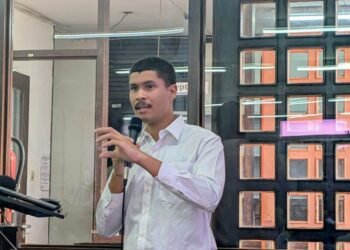
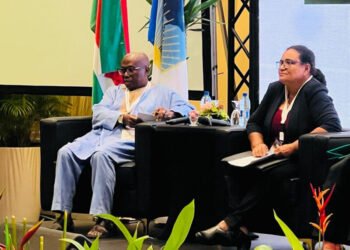
During the stakeholder session last month, several parties were present, but according to Mahabir, the ferry owners were missing. “They are an important group because they sail the route between Meerzorg and Paramaribo every day. Ilaco will therefore also talk to them.”
Mahabir agrees that the removal of the ‘Goslar’ will be an important step for the further development of the Suriname River. She refers to certain deep parts of the river, including the area where the KNSM jetty used to be, which are strategically important for future port development. “If you want to further develop the port, for example to build a cruise terminal, these are important areas to look at.”
Frame
The ‘Goslar’ was deliberately sunk by its own crew on May 10, 1940 (during the Second World War). The reason was the German invasion of the Netherlands on the same day. The Dutch authorities in Suriname wanted to capture the German crew and seize the ship. But the crew was one step ahead and initiated a pre-prepared sinking procedure – a so-called scuttling. The ship filled with water and sank.
The crew escaped without any casualties. After the ship was sunk, the people on board were brought ashore by the Surinamese authorities and imprisoned. Initially they were imprisoned in Fort Zeelandia and later moved to other locations and eventually to the Copieweg internment camp, where they stayed during the war. Chinese who were also on board were sent back to their countries.
In 1941, the first mate and the assistant engineer of the ‘Goslar’ tried to escape to French Guiana together with a German planter. They even reached the Marowijne River but were captured by local residents and brought back to the camp.