Made by the association “Les Citoyens” in the twelve regions of the Kingdom, the study is based on the responses of 2,992 people interviewed between January and April 2026. Its authors recognize that the sample is not statistically representative of the entire Moroccan electorate. On the contrary, it is mainly composed of urban citizensqualified and relatively engaged in public affairs. This is precisely what makes the results particularly worrying: the crisis of confidence first affects the categories usually considered as the most likely to participate in democratic life.
First paradox: while 66.6% of those questioned consider voting to be an important or very important civic duty, only 13.6% consider the results of the last elections credible. Conversely, 56.3% give the lowest marks to the credibility of the electoral results. This distrust goes far beyond the ballot alone. Public institutions are trusted by only 8.3% of respondents, while 66.1% give them a negative evaluation. As for the place given to young people in political life, it constitutes the most alarming indicator of the entire study: 86.7% believe that it is weak or very weak, compared to only 2.2% who consider it satisfactory. “The elections are formal and real power does not come through elections,” summarizes a participant who boycotted the 2021 election, quoted in the report.
A deep rupture between citizens and parties
This crisis of confidence does not, however, translate into a total withdrawal from politics. The authors instead describe a “critical disengagement”. Citizens continue to follow public news, but shift their spaces of information and expression. Social networks now largely dominate access to political information. Some 74% of respondents cite them as their main source of information, far ahead of the written or electronic press (13.6%), television (3.4%) or radio (0.4%).
The risk of a hard core of abstention
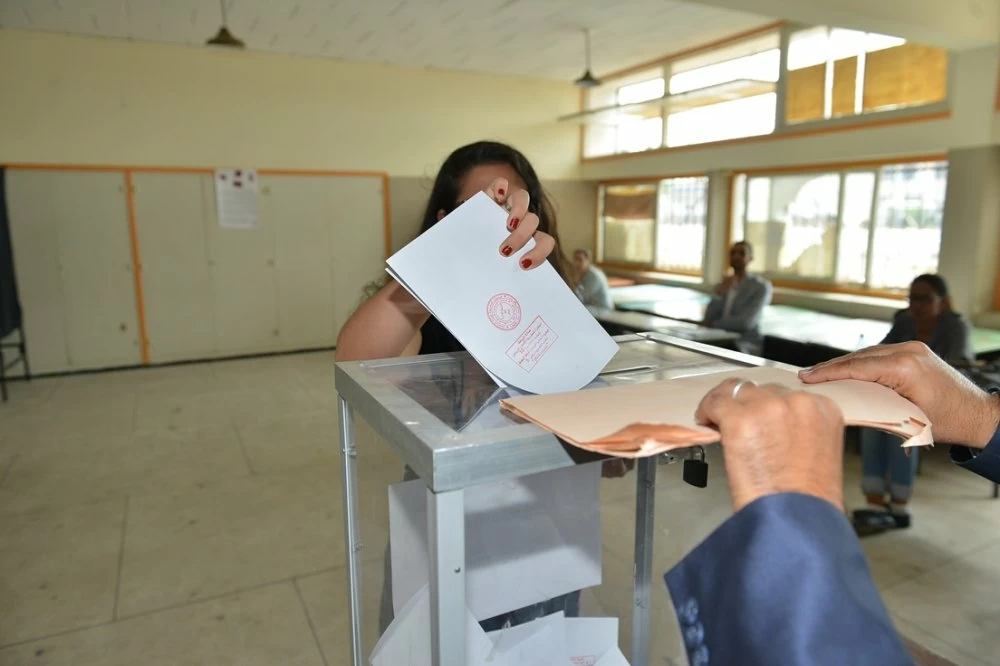
As 2026 approaches, voting intentions remain deeply fragmented. Only 27.9% say they will “definitely” vote and 14.4% “probably”, or 42.3% are in favor of participation. In front of them, 38.6% express a negative intention – including 21.1% saying they definitely won’t vote while 19.1% remain undecided. For the authors, the main issue lies in these hesitant or weakly opposed voters. But another piece of data particularly attracts attention: 24.1% of those questioned say that none of the proposed measures would be likely to convince them to participate in the vote. The report speaks of a “hard core of electoral abstention” and sees it as one of the main risks weighing on the legitimacy of the future government.
The reasons given for abstention almost systematically refer to the question of trust. Among those not registered, 53.4% first cite lack of confidencein front the feeling that voting is pointless (20.3%). Among those who boycotted the 2021 elections, distrust of parties is also the first explanation, mentioned by 51.9% of respondents. Next comes the conviction that the vote “changes nothing” (22.1%) then the absence of candidates truly representing the expectations of voters (11.3%). These three factors alone represent 85.3% of the declared reasons for non-participation. “It doesn’t change anything. Lack of confidence in parties, parties of rent and notables, corrupt and undemocratic elections,” testifies another participant cited by the study.
Young people ready to vote, but critical of the political class
If the diagnosis is gloomy, the survey also identifies the levers likely to remobilize part of the electorate. The first request made by citizens concerns guaranteeing the integrity of electionscited by 47.5% of respondents. Next come the presentation of clear and understandable political programs (42.9%), increased openness to young candidates (40.6%), more transparency in party financing (39.7%) and better informing citizens about the electoral process (37.7%).
For the Les Citoyens association, the 2026 elections represent “a decisive moment” for Morocco’s democratic trajectory. The report considers that the mechanisms to restore confidence already exist: increased transparency of results, reinforced electoral observation, automatic registration on the lists, regular public debates or renewal of the political offer… but warns that the lack of response could transform the current abstention into a lasting phenomenon.