June 15, 2026 07:00
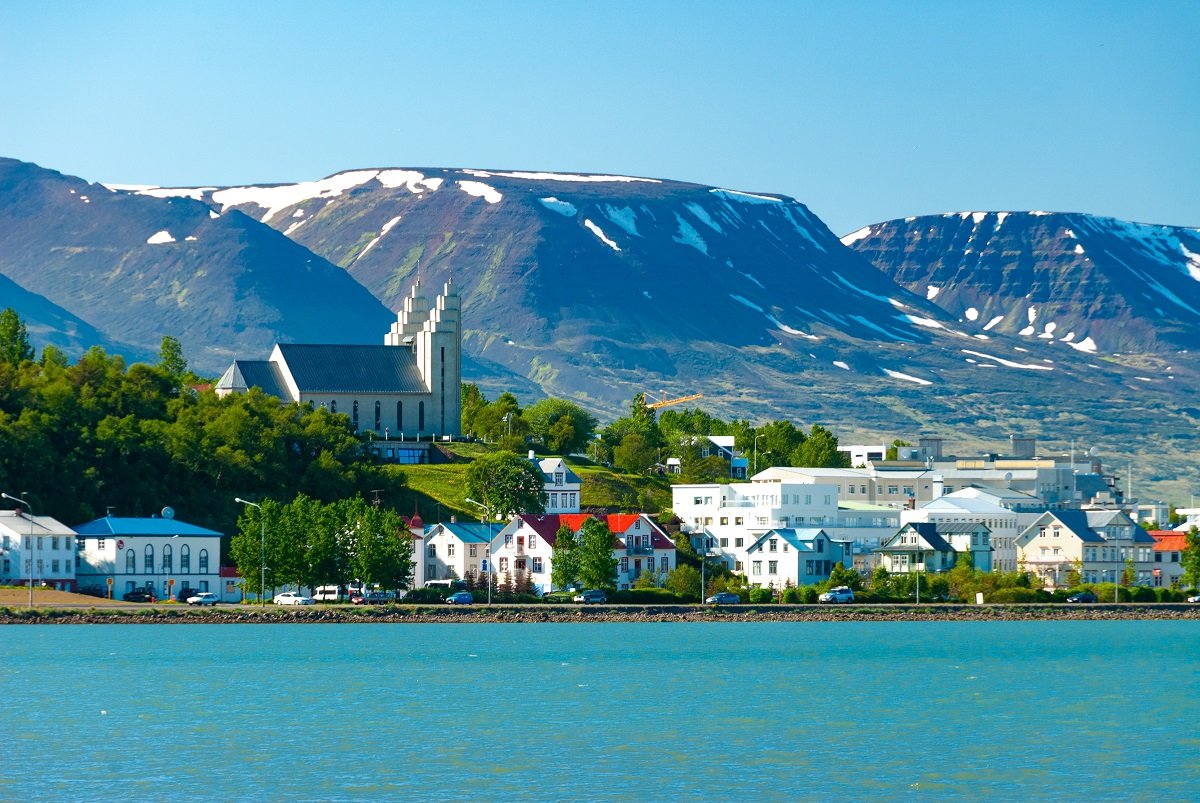
This year, Iceland is the most peaceful country in the world and for 19 years in a row it has taken first place in the Global Peace Index, published by the Institute for Economics and Peace (IEP), and European countries dominate the top 10 list.
New Zealand is in second place, followed by Switzerland, Slovenia, Ireland, Austria, Portugal, Singapore, Finland and Japan.
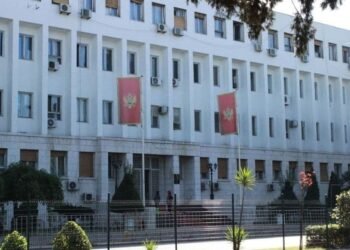
Montenegro takes the 30th place, thus confirming itself as one of the more peaceful countries, although it recorded a drop of two positions compared to the previous report.
In the region, better ranked than Montenegro are Slovenia (4th place) and Croatia (23rd place), while behind it are Albania (36), North Macedonia (46), Bosnia and Herzegovina (48), Kosovo (54) and Serbia (70).
Russia is the least peaceful country, while Sudan, the Democratic Republic of the Congo, Ukraine and Israel make up the remaining five at the bottom of the list.
Every year for the past two decades, the Institute for Economics and Peace has published the Global Peace Index (GPI), a comprehensive analysis of global security. This is, as noted, the 20th edition that ranks 163 independent countries and territories according to their level of peacefulness, covering 99.7% of the world’s population.
The report brings so far the “most comprehensive analysis” based on data on peace trends, its economic value and ways of developing peaceful societies. It uses 23 qualitative and quantitative indicators to measure the state of peace through three areas: the level of social safety and security, the extent of ongoing internal and international conflicts, and the degree of militarization.
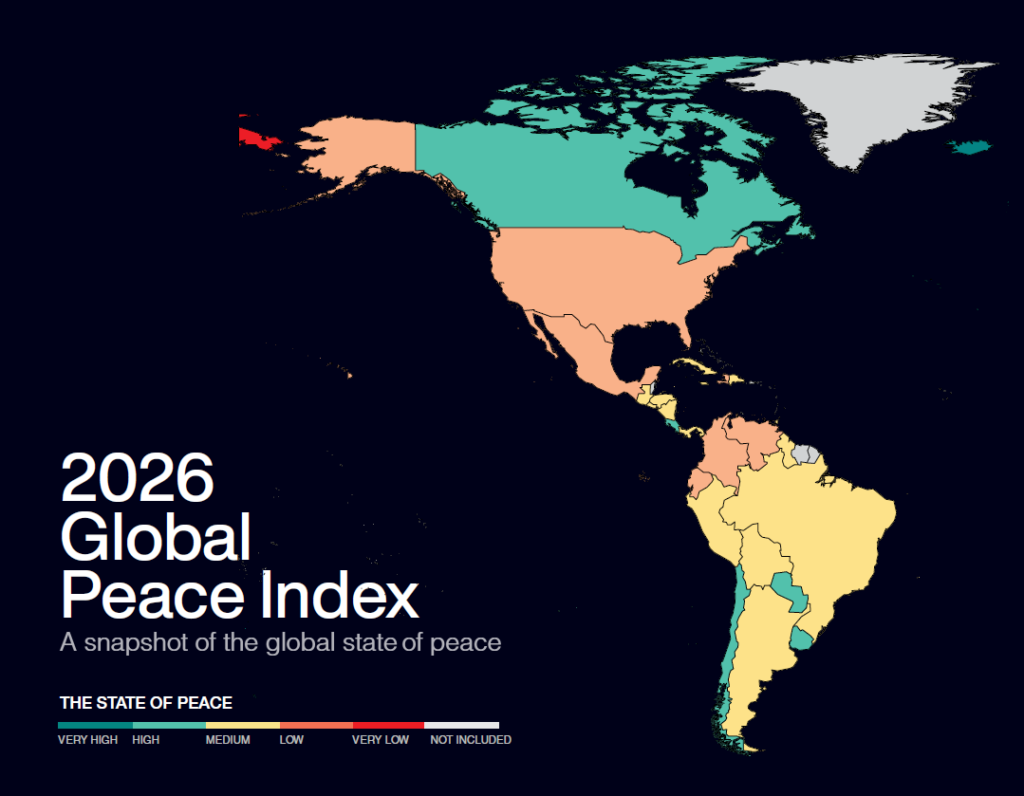
The report states that internationally extended internal conflicts are becoming more common, with an increase of more than 175% since 2010. The number of countries involved in at least one external conflict in the last five years increased from 59 in 2008 to 103 in 2026.
“The global number of deaths from internal conflict has increased more than sixfold over the same period – from around 29,000 in 2008 to more than 181,000 in the last year, with a peak of over 309,000 in 2023. The number of countries recording 1,000 or more conflict deaths in a single year has increased from eight in 2008 to 20 in the last year”, it is stated.
The growth of conflicts is part of a wider structural transformation of the international system, which the IEP calls the “Great Fragmentation”, which began in the late 2000s. It is the third major period in geopolitical relations in the last 50 years, after the Cold War and the period of rapid globalization after 1990. The number of middle powers has almost doubled since 1991, from nine to 16, while the number of emerging powers has tripled.
“The combined material power of the middle powers now exceeds that of the great powers, while the share of global GDP held by the major European powers has fallen significantly: Germany has halved its share from 8.5% to 4.3%, France from 5.2% to 2.9%, and Italy from 3.8% to 2.2%,” it said.
Western and Central Europe is the most peaceful region
According to the GPI, Western and Central Europe remains the most peaceful region, and the Middle East and North Africa the least peaceful.
The Eastern Europe and Central Asia region is the only one of the eight GPI regions to improve on average over the past year, while South Asia recorded the largest regional deterioration, primarily due to deterioration in Nepal and Pakistan.
Poland recorded the biggest improvement at the country level, with a growth of 9.1% and an advance of 23 places in the global ranking to 22nd position, thanks to a 17.5% improvement in the area of ongoing conflicts.
Gabon, Lesotho, Ukraine and Turkey also saw significant improvements, with Turkey’s progress linked to the peace process between the government and the Kurdistan Workers’ Party.
Nepal saw the biggest deterioration, with a 9.1% drop following the Generation Z protests in September 2025, followed by Chad, the Republic of Congo, Pakistan and Tanzania.
The United States worsened its score by 4%, mainly due to the increase in political instability, which worsened by 38.5%. Violent protests in the US have also increased significantly, and the country now ranks 134th on the GPI.
Increased fatality rate
Out of 23 GPI indicators, 14 worsened, eight improved, and one remained unchanged. The indicator of deaths in internal conflicts recorded the largest one-year deterioration since the index was created, with a decrease of 6.5%.
“This year’s index only partially covers the impact of the war between Iran and Israel in 2026, because many indicators are cut off at the end of 2025,” the report says.
The indicator of relations with neighboring countries recorded the second largest deterioration, while military expenditure (% of GDP) worsened for the third year in a row, as 97 countries increased their relative defense spending.
“The world has become less peaceful over the past 18 years. Out of 163 countries, 119 worsened their score and 42 improved. Out of 23 indicators, 17 worsened and six improved. The ongoing conflicts domain worsened by 18.5% and the social safety and security domain by 3.2%, while the militarization domain improved by 1.3% on average. However, the militarization trend reversed sharply from in 2022, with most of the growth concentrated in Western and Central Europe,” the report says.