Where did the billions evaporate?.. The truth about the lie of turning Aden into “Dubai and Jeddah”
Children die, citizens faint, and the heat claims the lives of the elderly
The “hotel government” plunders $55 million a month under the pretext of subsidizing electricity
Hundreds of families flee to the northern governorates to escape the hell of summer
The Revolution / Muhammad Abdullah
Residents of the city of Aden and the occupied coastal governorates are experiencing the bitterness of summer again, with a stifling heat wave compounded by the sharp deterioration in electricity service and the increase in outage hours, which has cast a heavy shadow on the most vulnerable groups such as children, women, and the elderly.
In the absence of radical solutions and the recurrence of the crisis annually, social media platforms have turned into an arena for condolences and continuous appeals, through which families document their suffering to no avail or a tangible response from the (hotel government).
In live documentation of the tragedy, activists circulated a poignant video clip of a citizen shouting angrily: “People are dying. We only want our most basic human rights to live in dignity. We want electricity and water.”
In a related context, media sources confirmed that deaths had been recorded among the elderly, and the sources described homes as turning into “cemeteries and skirts” due to the high temperature, which also caused the spread of epidemics and diseases.
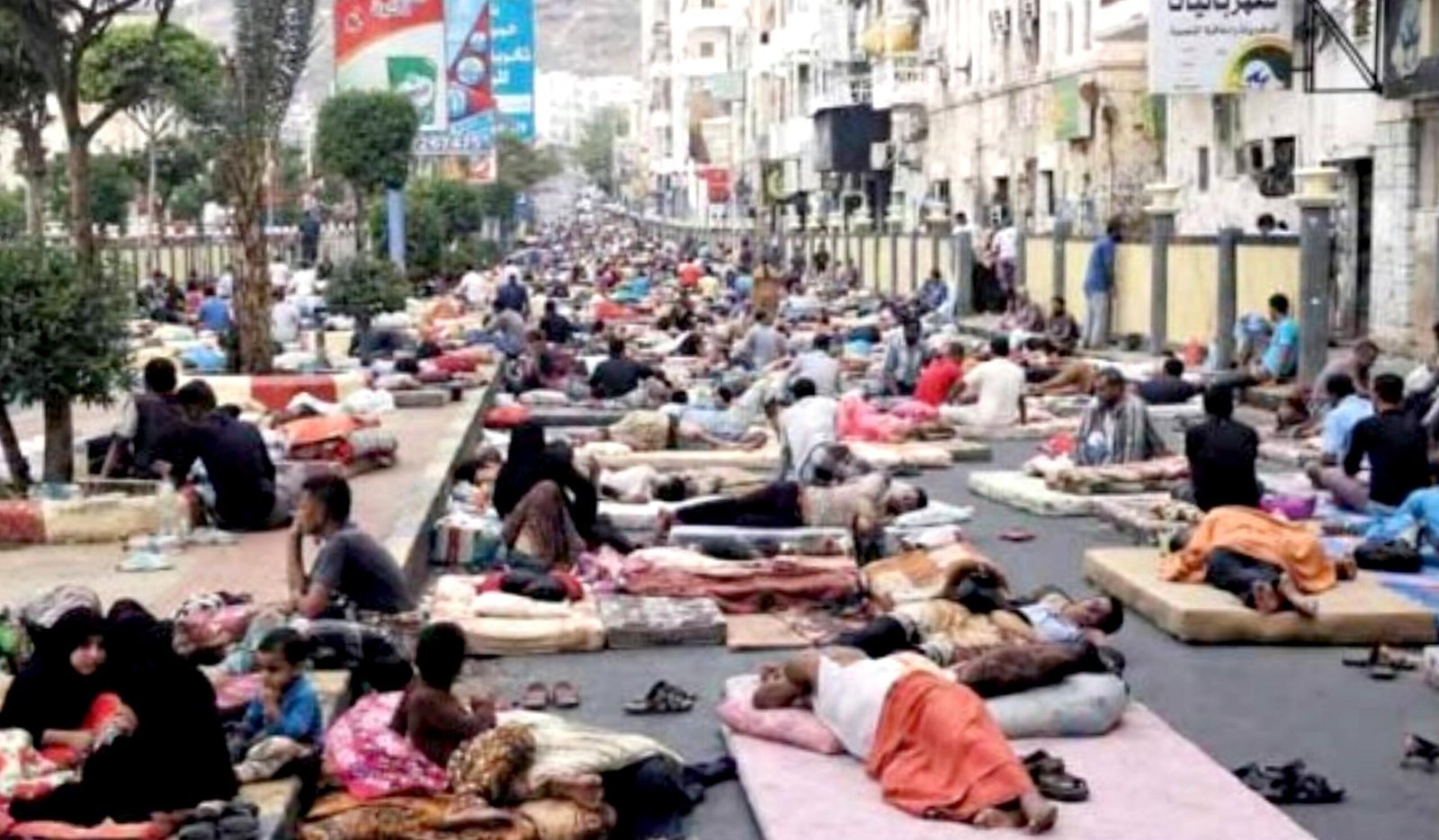
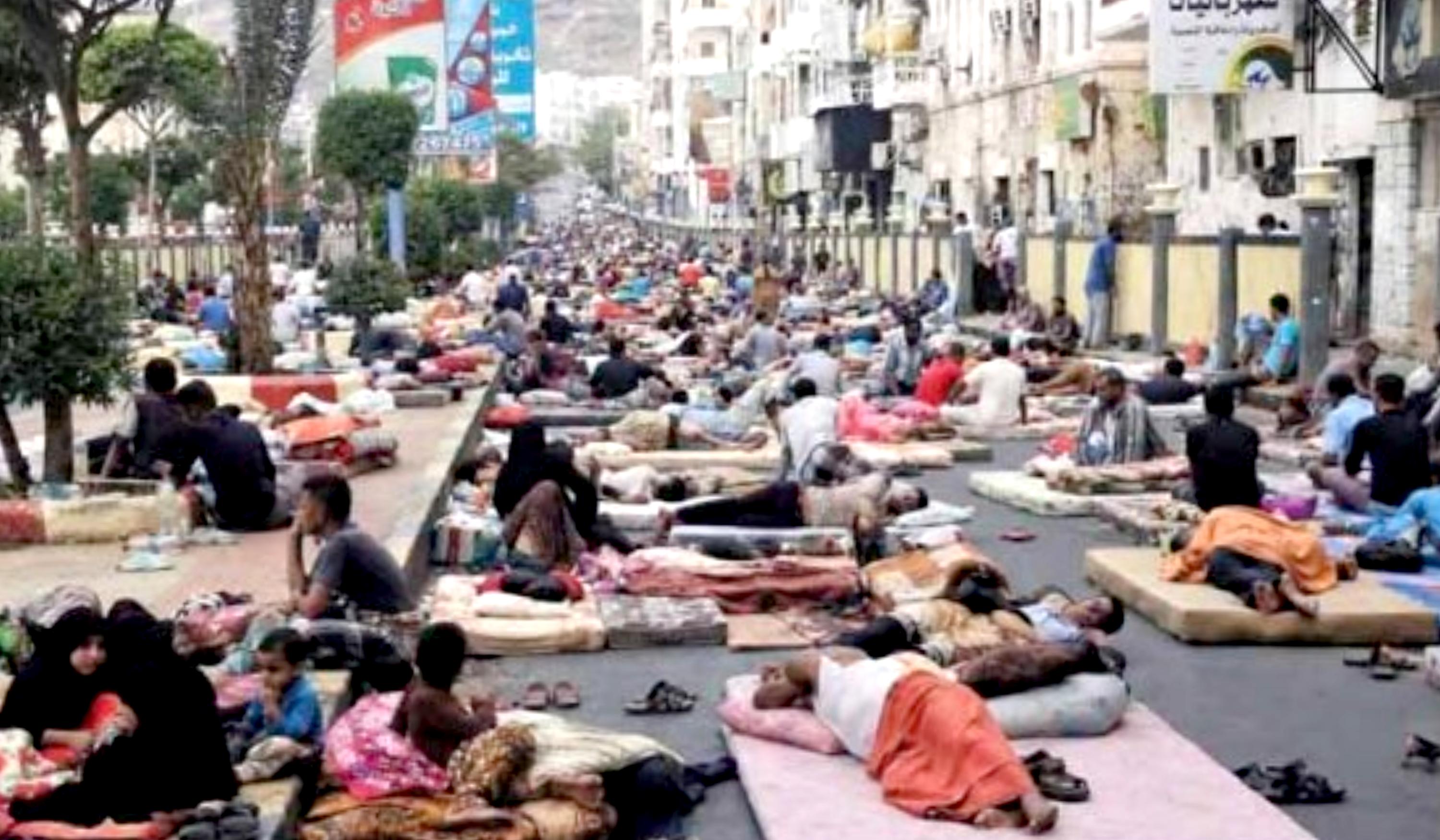
This disastrous situation prompted the youth of the Al-Khasaf area in the Crater District to issue calls for an open sit-in under the slogan “sleeping in the streets,” after homes became an unbearable piece of hell.
Al-Thawra recorded shocking images from various Aden districts being circulated by social media users, showing how the streets and sidewalks turned into a last refuge for people fleeing the burden of oven-like homes, as a result of the long power outage. The pictures conveyed harsh scenes of children and women lying on the ground outdoors in search of sleep, while other pictures revealed painful skin ulcers and abrasions that affected the bodies of dozens of children due to the humidity and extreme heat in the coastal city.
This humanitarian catastrophe comes in conjunction with trends by the mercenary government in Aden to remove its hand from the electricity sector in compliance with the requirements of the International Monetary Fund, a step that receives a Saudi green light, and intersects with movements by Riyadh aimed at overthrowing the governor of Aden, Abdul Rahman Sheikh Al Yafei, against the backdrop of recent tensions and offensive statements issued by the chief sheikh of Yafei against the Kingdom.
This comes at a time when the electricity crisis has taken a disastrous turn, after the heat wave caused citizens to faint and stopped hospitals and water pumping, forcing people to sleep in the streets, while well-off families fled to the northern governorates to escape the hell of summer.
This suffering comes as the “hotel government” continues to ignore the street’s appeals, which reveals a deep flaw in the performance of the mercenary government and its complete inability to explain the reasons for this continuous power outage.
The question that burns the hearts of the people of Aden today: Where did the billions and bright promises that were bestowed over a whole decade go? Where are those promises to transform Aden into Dubai and Jeddah?!!
Aden…the story of a city killed by heat and suffocated by darkness
The electricity crisis in occupied Aden is no longer just a line in the news, or a service defect that can be lived with. It is the daily lump in the throat of millions of residents, and the identification card of a scorching summer that ravages their bodies without mercy, amid the inability of the hotel government, which has turned over time into a deaf wall that does not hear the groans.
In this coastal city, where the heat is mixed with the stifling humidity, electricity has turned from a basic right into an unattainable dream. More than ten and a half hours of darkness and hot temperatures, offset by two incomplete hours of light, and in many cases the darkness extends for more than half a day.
This persistence in public torture has ignited the streets in anger and protest. How can an entire city remain a hostage to a tyrannical freedom?
Inside the homes that have turned into what resemble ovens, the groans of the elderly multiply, the bodies of children wither, and hospitals and vital facilities are plunged into complete paralysis.
As for alternative solutions, such as solar energy and generators, they have become a luxury that the vast majority of citizens who are oppressed by the basics of living do not have.
Between evaporated promises and powerless stations
Behind the scenes of this collapse, the justifications for the “hotel government” fall away one after another. The issue has gone beyond the shortage of diesel fuel to systemic corruption and chronic administrative and structural failure.
Generation stations have become unable to keep up with the population explosion, while the so-called strategic “Al-Rais” station has been drowned in solving technical problems and disruptions in crude oil supplies, causing the energy sector to lose about 130 megawatts at once.
The question that burns the hearts of the people of Aden today: Where did the billions and bright promises that were bestowed over a whole decade go? Where did the maintenance contracts and leased stations evaporate? Regulatory reports reveal black holes of corruption and abuses in fuel deals, while the inevitable result on the ground: money is spent, and darkness expands.
The revolution of impatient patience
The crisis has transformed from a “seasonal” to a “chronic disease” that haunts the city throughout the seasons of the year, recording in recent years record numbers of 22 hours of blackout per day.
With the lack of solutions, the only thing left for citizens is the street. They went out in angry demonstrations under the pressure of high prices and declining purchasing power, holding the authorities of the coalition countries fully responsible for this slow death.
Experts agree that the solution begins with extracting the sector from corruption, randomness, and temporary trade-offs, by providing sustainable fuel, shifting towards renewable energy, and building real plants that are subject to strict and transparent oversight.
But until the responsible conscience awakens, Aden will continue to pay with the blood and health of its children for years of neglect, with a miserable timetable that sums up their reality: extended hours of hell and darkness, in exchange for fleeting flashes of life.
Electricity corruption in Aden
Over many years, the electricity crisis in Aden was no longer just a service or technical problem, but rather turned into one of the most controversial public spending files, in light of the continuing daily power outages despite billions of riyals and dollars spent under the title of “saving the electrical system.”
Every summer, the same scene is repeated: long hours of darkness, popular protests, and urgent promises, before the crisis returns again in a more severe form, which raises fundamental questions about the reasons for chronic failure in a sector that has depleted huge resources without tangible results.
Purchased energy…permanent bleeding
The “purchased energy” file is one of the most controversial files in the electricity sector in Aden.
According to multiple regulatory and media reports, energy purchase contracts from the private sector witnessed widespread financial and administrative imbalances, while reports by the Central Agency for Control and Accounting spoke of fundamental observations on those contracts and contracting and implementation mechanisms.
Published reports indicated that Aden Electricity incurred more than $16 million in just ten months as a result of arrangements related to purchased energy contracts, while citizens continued to suffer from frequent outages.
$55 million total spending on electricity per month:
In one of the most surprising ironies, press reports stated that monthly spending on electricity in Aden reached about $55 million during some periods, and despite this, the outage hours continued to reach 14 hours a day or more.
These numbers raise difficult questions about the efficiency of spending, control mechanisms, and the extent of actual benefit from the funds allocated to the electricity sector.
Investigations and oversight documents reveal widespread imbalances
An investigative report published in 2025 AD, and based on official documents, government statements by mercenaries, and oversight reports, talked about the existence of administrative and financial corruption that affected vital projects in the electricity sector, and revealed files related to the Al-Haswa thermal station, floating station deals, and violations in fuel tenders.
Other reports also indicated the existence of supervisory observations regarding fuel and oil derivatives contracts allocated to power stations, and the accompanying violations and waste of public money.
The citizen is the first victim
While the various parties exchange accusations and justifications for the failure, the Adenian citizen remains the most affected party.
Families bear additional costs to purchase batteries, solar energy, and fuel for private generators, while hospitals, workshops, shops, and the educational process are directly affected as a result of the ongoing outages.
According to observers, the citizen pays the price for corruption or mismanagement twice: once from public money spent on unsustainable projects, and once from his daily suffering with the lack of service.
Why has the crisis not been resolved yet?
Experts believe that the problem goes beyond fuel shortages or technical malfunctions, and extends to the absence of a long-term strategy for energy production, continued reliance on expensive emergency solutions, weak transparency in sector management, and the spread of corruption.
The continuing controversy over purchased energy contracts, fuel deals, and generation projects also reflects the need for a comprehensive review of the electricity file, publishing the results of investigations and supervisory reports to public opinion, and holding accountable any party proven to be involved in wasting public money.
conclusion
After years of promises, financial allocations, and announced projects, Aden is still experiencing one of the worst electricity crises in its modern history.
The question that citizens ask with every new extinction remains: If the money has been spent, the projects have been announced, and the fuel has been purchased, then why is the city still drowning in darkness?