Al-Thawra Net | I interviewed him – Maha Musa
The prisoners’ file represents one of the most complex and sensitive humanitarian files in the course of the aggression against Yemen, as it has been subject to political and field tensions for many years, despite the human suffering it brings to thousands of Yemeni families.
In a remarkable development, the file recently witnessed a major breakthrough that culminated in the conclusion of a large-scale exchange deal, which restored hope of closing this file permanently.
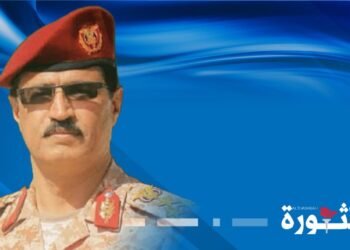
In this dialogue, we shed light on the dimensions of the recent deal, its political and humanitarian backgrounds, the nature of the negotiations, and the existing challenges, through a special meeting with the Vice Chairman of the National Committee for Prisoners’ Affairs, Brigadier General Murad Qasim.
To the text of the dialogue:
From the Stockholm Agreement to the latest deal
The prisoners’ file went through several stages, most notably the Stockholm Agreement, which stipulated the principle of all for all, but it remained faltering throughout the past years. What has changed recently to allow the file to be advanced on such a large scale and the final deal to be achieved at this level?
From the beginning, the other party was unable to implement a comprehensive deal according to the all-for-all principle. After several rounds of negotiation, it became clear that proceeding with this file requires working according to gradual stages. At each stage, we evaluated what had been accomplished and what remained, leading to this final stage, which was comprehensive and large in number, as it represents the final station of this path.
Meanings of numbers and deal messages
The deal includes 1,700 prisoners compared to 1,200, including Saudis and Sudanese. What do these numbers reflect about the political and humanitarian balance in the file today, and what messages do they carry?
First, this deal reflects the amount of joy that will prevail among the families of our prisoners and detainees, which is the most important humanitarian dimension in this file.
It also carries clear messages that the current reality reflects the sincerity and seriousness of our leadership, and its real readiness to address all the troubled files and move towards an honorable peace. This deal represents a real opportunity to build confidence, which will open the door to bring about a qualitative shift in the rest of the files, God willing.
Secondly, the deal’s inclusion of large numbers confirms our keenness to include all our prisoners, based on our precise knowledge of their places of detention, which came as a result of continuous follow-up that extended over many years.
Breaking politicization and ending the political complex
The leader of the Islah Party, Muhammad Qahtan, had previously failed to include his name on the prisoner lists as a result of the policies of the other party and the politicization of his case. What changed in the recent deal to enable him to be included? What is the symbolic significance of his presence in the deal?
The deal that was signed represents a real move towards ending this file once and for all. Muhammad Qahtan was included considering that this deal is complementary to the previous agreements, during which we were keen to address the outstanding issues, taking into account the field complexities faced by the other party.
Who are included in the prisoners’ file?
Is the committee’s file limited to prisoners of war only, or does it also include detainees from different regions such as Aden and Ma’rib, especially since there have been those kidnapped since 2015?
The file of prisoners is not limited to those captured on the front lines only, but includes every Yemeni who was arrested because of his affiliation or cooperation with us, or any citizen who was arrested on the roads and we were officially informed by the competent authorities to demand his release.
Behind the scenes of negotiation and the challenges of multilateralism
In light of the scenes of the negotiations that took place with the Saudi side and a number of Yemeni parties, what was the nature of the negotiations and what were the most prominent challenges?
From our side, the negotiations were positive due to the fact that we were one party that was unified in its position and decision. As for the most prominent challenge, it was negotiating with several parties on the other side whose field reality was suffering from complexity and fragmentation due to the multiplicity of factions. Despite this, we sought to turn this challenge into an opportunity in a way that would ensure the release of all our prisoners, God willing.
Exchanging statements and guarantees of the success of the deal
You indicated in your statements that any problems in exchanging statements may come from the other side. Do you have a mechanism to deal with them to ensure the success of the deal?
The mechanisms organizing the process of exchanging statements are supervised by the United Nations. We, thanks to God, have full readiness and sincere intention to move forward and reach final statements that guarantee the success of the deal.
Timeline for implementation and international sponsorship
Finally, what are the time estimates for the practical implementation of the deal to begin after the exchange of statements, and what are the practical steps and guarantees agreed upon to ensure the release of prisoners according to this path?
The timetable begins with the exchange of statements, and it was agreed that they would be completed within a maximum period of one month of January. However, implementation may take a longer time due to the instability and organization of the other party’s reality.
The guarantees are that the agreement is sponsored by the United Nations and the International Red Cross, with generous hosting and Omani mediation, with the commitment of all signatory parties to move forward towards implementing the full terms of the agreement.