Al-Thawra Net | Interview by Nasser Jarada
In the wake of the statement of Commander Abdul-Malik Badr al-Din al-Houthi, may God protect him, which outlined the features of a clear strategic vision regarding the Zionist movements in the Red Sea and the Horn of Africa, and exposed the dimensions of the project to recognize the Somaliland region as a separate entity, questions deepen about the backgrounds of this movement, its timing, and its military and strategic objectives.
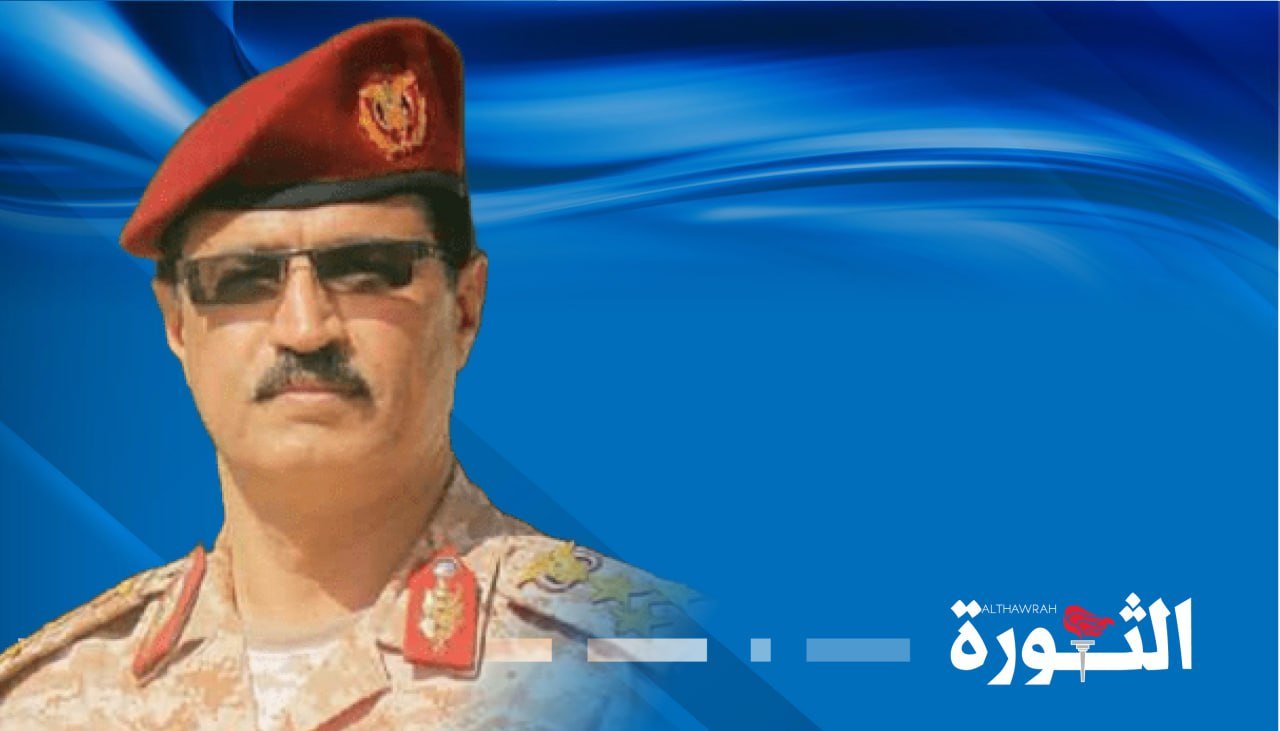
In light of the rapid transformations in the Red Sea and the Horn of Africa, the escalation of regional confrontation, and the overlapping of international projects, the military and strategic expert, Brigadier General Aziz Rashid, presents: In an exclusive interview with “Al-Thawra Net”An in-depth reading starting from the contents of the Commander’s statement, and dealing with the repercussions of Zionist recognition on the security of the region and international navigation, stressing that what is happening represents a failed attempt to circumvent the Yemeni equations imposed by the armed forces.
To the text of the dialogue:
Zionist recognition…a strategic reading of timing and implications
Firstly, Mr. Brigadier General, and in light of Mr. Commander’s statement, how do you read from the strategic and military angle the Zionist entity’s announcement of its recognition of the “Somaliland” region as a separate entity?
To begin with, the statement of Commander Abdul Malik Badr al-Din al-Houthi, may God protect him, constituted an advanced strategic vision and an important and frank position that pushes the Arab and Islamic nation to adopt a strong and clear speech towards the Zionist enemy, at a time when Arab regimes no longer dare to take similar positions, due to the commitments and agreements they have that are treated, in their belief, as if they were a “home book” from which it is not permissible to deviate.
From a military perspective, the combat doctrine in the region existed historically, and was built on the basis that the virtual enemies, according to the military classification and from the geostrategic perspective, are the United States and the Zionist entity as the two main enemies, given the Zionist entity’s occupation of parts of the Arab world, and the spread of American military bases that encircle Arab and Islamic national security from all sides. However, this doctrine has been subjected to systematic distortion during the last two decades, and has turned into multiple alliances and partnerships, and military maneuvers. It targets Yemen and Iran because of their support for the Palestinian cause and confronting American projects in the region. It also attempts to send messages to international competitors such as Russia and China.
After we discussed the direct military vision of this recognition, what are its implications in the context of regional and international conflict?
The implications of the Zionist recognition of “Somaliland” cannot be separated from the major strategic shift imposed by the Yemeni armed forces, as tightening control over the Red Sea represented a devastating blow to the American military doctrine based on the use of aircraft carriers as a decisive tool. Likewise, targeting the American aircraft carriers and shooting down three “F-18” aircraft with hypersonic ballistic missiles and unmanned aerial vehicles constituted a precedent in the history of naval wars, which the American leadership itself acknowledged, all the way to an announcement. Washington stops fighting with Yemen.
This is evidenced by the statements of US Navy commanders in response to their questions: “What do air defenses do in the face of 30 seconds of the speed of Yemeni missiles?” It is a miracle!”, while changing its naval doctrine by removing aircraft carriers from any future naval confrontation, especially with the advancement of artificial and technological intelligence in asymmetric warfare.
The Zionist bet failed and targeting tools changed
To what extent can this Zionist move be considered a qualitative shift in the targeting tools for the region, and not just a passing political stance?
This Zionist step represents a qualitative shift in the targeting tools for the region, but it is not new in essence. The Zionist plans were announced decades ago by the leaders of the entity themselves. “Shimon Peres” spoke about the “New Middle East” after the Oslo Accords, and “Golda Meir” announced her racist vision towards the Arabs. These statements were not individual opinions or press statements by Zionist extremists, but rather policies adopted by successive American administrations.
Starting in the 1950s at the initiative of US President Eisenhower, through Reagan and Bush, and finally to Trump and Biden, American support for the Zionist entity has remained constant as a tool to protect American interests in the region, which makes this recognition part of a long-term project and not a passing political position.
The entity, after failing to break the Yemeni siege, tried to build direct relationships with local forces with Emirati support to push them to confront the Yemeni armed forces on its behalf, in exchange for promises of air coverage, but these bets quickly fell.
“Somaliland”… in the context of the project to dismantle the region
The statement described this move as part of conspiracies to change the Middle East. How do you explain that?
Indeed, the statement described the move as part of conspiracies to change the Middle East, and this is consistent with previous Zionist-American projects in the region. There are previous goals stated by Shimon Peres in his memoirs in 1993-1995 following the ill-fated Oslo Accords, where he announced the goal as a pulse test for the Arabs to integrate the Zionist entity (economically and politically) into the region under the term “New Middle East” as an American-Zionist project.
Then came George W. Bush’s announcement in 2004 under the term “Greater Middle East” under the pretext of reshaping the region to include Islamic countries. Likewise, in 2006, the US State Department announced, through the words of Condoleezza Rice, the term “New Middle East” during Hezbollah’s confrontation with the Zionist entity, and said literally: “The labor pains of the birth of a new Middle East.”
The statements of the criminal Netanyahu in 2010 about normalization and security partnership, and the statements of Netanyahu in 2020 and Trump with the signing of the Abraham Accords with Gulf countries, indicate the continuation of this project.
Likewise, the statements of one of the Zionists who said: “We made a mistake in the Sykes-Picot Agreement when we divided the Arabs into countries, and today we seek to divide them on a sectarian, ethnic, and sectarian basis, in order to break up what is divided, divide what is divided, and divide what is divided, and we hope that the great Jewish state will not be established unless the Arabs are five thousand states.”
How do you explain the Emirati-Saudi division that is taking place?
Through this division, the two parties seek to impose a settlement and the reality of sharing influence, provided that the American and Zionist interest in securing the sea lanes in the Red and Arabian Seas and the Gulf of Aden is achieved.
The only losers in this battle are the tools of the mercenaries, and what is called “legitimacy” has ended, because it has become the legitimacy of a fight between two teams, and this is outside the framework of the international vision for Yemen, so legitimacy has no meaning after today except internal legitimacy.
Military dimensions of the Zionist presence in the Horn of Africa
What does it mean militarily if the entity seeks to find a foothold in a territory overlooking the Red Sea?
The goals are multiple, most notably:
– Siege of Yemen and control of ships heading through Bab al-Mandab.
– Monitoring and inspecting ships, and knowing the movement of commercial and military exchange.
– The siege of Egypt from the southern entrance to the Red Sea, thus completing the encirclement of Egypt from the south of the Red Sea to northeastern Sinai through the so-called “Ansar Bayt al-Maqdis” and westward through the Takfiri terrorist organizations in Libya and the national security threat from the fighting south in Sudan.
Targeting Egypt economically by threatening the water outfalls represented by the Ethiopian-Zionist Renaissance Dam.
All of these pressures aim to force Egypt to concede if it does not move with the Yemeni position, especially after the entity announced through Netanyahu the “New Middle East Revival” project, with “Somalia Land” at the forefront, all the way to the transitional mercenaries who announced their secession and then quickly evaporated.
What impact does this have on the Yemeni armed forces?
The armed forces will be affected by the installation of spy radars and jamming of missiles, drones, and satellites, and this is the most important military aspect that the entity will benefit from if it sets foot there.. But we confirm that any movement of this kind will be exposed, and the Yemeni armed forces are able to target it before it begins any action of this kind.
Threat to navigation and regional security
How big a threat does any potential Zionist military or intelligence presence in “Somaliland” pose to the security of the Red Sea and international navigation?
This presence constitutes control over the economic, military, and informational fate of Arab, Islamic, Western, and international national security, and the collection of a military, economic, and political database through the movement of ships, containers, and military deals, and revealing it before it reaches the countries of demand.
Pirate entities and militias will also be imposed in the future through which they will achieve major goals. I believe that without the partnership of the United States, and if the major powers or regional countries do not have a role, the security of the region is at risk, especially the Arab world and the regional environment. These forces will penetrate into Africa and apply multiple methods of colonization and occupation, as European powers did previously.
The Commander’s statement is a message of deterrence
Finally, Mr. Brigadier General, how does the Zionist entity view its statement to recognize “Somaliland” after the statement of Mr. Commander?
The statement of Mr. Commander was a clear message of deterrence to the Zionist entity and all the parties supporting it, stressing that any attempt to infiltrate or impose influence on “Somaliland” or control the Red Sea and the Arabian Sea as strategic corridors will collide with the Yemeni equations imposed by the armed forces and the resistance forces.”
Zionist recognition represents a failed attempt to circumvent these equations. The enemy, who may see it as an opportunity for regional division, in fact finds it a weakness in the face of Yemen’s will, internal legitimacy, and the popular and military position.
The statement of Mr. Leader clearly outlined the strategic vision, and made it clear that any hostile move would be calculated and exposed, which would protect the security of Yemen and the region and make any Zionist project doomed to failure.