One August morning in 2006, Jorge Odon had an idea in his dream.
It had happened before, but this time something was different.
The idea was not a solution to the balancing, centering and brake problems he struggled with daily in the workshop he ran in Buenos Aires.
“Marcella, look, listen,” said the auto mechanic to his wife.
“This could help with childbirth,” he recalled in an interview with BBC Mundo from the Argentine capital.
Two decades later, Odon’s idea has become a device that helps during vaginal births and reduces the risk of injury to newborns and mothers.
It also reduces the need for more invasive and expensive interventions, such as caesarean section.
After it was first tried in Argentina, OdonAssist, named after Jorge as its inventor, it is already in use in 40 hospitals in five European countries, where it has been used in 300 births, according to British health authorities and the company that makes it.
‘I barely felt anything’
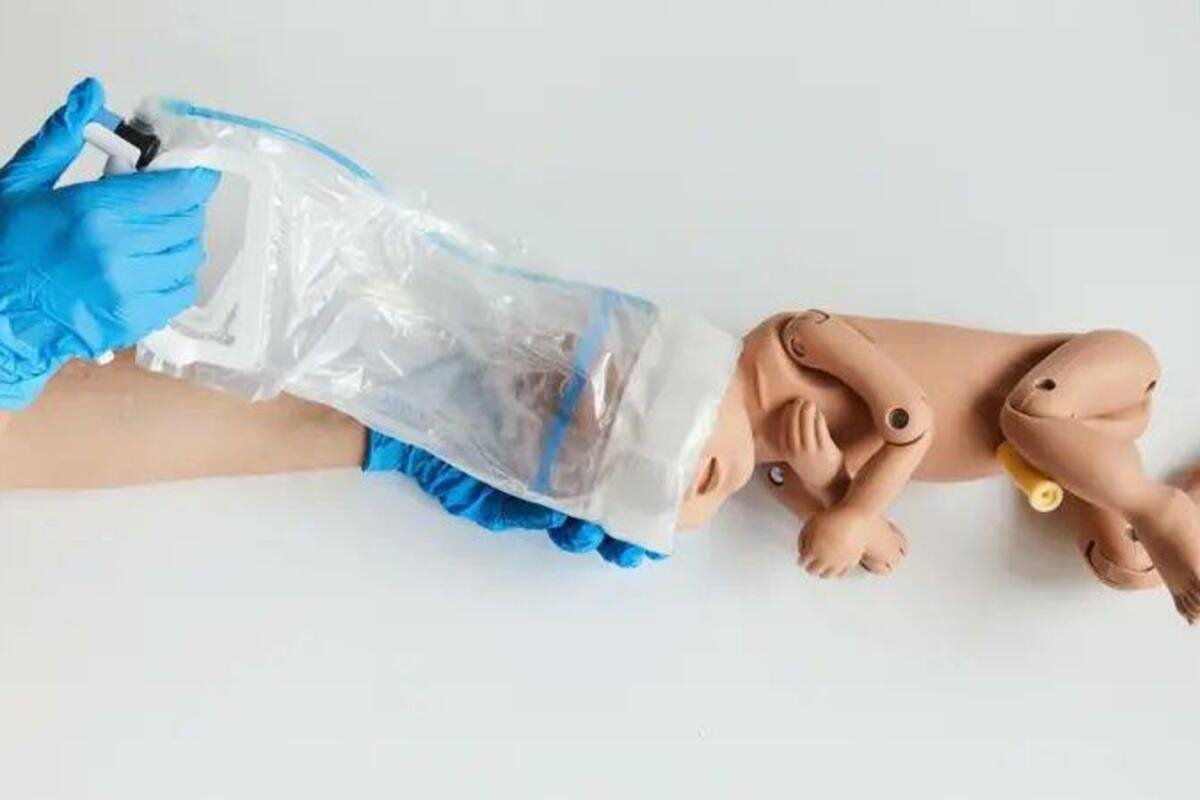
OdonAssist is an inflatable device designed to assist vaginal births when labor stops for any reason.
It functions as a “gentler alternative to traditional metal forceps or vacuum extractors,” according to the website of MNHI (Maternal and Child Health Innovations), the company that makes it.
“It works via a soft air cuff that we put around the baby’s head,” British doctor Emily Houghton explains to the BBC.
Once inflated, the device supports the baby’s head and provides gentle, controlled traction that helps the mother’s contractions, according to the MNHI website.
“The air cuff is used by operators to help guide the baby through the birth canal, as it is connected to handles that help control the birth,” adds the obstetrician and gynecologist in charge of the clinical trials, which have been ongoing for more than a year at Southmead Hospital in Bristol, south-west England.
As soon as the baby’s head leaves the mother’s womb, the device is removed so that the baby can take its first normal breath.
“I got an epidural after a long labor and I hardly felt anything,” Ella Redford, one of the British women who gave birth with the help of this device, told the BBC.
“It was wonderful,” he says shortly.
She would certainly use it again, she points out.
“It makes sense to inflate that cuff and tense the vaginal muscle away from the baby instead of pulling on the baby’s head,” added the new mom.
“This is the first innovation in childbirth since the 1950s.”
Watch the video: Five things you should know about childbirth in Serbia
It all started with a trick
Odon admitted that the invention was not born out of concern for the risks of having children.
In 2023, 260,000 women around the world died during childbirth – one woman every two minutes, according to World Health Organization (WHO) statistics.
In addition, in 2023, about one million babies died in the first 24 hours of life, according to data from the United Nations agency.
“It all started with a trick that one of my employees performed for another, which consisted of trying to pull the cork out of a bottle.
“I thought, ‘He’s going to have to break her,'” Odon told BBC Mundo.
“But the magician took a small bag, put it in a bottle, filled it with air, pulled and pulled the cork.
“I was impressed with that pneumatic clamp and conveyor belt mechanism,” he recalled.

How did he connect the idea of pulling the cork out of the bottle with childbirth?
Odon attributes this to providence.
“The truth is that what happened to me was actually a miracle, because I didn’t have any problems with the pregnancies of any family members or acquaintances,” he admits.
A few days later, Odon was with his associate Carlos Modena, an engineer by profession, visiting a doctor in the Argentine capital to present the idea to him.
Soon after, she ended up in the hands of obstetrician Mario Merialdi, who at the time was the head of the Department of Reproductive Health at the WHO.
Merialdi admitted that when he first saw the prototype, during a break at the WHO congress in Buenos Aires, he was surprised.
“When I saw the device, I was struck by two aspects – its simplicity and its safety,” the Italian-Swiss doctor, who is now chief medical officer at the MNHI, told BBC Mundo.
“It can be easily used, which allows both medical professionals and midwives to use it, guaranteeing access to health care in areas or regions with weaker health systems,” he said.
In terms of safety, he said the soft materials used to make the OdonAssist reduce the risk associated with forceps, vacuum extraction or caesarean section.
“So far, all babies born with the help of this device have been born without bruises, hematomas or other injuries that sometimes occur during current procedures,” he added.
Risks to mothers and children
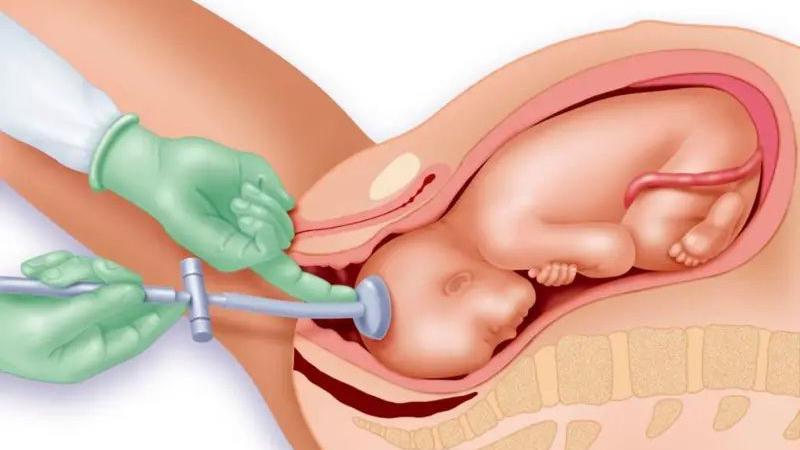
Although he claims that forceps, vacuum extraction and caesarean section are safe, Merialdi reminds that “like any other surgical procedures”, they also come with certain risks.
“There may be some injuries, which in most cases disappear within a few days, but in rare cases, they can leave permanent consequences,” he pointed out.
In Canada, for example, severe neonatal trauma occurs in one out of every 105 forceps deliveries, according to a report available at the US National Library of Medicine.
But not only babies suffer, the same happens to their mothers, since vaginal and rectal tears can occur in 10 percent of births with the help of forceps, according to data from the Cleveland Clinic in the USA.
In Mexico, a 2012 study that looked at 467 forceps deliveries at the Women’s Hospital in Mexico City found that 38.5 percent of mothers experienced lacerations and 55.9 percent of infants had some complications or injuries.
In 2025, OdonAssist received the CE Kitmark certificate, confirming its safety for use in hospitals throughout Europe.
However, unlike forceps or vacuum extraction, the device cannot be reused.
“It is disposable, because it requires sterilization by gamma radiation,” explains Merialdi, who added that “since the soft materials are used to avoid harming the baby or the mother, they cannot be reused without the risk of infection.”
Each device costs $335, according to MNHI.
‘Mad’ inventor
Odon is pleased with the results his invention has produced.
“In the tests carried out in Argentina, and now in Europe, not a single baby was harmed,” he points out.
“It’s amazing we didn’t think of it sooner,” adds Houghton, head of clinical trials at Bristol’s Southmead Hospital, where the device will be offered to all women giving birth from this summer.
Georgie Jacobs, another Bristol resident who gave birth with the help of the device, expressed similar sentiments.
“It seems absolutely crazy that we have all these methods that are outdated today,” she told the BBC.
In addition to the United Kingdom, Spain, France, Italy and Germany, the device is also being used in Ethiopia, where it “gave the same results,” Merialdi said.
As for Odon, he admitted that he was not always sure of the benefit of his own creation.
“When you invent something, you think you’re some kind of crazy – how did this occur to me when it’s been there for years, why didn’t any doctor think of it before?“
After selling his auto repair shop a few years ago, this mechanic now lives in retirement in Uruguay, but insists that he never stops creating.
“Mechanic, carpenter, mason… We are all creative,” he concludes.
Additional reporting: Jasmine Kettibuah-Foley
BBC is in Serbian from now on and on YouTube, follow us HERE.
Follow us on Facebook, Twitter, Instagram, YouTube and Viber. If you have a topic suggestion for us, please contact bbcnasrpskom@bbc.co.uk
Download the application and follow the news


FOLLOW US ON

News