Doha – Ibrahim Salah:
Public schools across the country have completed their final preparations for the launch of the end-of-second semester exams for the academic year 2025-2026, which begin on Thursday, June 4, amid full readiness at the organizational, administrative, educational, and logistical levels, ensuring the provision of a stable and safe testing environment that helps students take their exams in an appropriate atmosphere and achieve the best results.
These preparations come after a series of intensive measures implemented by schools in coordination with the Ministry of Education and Higher Education, which included preparing examination committees and halls, completing the formation of conduct and control committees, preparing schedules and statements for students and invigilators, in addition to implementing review programs, academic support, and awareness of the procedures and instructions for examinations.
A number of middle and high school principals confirmed to Al-Raya that all preparations were completed according to the approved time plans, noting that the schools were keen to provide various requirements that ensure the regular conduct of tests from the first day, in a way that achieves justice and equal opportunities among all students.
They explained that control and conduct committees were formed early on, tasks and responsibilities were distributed among administrative and teaching staff, and the necessary coordination meetings were held to review all procedures related to organizing tests, receiving students, monitoring mechanisms, and dealing with various cases that may arise during the testing period.
They pointed out that the schools had completed preparing the examination halls and ensured the readiness of the various facilities and services, including air conditioning and lighting systems and the technical means used in managing the examination process, in addition to preparing organizational plans that ensure the ease of movement of students within the schools and the smooth flow of entry and exit from the committees.
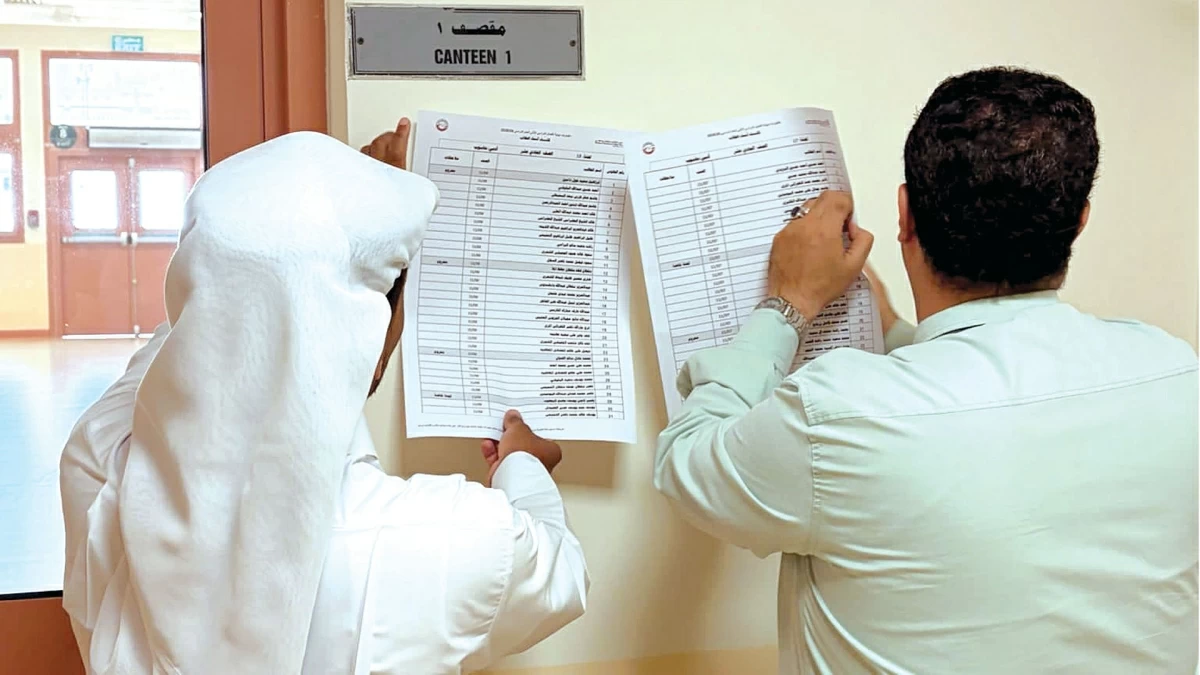
Schools have also finished preparing student rosters and distributing them to the examination committees in accordance with the approved regulations, so that the number of students within one committee does not exceed 25 students, ensuring the provision of an appropriate testing environment that helps with focus and discipline. Preparations included issuing student cards for the exams and sticking them on the tables inside the committees well before the exam date, in addition to preparing information boards and lists for distributing students to the various halls to facilitate the process of reaching the committees from the first day of the exams.
Organizational teams of teachers and administrators have also been formed to guide students and help them reach their committees with ease, which contributes to the smooth flow of entry and reduces congestion during the morning period, especially in the first days of exams, which usually witness heavy movement of students and parents.
They advised students to come to school early, no later than seven-thirty in the morning, as committee doors open at seven-forty-five, while the exam begins at eight in the morning, stressing the importance of investing time in organized review and avoiding staying up late and exhausted during the exam period.
They also called on students to rely on the textbook, official educational sources, and the Qatar Learning Platform for review, to benefit from available applications and exercises, to stay away from unapproved external manuals, and to focus on understanding academic content and answer skills instead of just memorization. As part of the final preparations, during the past weeks, schools completed practical tests for all transportation classes, which included science, computing, information technology, and physical education subjects, in addition to dictation and listening tests in the Arabic and English language subjects. School principals confirmed that the practical tests went in an organized manner and achieved their educational objectives, noting the students’ commitment to attendance and active participation, which reflects the students’ good level of preparation and keenness to achieve the best results.
June 4
The first cycle tests for students in the first, second and third grades begin on Thursday, June 4, with the Arabic language subject, followed by mathematics on June 7, then general culture and the English language, while the written tests conclude on June 11 of this year.
As for students in the fourth, fifth and sixth grades, their tests begin on the same date and continue until June 14, with a daily test starting from eight in the morning until nine thirty in the morning.
In the preparatory stage, students in the seventh, eighth and ninth grades take their tests starting on June 4 and continuing until June 14, with an hour and a half allocated for most tests and two hours for the English language test.
Exams for the tenth and eleventh grades in the secondary stage will also begin next Thursday, with students in the literary, scientific and technological tracks taking their exams according to separate schedules that will continue until June 15, with time periods ranging between one and a half and two and a half hours being allocated for some scientific and specialized subjects.
As for high school diploma students, their written exams begin on Thursday, June 4, with students in the literary track taking the history test, while students in the scientific track take the biology test, while students in the technology track take the information technology test, with the tests continuing until June 21.
The number of twelfth grade students applying for the second semester exams this year is 16,486 male and female students in various educational tracks, while the exams are held in 87 centers distributed across various regions of the country, including 43 centers for boys, 41 centers for girls, and 3 mixed centers.
All stages of preparing, reviewing and approving the tests, printing the forms and delivering them to the relevant centers have also been completed, in addition to preparing the committees and ensuring their complete readiness to receive students according to the highest standards of quality and accuracy.
Educational authorities confirmed that all tests were prepared in accordance with approved scientific and educational standards that measure the different levels of achievement among students, and take into account individual differences among them, in order to achieve justice and objectivity in the evaluation process.
On the awareness side, schools have intensified their efforts over the past few days to educate students about the instructions for exams. Schools have confirmed that the priority during this stage is to provide a positive atmosphere that enhances students’ self-confidence and helps them focus, while emphasizing the importance of staying away from rumors and unreliable information that sometimes spread during exam seasons, and focusing instead on serious review and benefiting from approved educational sources.
These intensive preparations reflect the keenness of the Ministry of Education, Higher Education and government schools to make the exam season a success and to ensure that it proceeds according to the highest standards of quality and organization, in a way that achieves justice for all students and gives them the opportunity to demonstrate their academic abilities and reap the efforts of a full academic year, at a time when families and educational bodies are looking forward to positive results that reflect the volume of efforts made in the educational field throughout the academic year.
Daily reviews via the Qatar Learning platform
Schools provided daily reviews via the Qatar Learning platform for an hour and a half for the subject scheduled to be tested the next day, in addition to allocating phone numbers and direct lines to respond to student inquiries related to curricula and tests, ensuring continued academic support until the last days before the tests.
School principals pointed out the completion of the preparation of lists of observers from inside and outside the school, and the distribution of instructions related to monitoring and the work of the management and control committees, and reminding them of them during the recently held coordination meetings, in order to ensure unified procedures within all committees and achieve the highest levels of discipline.
Intensifying enrichment classes
School principals confirmed that the recent period witnessed the intensification of academic review programs within schools through enrichment classes that continued on a daily basis after the end of school hours, where additional classes were allocated to review lessons and focus on basic skills and training models, in addition to providing individual support to students who need to enhance their academic level in some subjects.
They explained that these free enrichment classes contributed to raising the level of students’ readiness and enhancing their self-confidence before taking the exams. They also provided the opportunity to address some aspects of academic weakness and provide the necessary educational support to students according to their various needs.
Text messages to parents
As part of enhancing communication with students and parents, schools were keen to send short text messages on a daily basis that included reminders of test dates and subjects scheduled for each day, in addition to a set of instructions and guidelines related to preparing for tests, which include the importance of sleeping early, getting enough rest, committing to organized review, and eating breakfast before heading to school.