Japan.
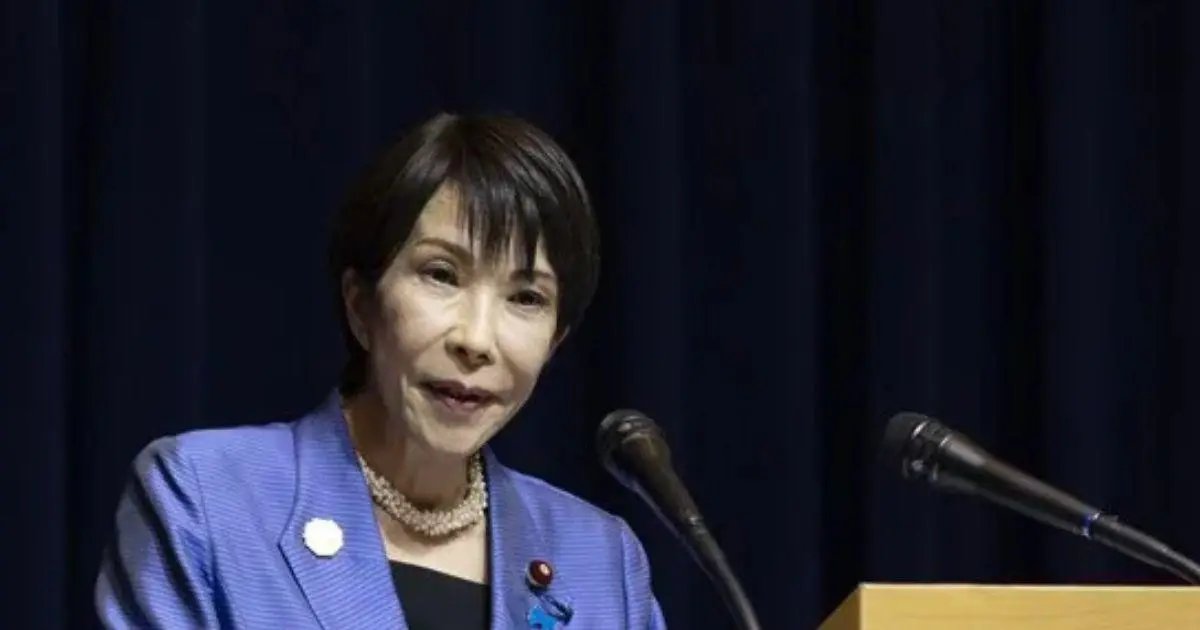
The prime minister of Japan, Sanae Takaichiurged the president of Iran, Masud Pezeshkianto show “flexibility” at a “crucial” moment in the negotiations for a peace agreement with the United States, despite the fact that Tehran announced the suspension of dialogue with Washington for the Israeli offensive against Lebanon.
The spokesman for the Japanese Government, Minoru Kiharasaid this Tuesday in a press conference that the call, which took place the day before, “occurred at a time when the exchange between USA and Iran is going through an extremely crucial phase,” amid new rounds of US and Iranian attacks.
Kihara explained that this is the first call between Takaichi and Pezeshkian in a month, a period in which the head of the Japanese Government “ratified cooperation with leaders of several countries to work on pacifying the situation,” including the tenant of the White House, Donald Trump.
Late Monday afternoon, Takaichi conveyed to the Iranian president his hopes that “this opportunity will be fully exploited so that Iran continues to demonstrate maximum flexibility and an agreement is reached as soon as possible.”
Likewise, he reiterated his request that the ships that remain stranded in the area “be able” to cross the strategic Strait of Hormuz “freely and safely as soon as possible,” as indicated in his profile on the social network X.
The call came hours before Trump declared that a deal to end Iran’s war and unblock Hormuz could be reached next week, even though Iranian officials said they had paralyzed peace negotiations in retaliation for Israel’s offensive against Lebanon.
In recent hours, Israel has intensified its military offensive in Lebanon, in an escalation that violates the ceasefire in force since April and that put at risk the new round of peace talks scheduled for this Tuesday in Washington with the Lebanese Government, a process that the Shiite militia party Hezbollah rejects.
The offensive against Hezbollah, an ally of Iran, also threatens talks between Washington and Tehran, which for weeks have been exchanging drafts for an agreement to end the war that began in February and allow the reopening of the Strait of Hormuz, a key route for global oil trade.