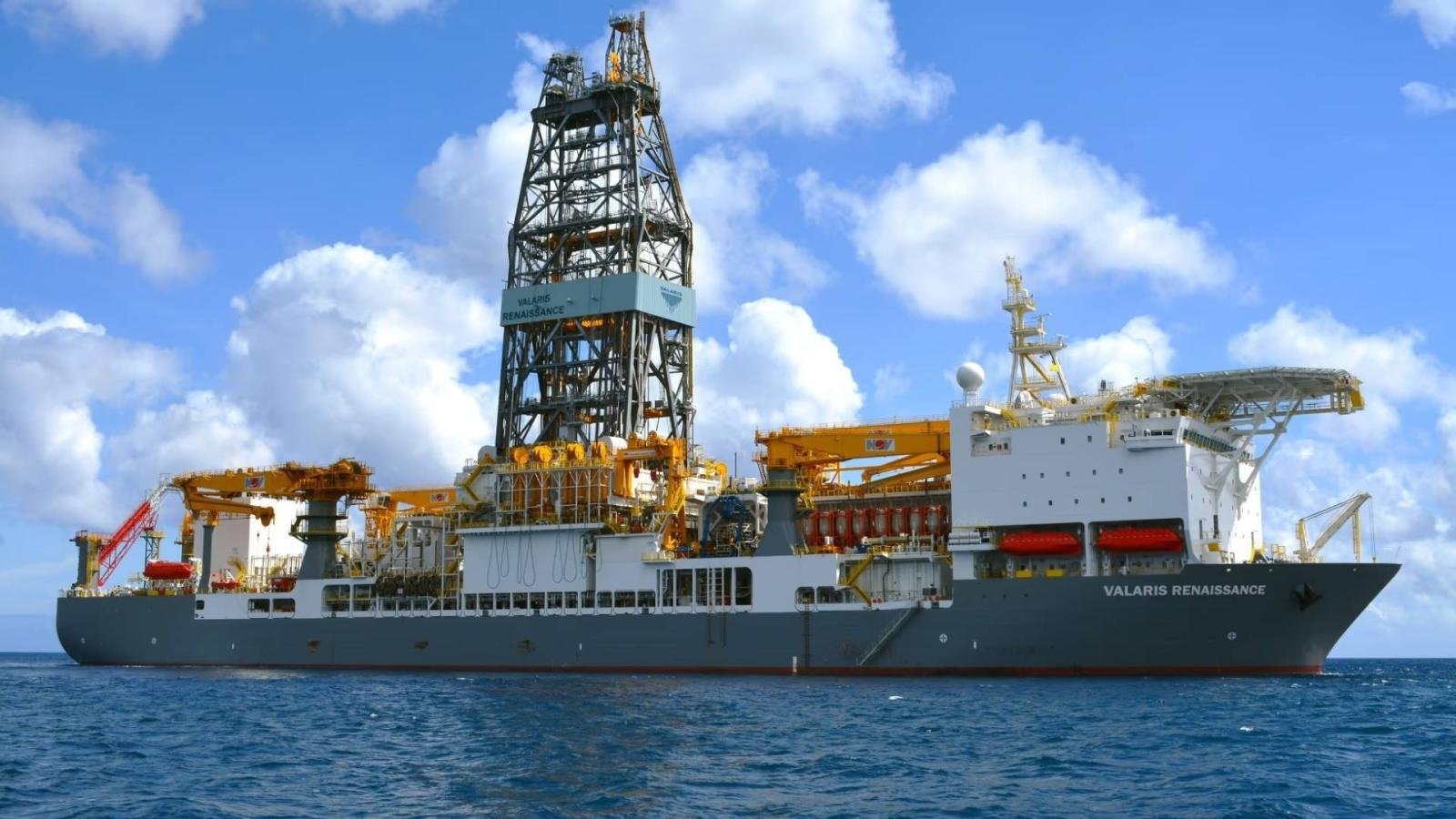
Test drilling at Brazil to ascertain whether the largest deposit oil discovered in the last 25 years is economically exploitablethe company is preparing to carry out BP.
In August 2025, BP announced that during exploratory drilling in the Santos basin off Brazil (about 400 km south of Rio de Janeiro) detected at a depth of 5,855 meters a particularly notable one deposit hydrocarbons in the Boomerangue sea “plot”.
By mid-2027 the company will do 3 special drillings to measure the size, quality and quantity of oil in the field.
Initial estimates placed the vertical column of hydrocarbons at a height of about 500 meters. However, according to a recent update issued by BP at the end of October, discovery actually involves a total hydrocarbon column of approximately 1,000 meters, which includes 100 meters of crude oil and 900 meters of condensate-rich natural gas.
The reservoir consists of high-grade carbonate rocks that formed beneath the subsoil saltalso known as pre-saline rocks, and extends over an area of more than 300 square kilometers, roughly the size of the whole of Paris.
Simply put, it is a huge “underground tank” which can accommodate large quantities oil and natural gasunder very difficult geological conditions, which makes the discovery extremely important for the company and the energy market.
BP is in the process of conducting laboratory tests to determine the characteristics of the field, the ratio of gas-oil and condensate-gas, as well as for the estimation of volumes. The planning of the assessment activities is ongoing, while thedrilling operations are expected to begin in early 2027, subject to obtaining the required regulatory approvals.
Gordon Birrell, BP’s executive vice-president of Production and Operations, said: “This year has seen significant progress for BP’s upstream division, with six major projects underway, five more approved and a number of discoveries, including Boomerangue. Although we are still in the exploration phase, initial results are encouraging, indicating a large hydrocarbon column and a significant volume of fluids in the reservoir.”
It is noted that BP had announced from the beginning that it was there in search of a partner for the exploitation of the deposit, which according to the announcement may last one to two years, with the aim of establishing an agreement before making the final investment decision.
According to Andre Guevara, head of BP Brazil, a potential partner is Petrobras, Brazil’s state-owned oil company; which, according to analysts’ estimates, was the biggest “favorite” from the beginning.