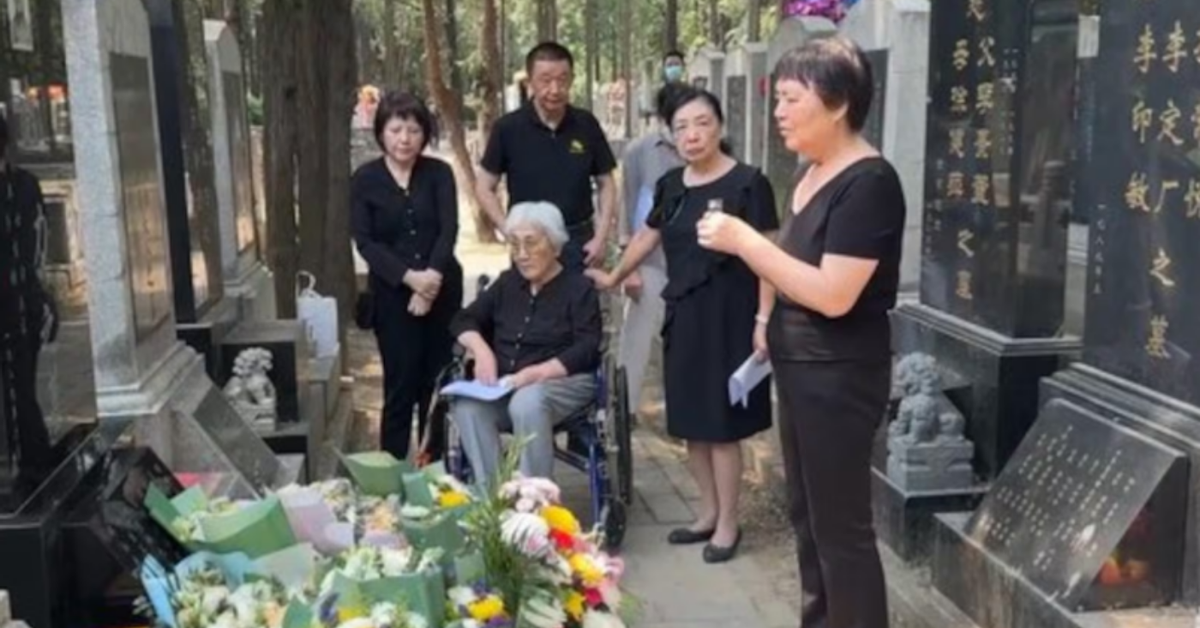
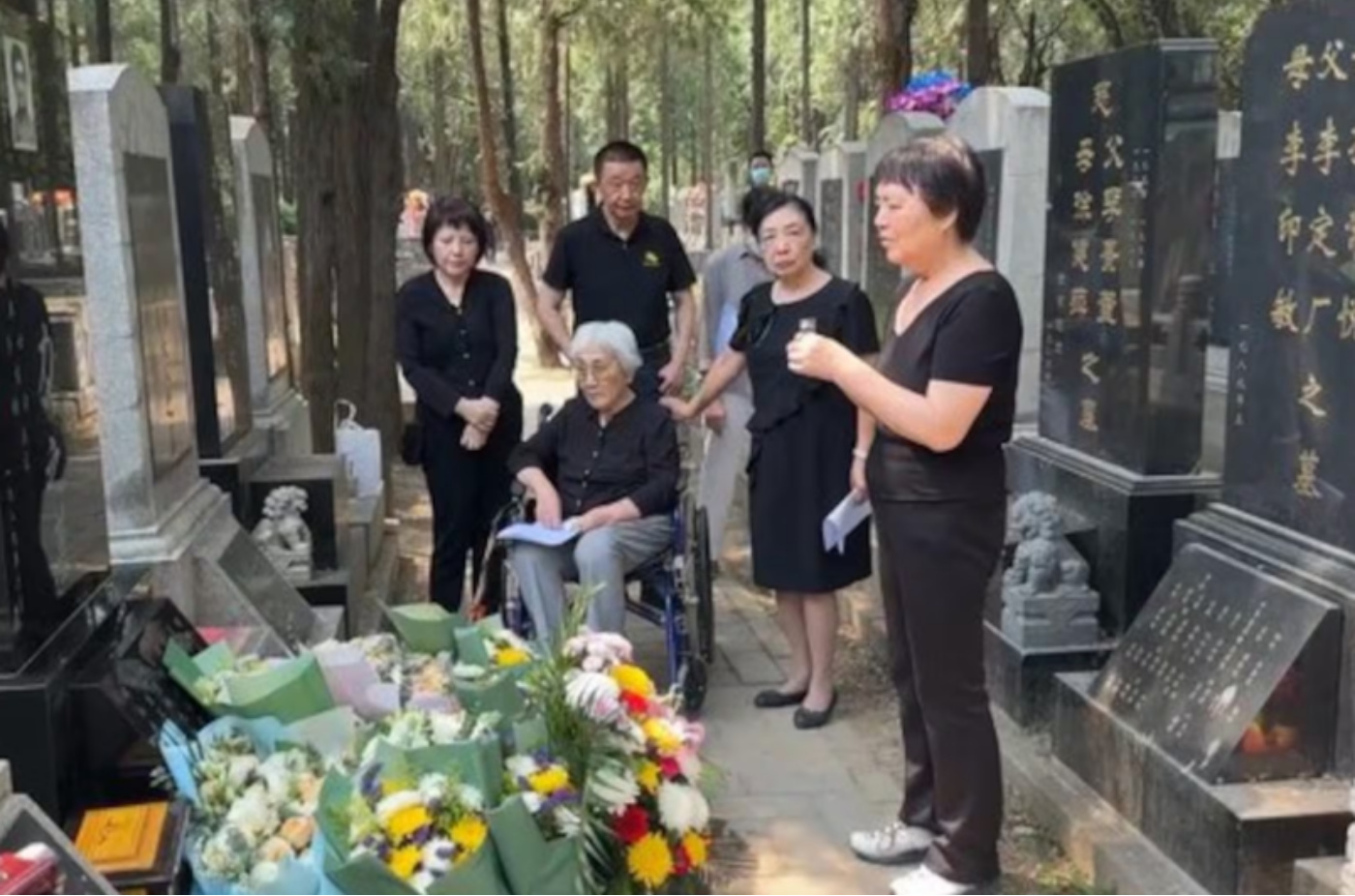
Beijing / Taipei /The Mothers of Tiananmen demanded that the Chinese authorities clarify how many people died, were injured or disappeared during the military repression of 1989, as this Thursday marks the 37th anniversary of the massacre.
The group, which brings together relatives of victims, asked the Chinese government to “honestly face” the facts, “recognize its mistakes,” “make public the truth” and “be accountable” to the families and Chinese society, according to a statement from the group, published in the days leading up to the anniversary by Human Rights in China (HRIC), an NGO founded in 1989 by Chinese citizens abroad.
“Today there is still no clear balance of how many died, how many were injured or how many disappeared during the repression,” the Tiananmen Mothers noted.
“Today there is still no clear balance of how many died, how many were injured or how many disappeared during the repression”
The Tiananmen massacre occurred on the night of June 3 to 4, 1989, when soldiers and tanks of the Chinese Army made their way to the central square of Beijing and its surroundings, where students and workers had been demonstrating for weeks demanding an end to corruption and calling for greater political openness.
The number of victims was never officially revealed by Beijing and ranges between hundreds and thousands, according to the source.
The statement denounces that, “despite extraordinary technological advances,” “truthful accounts” about the massacre remain “inaccessible” in China, where it is not possible to speak openly about the episode or pay public tribute to the deceased.
They also stated that even private commemorations for family members have been under “intense surveillance” for years, which, according to the group, has contributed to “many young people being unaware that in June 1989 soldiers opened fire on students and unarmed civilians in Beijing.”
The group reiterated its historic demands: “disclose the full truth about the massacre”, “fairly compensate the victims and their families” and “demand legal responsibilities” from those who ordered or carried out the repression.
The Mothers of Tiananmen also denounced the changes in the official Chinese narrative about what happened, from the first references to the suppression of “riots” and a “counter-revolutionary rebellion” to the more recent formulation of “serious political unrest.” According to the group, these formulations seek to “hide” that the Government “deployed the Army against its own people.”
The Tiananmen Mothers also recalled General Xu Qinxian, then commander of the 38th Army, who refused to carry out the order to deploy troops against the protesters.
Xu’s case became relevant at the end of 2025, when a video of his military trial, held in the early 1990s, began to circulate on international social networks. He was sentenced to five years in prison, expelled from the Army and removed from public life until his death in 2021.
“Censorship, intimidation and harsh repression” from Beijing have not prevented Chinese citizens abroad from continuing to commemorate the massacre.
Several human rights organizations have joined the demand, including Human Rights Watch (HRW), which stated in a statement released in the days prior to the anniversary that the Chinese Government is “intensifying its efforts to erase the memory” of what happened, while reinforcing social control in the country.
“Censorship, intimidation and harsh repression” from Beijing have not stopped Chinese citizens abroad from continuing to commemorate the massacre, said Yalkun Uluyol, China researcher at HRW, adding that “by burying the past, the Chinese government is also burying respect for fundamental rights in the future.”
HRW recalled that the Chinese authorities continue to prohibit commemorations and that they “have not taken measures to offer information or compensation” to the families of the deceased or to “prosecute those responsible.”
The organization called on Beijing to respect the freedoms of “expression, association and peaceful assembly” and to put an end to the “harassment” and “arbitrary arrests” of those who question the “official version” about Tiananmen.
For its part, the Network of Chinese Human Rights Defenders (CHRD) assured this week that the Chinese authorities have never investigated or prosecuted those responsible for the repression, an “impunity” that, according to the entity, has “encouraged other human rights violations.”
“Members of the current leadership believe they can commit serious abuses because their predecessors did it in 1989 and after,” said Angeli Datt, CHRD research and advocacy coordinator.
CHRD also linked the memory of Tiananmen with the situation of labor rights in China, recalling that workers participated prominently in the 1989 movement and that among their demands were “better working conditions, the right to strike and independent unions.”
CHRD stated that in 2025 it documented more than 30 human rights defenders detained for participating in or commemorating the events of 1989.
CHRD stated that in 2025 it documented more than 30 human rights defenders detained for participating in or commemorating the events of 1989.
The institution also asked Beijing to annul cases against human rights defenders, including labor activists and people who participated in the events or tried to remember them.
The president of Taiwan, Lai Ching-te, is another of those who have joined the demand. “I sincerely hope that China can face head-on the incident of June 4 37 years ago (…), allow the population to freely express their opinions and that people of different generations and positions can participate in public decision-making,” said the island president through his official Facebook account.
Considered an “independence supporter” and a “troublemaker” by the Chinese authorities, Lai reported that during that night of June 4, thousands of young people were “killed and crushed mercilessly” by the Chinese Army.
“What was struck down and crushed then was not only the lives and youth of those who participated in the democratic movement, but also the desire and effort of an entire generation of China to pursue and realize freedom and democracy,” Lai said.
In the opinion of the Taiwanese president, a truly great country “should not worship the solidity of its ships and the power of its weapons or surrender to militarism”, but should “welcome different voices” and “have the courage to face the wounds of its history.”
“Only a country that respects its people, protects freedom and puts democracy into practice is a country truly worthy of respect,” said the leader of the autonomous island.
Currently, Taiwan is the only Chinese-speaking territory where the Tiananmen massacre is still publicly remembered, with a commemorative event in central Taipei, as China avoids any mention of the anniversary and keeps the traditional commemorative vigil banned in Hong Kong.
The Chinese Government referred to the facts this Thursday only to respond to the United States that there is already a “clear conclusion” and to accuse Washington of “distorting historical facts”
The Chinese Government referred to the facts this Thursday only to respond to the United States that there is already a “clear conclusion” and accuse Washington of “distorting historical facts” and interfering in its internal affairs, after the US Secretary of State, Marco Rubio, stated that “no attempt can erase history.”
Foreign Ministry spokesperson Mao Ning recalled today, in response to a question about Rubio’s statements, that the Chinese authorities consider the issue related to the “political turmoil that occurred in the late 1980s settled” as settled. Mao assured that China will continue to advance along the path of “socialism with Chinese characteristics” and affirmed that “no country or force can stop the advance of the Chinese people.”
The spokesperson expressed Beijing’s “strong dissatisfaction and firm opposition” and urged Washington to stop using “democracy and human rights” as a pretext to intervene in Chinese internal affairs.