Thursday, June 4, 2026
    The GeoStrategic Consensus
    No Result
    View All Result
    • Login
    • HOME
    • AMERICAS
      • Argentina
      • Brazil
      • Canada
      • Chile
      • Colombia
      • Costa Rica
      • Cuba
      • Dominican Republic
      • Ecuador
      • El Salvador
      • Greenland
      • Guatemala
      • Honduras
      • Mexico
      • Nicaragua
      • Panama
      • Paraguay
      • Peru
      • United States
      • Uruguay
      • Venezuela
    • ASIA-PACIFIC
      • Australia
      • Brunei Darussalam
      • Cambodia
      • China
      • Federated States of Micronesia
      • Fiji
      • Indonesia
      • Japan
      • Kiribati
      • Laos
      • Malaysia
      • Marshall Islands
      • Mongolia
      • Myanmar
      • Nauru
      • New Zealand
      • North Korea
      • Palau
      • Papua New Guinea
      • Philippines
      • Samoa
      • Singapore
      • Solomon Islands
      • South Korea
      • Taiwan
      • Thailand
      • Timor-Leste
      • Tonga
      • Tuvalu
      • Vanuatu
      • Vietnam
    • CARICOM
      • CARICOM – Non-English
        • Haiti
        • Suriname
      • CARICOM Associates
        • Anguilla
        • Bermuda
        • British-Virgin-Islands
        • Cayman-Islands
        • Curacao
        • Turks-and-Caicos
      • CARICOM English
        • Antigua and Barbuda
        • Barbados
        • Belize
        • Dominica
        • Grenada
        • Guyana
        • Jamaica
        • Montserrat
        • Saint Kitts and Nevis
        • Saint Lucia
        • Saint Vincent and the Grenadines
        • The Bahamas
        • Trinidad and Tobago
    • EURASIA
      • Armenia
      • Azerbaijan
      • Balarus
      • Georgia
      • Kazakhstan
      • Kyrgyzstan
      • Moldova
      • Russia
      • Tajikistan
      • Turkmenistan
      • Ukraine
      • Uzbekistan
    • EUROPE
      • Albania
      • Andorra
      • Austria
      • Bosnia and Herzegovina
      • Bulgaria
      • Croatia
      • Cyprus
      • Czech Republic
      • Denmark
      • Estonia
      • Finland
      • France
      • Germany
      • Greece
      • Holy See
      • Hungary
      • Iceland
      • Ireland
      • Italy
      • Kosovo
      • Latvia
      • Liechtenstein
      • Lithuania
      • Luxembourg
      • Malta
      • Monaco
      • Montenegro
      • Netherlands
      • North Macedonia
      • Norway
      • Poland
      • Portugal
      • Romania
      • San Marino
      • Serbia
      • Slovakia
      • Slovenia
      • Spain
      • Sweden
      • Switzerland
      • United Kingdom
    • MIDDLE EAST AND NORTH AFRICA
      • Algeria
      • Bahrain
      • Egypt
      • Iran
      • Iraq
      • Israel
      • Jordan
      • Kuwait
      • Lebanon
      • Lybia
      • Morocco
      • Oman
      • Palestinian Territories
      • Qatar
      • Saudi Arabia
      • Syria
      • Tunisia
      • Turkey
      • United Arab Emirates
      • Western Sahara
      • Yemen
    • SOUTH ASIA
      • Afghanistan
      • Bangladesh
      • Bhutan
      • India
      • Maldives
      • Nepal
      • Pakistan
      • Sri Lanka
    • SUB-SAHARAN AFRICA
      • Angola
      • Benin
      • Botswana
      • Burkina Faso
      • Burundi
      • Cabo Verde
      • Cameroon
      • Central African Republic
      • Chad
      • Comoros
      • Cote d’Ivoire
      • Democratic Republic of the Congo
      • Djibouti
      • Equatorial Guinea
      • Eritrea
      • Eswatini
      • Ethiopia
      • Gabon
      • Gambia
      • Ghana
      • Guinea
      • Guinea Bissau
      • Kenya
      • Lesotho
      • Liberia
      • Madagascar
      • Malawi
      • Mali
      • Mauritania
      • Mauritius
      • Mozambique
      • Namibia
      • Niger
      • Nigeria
      • Republic of the Congo
      • Rwanda
      • Sao Tome and Principe
      • Senegal
      • Seychelles
      • Sierra Leone
      • Somalia
      • South Africa
      • South Sudan
      • Sudan
      • Tanzania
      • Togo
      • Uganda
      • Zambia
      • Zimbabwe
    • HOME
    • AMERICAS
      • Argentina
      • Brazil
      • Canada
      • Chile
      • Colombia
      • Costa Rica
      • Cuba
      • Dominican Republic
      • Ecuador
      • El Salvador
      • Greenland
      • Guatemala
      • Honduras
      • Mexico
      • Nicaragua
      • Panama
      • Paraguay
      • Peru
      • United States
      • Uruguay
      • Venezuela
    • ASIA-PACIFIC
      • Australia
      • Brunei Darussalam
      • Cambodia
      • China
      • Federated States of Micronesia
      • Fiji
      • Indonesia
      • Japan
      • Kiribati
      • Laos
      • Malaysia
      • Marshall Islands
      • Mongolia
      • Myanmar
      • Nauru
      • New Zealand
      • North Korea
      • Palau
      • Papua New Guinea
      • Philippines
      • Samoa
      • Singapore
      • Solomon Islands
      • South Korea
      • Taiwan
      • Thailand
      • Timor-Leste
      • Tonga
      • Tuvalu
      • Vanuatu
      • Vietnam
    • CARICOM
      • CARICOM – Non-English
        • Haiti
        • Suriname
      • CARICOM Associates
        • Anguilla
        • Bermuda
        • British-Virgin-Islands
        • Cayman-Islands
        • Curacao
        • Turks-and-Caicos
      • CARICOM English
        • Antigua and Barbuda
        • Barbados
        • Belize
        • Dominica
        • Grenada
        • Guyana
        • Jamaica
        • Montserrat
        • Saint Kitts and Nevis
        • Saint Lucia
        • Saint Vincent and the Grenadines
        • The Bahamas
        • Trinidad and Tobago
    • EURASIA
      • Armenia
      • Azerbaijan
      • Balarus
      • Georgia
      • Kazakhstan
      • Kyrgyzstan
      • Moldova
      • Russia
      • Tajikistan
      • Turkmenistan
      • Ukraine
      • Uzbekistan
    • EUROPE
      • Albania
      • Andorra
      • Austria
      • Bosnia and Herzegovina
      • Bulgaria
      • Croatia
      • Cyprus
      • Czech Republic
      • Denmark
      • Estonia
      • Finland
      • France
      • Germany
      • Greece
      • Holy See
      • Hungary
      • Iceland
      • Ireland
      • Italy
      • Kosovo
      • Latvia
      • Liechtenstein
      • Lithuania
      • Luxembourg
      • Malta
      • Monaco
      • Montenegro
      • Netherlands
      • North Macedonia
      • Norway
      • Poland
      • Portugal
      • Romania
      • San Marino
      • Serbia
      • Slovakia
      • Slovenia
      • Spain
      • Sweden
      • Switzerland
      • United Kingdom
    • MIDDLE EAST AND NORTH AFRICA
      • Algeria
      • Bahrain
      • Egypt
      • Iran
      • Iraq
      • Israel
      • Jordan
      • Kuwait
      • Lebanon
      • Lybia
      • Morocco
      • Oman
      • Palestinian Territories
      • Qatar
      • Saudi Arabia
      • Syria
      • Tunisia
      • Turkey
      • United Arab Emirates
      • Western Sahara
      • Yemen
    • SOUTH ASIA
      • Afghanistan
      • Bangladesh
      • Bhutan
      • India
      • Maldives
      • Nepal
      • Pakistan
      • Sri Lanka
    • SUB-SAHARAN AFRICA
      • Angola
      • Benin
      • Botswana
      • Burkina Faso
      • Burundi
      • Cabo Verde
      • Cameroon
      • Central African Republic
      • Chad
      • Comoros
      • Cote d’Ivoire
      • Democratic Republic of the Congo
      • Djibouti
      • Equatorial Guinea
      • Eritrea
      • Eswatini
      • Ethiopia
      • Gabon
      • Gambia
      • Ghana
      • Guinea
      • Guinea Bissau
      • Kenya
      • Lesotho
      • Liberia
      • Madagascar
      • Malawi
      • Mali
      • Mauritania
      • Mauritius
      • Mozambique
      • Namibia
      • Niger
      • Nigeria
      • Republic of the Congo
      • Rwanda
      • Sao Tome and Principe
      • Senegal
      • Seychelles
      • Sierra Leone
      • Somalia
      • South Africa
      • South Sudan
      • Sudan
      • Tanzania
      • Togo
      • Uganda
      • Zambia
      • Zimbabwe
    No Result
    View All Result
    Agentially
    No Result
    View All Result
    Home AMERICAS United States

    Why Lebanon’s unhealed wounds pose a mortal threat to Trump’s Iran dealmaking

    The Analyst by The Analyst
    June 4, 2026
    in United States
    Why Lebanon’s unhealed wounds pose a mortal threat to Trump’s Iran dealmaking


    • Trump’s emergency diplomacy on Monday temporarily halted Israeli-Hezbollah escalation that threatened to derail his Iran talks.
    • Lebanon remains a volatile flashpoint because Iran views Hezbollah as critical to its regional power and Israel demands full disarmament.
    • The president’s intervention may have shown he can restrain Israeli Prime Minister Netanyahu, but deep-rooted Middle East conflicts could still upend any deal.

    AI-generated summary was reviewed by a CNN editor.

    READ ALSO

    Israel and Lebanon renew ceasefire deal without Hezbollah

    ‘Teachers Are Going to Hate It’: How Social Media Apps Hooked Teens at School

    It was a day that showed why the Middle East’s generational hatreds are so often treacherous for American presidents.

    On Monday morning, US President Donald Trump’s brittle diplomatic push to get out of the Iran war suddenly seemed to buckle. The causes, this time, were an Israeli threat to strike Tehran-backed Hezbollah in Beirut’s southern suburbs and militia missile attacks on Israel.

    The sudden escalation prompted an outpouring from Trump that betrayed his frustration with a conflict he launched in February that has now stretched into June, defying his hopes for a swift and clear-cut victory.

    “I really don’t care. I couldn’t care less,” Trump told CNBC, when asked about Iran’s claim it had suspended talks with the US because of what it regarded as Israeli ceasefire violations in Lebanon. The talks have become “very boring,” he said.

    But Trump nevertheless launched emergency diplomacy, calling Israeli Prime Minister Benjamin Netanyahu for a conversation that became acrimonious, with the US president using expletives to express his disapproval of the planned offensive in Lebanon.

    Trump also talked to Hezbollah through what he called “highly placed” representatives. He then announced on Truth Social that both sides had agreed not to shoot and said Iran talks were continuing at a “rapid pace.”

    Lebanon’s embassy in Washington later said Hezbollah had confirmed it would refrain from attacking Israel in exchange for Israel ceasing strikes in Beirut. Israel said in a statement that it would continue operations in southern Lebanon but tacitly announced that, for now at least, it would not strike Beirut.

    Trump’s intervention may have kept alive his Iran push — and along with it, hopes that the Strait of Hormuz will reopen and halt fast-worsening consequences for the global economy.

    A drone view shows vessels anchored at the Strait of Hormuz as seen from Musandam, Oman, on May 30.

    Monday’s drama may also have demonstrated to Iran that Trump still has the capacity to rein in Netanyahu — a factor that might be crucial to the survival of any US-Iran deal that Israel may oppose. Ali Fathollah-Nejad, founder and director of the Center for Middle East and Global Order, told Max Foster on CNN International that the call “speaks to the kind of power relations that exist between the United States and Israel.”

    Trump later told ABC that “there was a little glitch today, but I turned that one around very quickly, as you probably noticed earlier.”

    But history and the brutal realities of Middle East politics suggest that his diplomatic firefighting may be a temporary fix. The clashing pan-regional interests of powers such as Israel and Iran are likely to recur; so is the mistrust that has destroyed far more in-depth US Middle East peace initiatives than Trump’s. These intractable factors threaten the president’s hopes of finding a satisfactory way out.

    Why is Lebanon even a threat to US-Iran peace talks?

    The country, a narrow strip on the eastern shore of the Mediterranean, is some 1,000 miles northwest of the Strait of Hormuz, the critical artery of the global carbon economy that Iran effectively closed when the war started.

    The Trump team insists the tensions in Lebanon are distinct from its showdown with the Islamic Republic and should not affect progress in two-way talks on nuclear and missile issues.

    But Iran doesn’t see it that way.

    Lebanon lies to the north of Israel and has therefore long been a forward operating base for Iranian proxies that threaten the Jewish state. Tehran wants to keep Hezbollah as a viable force after years of its Islamic Revolutionary Guard Corps pumping in financial and military aid.

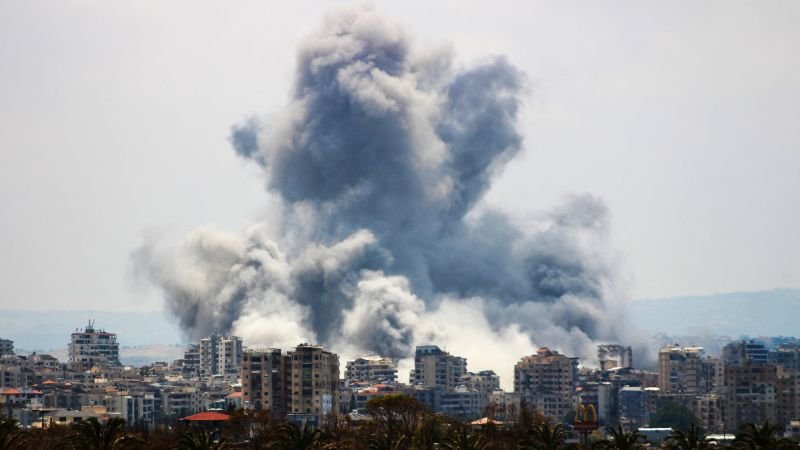
    Aftermath of an Israeli airstrike is seen on May 29, in Tyre, Lebanon.

    Although diminished by relentless Israeli attacks in recent years, Hezbollah, the Shiite militia and political network — which is embedded deep in Lebanon — remains a critical nexus in Tehran’s wider regional ambitions and to any hopes the IRGC could rebuild its capacity to threaten Israel after the war. Iran, unlike Washington, makes no distinction between US and Israeli interests — perhaps not surprisingly, given the joint bombardment that started the current war and killed its former supreme leader, Ali Khamenei.

    “Iran desperately wants to preserve what it built in Lebanon over the past four and a half decades,” Ronnie Chatah, a regional analyst and host of “The Beirut Banyan” podcast, told CNN International’s Isa Soares.

    While Trump may have headed off an Israeli escalation in Lebanon on Monday, he’s unlikely to have reshaped Israel’s enduring strategic assessments.

    Israel sees Hezbollah as a terrorist group and threat to its security. It is demanding the group be fully disarmed and holds Lebanon responsible for doing so. Yet many analysts argue that the weak Lebanese government — which rules a fragmented state that includes Maronite Christians and Shiite and Sunni Muslims — has no power to fulfill Israel’s demands. Lebanese leaders support Hezbollah’s disarmament, but argue it must follow a comprehensive political settlement likely to involve long negotiations with regional powers.

    An Iranian flag is seen as a woman walks past damaged buildings amid a ceasefire between Lebanon and Israel, in the southern suburbs of Beirut, Lebanon, on April 20.

    In the meantime, Israel is likely to continue to seek to suppress the power of Hezbollah. This means the Lebanon conflict will pose a constant threat to boil over and disrupt the US negotiating process with Tehran. It’s another example of a difference in outlook between the allies that started the Iran war. Israel regards protecting its security as an endless mission that may entail periodic wars. Trump is looking for a definitive resolution — and to get out of the region.

    The Trump administration understands how Lebanon threatens that goal. It recently held peace talks in Washington between Lebanese and Israeli officials. The meeting made only rudimentary progress on extending a ceasefire on the Israeli-Lebanon border — and already seems to have been overtaken by events.

    That leaves Lebanon what it has been for half a century — a victim constantly pulled toward political collapse and into humanitarian crises. It’s in the crossfire of proxy clashes involving regional rivals like Israel, Iran, Syria and various Palestinian groups. It’s still recovering from a 15-year civil war and an Israeli invasion in 1982 that tore it apart.

    While Trump jumped in to save the day on Monday, there are few signs he’s got the appetite or political capital to mastermind a more permanent peace in Lebanon. That would require a regional compact. He’s envisaged such a framework with his call to expand his Abraham Accords to encompass all regional Arab and Muslim powers in recognition of Israel. But other issues, including the Palestinian question, make this an elusive goal.

    So Lebanon will remain a festering sore that could undermine his Iran war diplomacy.

    President Donald Trump in the East Room of the White House in Washington, DC, on May 22.

    And Lebanon is not the only threat to that diplomacy.

    Iran’s intransigence further undercut Trump’s credibility at home and his claims about the war, such as his social media post Monday saying that “Iran really wants to make a deal.”

    Tehran’s behavior seems to indicate that it believes it can push the president and that he is the one who really wants a deal — after he sent back a proposed framework at the weekend with edits covering Iran’s nuclear commitments and its agreement to reopen the Strait of Hormuz.

    Hope for a breakthrough is not dead because, behind the spin, both Iran and the US have an interest in formally ending the fighting. Trump has been politically humbled by high gas prices. Iran gets most of its imports by sea, and the US blockade of its ships and ports is biting hard.

    But the stalemate endures.

    First responders gather at the site of an Israeli strike that hit near a hospital in the southern Lebanese city of Tyre on June 1.

    The US still insists Iran can never have a nuclear weapon. Tehran insists on its right to enrich uranium. While US bombing might have destroyed Tehran’s nuclear plants last year, its stocks of highly enriched uranium are still in the country.

    The ceasefire between the US and Iran is nominally holding, but it’s being tested by both sides. US forces attacked Iranian radar and drones at the weekend, and Iranian forces claimed to have hit a US airbase.

    This situation is tenuous enough on its own, without the added peril of a distant front in the US-Israel proxy war destabilizing it further.

    Trump may have contained the damage on Monday. But he got a fresh lesson that presidential ventures in the Middle East are easily begun but can be nearly impossible to escape.

    Source link

    Related Posts

    Israel and Lebanon renew ceasefire deal without Hezbollah
    United States

    Israel and Lebanon renew ceasefire deal without Hezbollah

    June 4, 2026
    ‘Teachers Are Going to Hate It’: How Social Media Apps Hooked Teens at School
    United States

    ‘Teachers Are Going to Hate It’: How Social Media Apps Hooked Teens at School

    June 4, 2026
    94 days of paralysis: The Strait of Hormuz remains choked off
    United States

    94 days of paralysis: The Strait of Hormuz remains choked off

    June 4, 2026
    Opinion | The Strait of Hormuz Is Blocked. The World Is Adjusting.
    United States

    Opinion | The Strait of Hormuz Is Blocked. The World Is Adjusting.

    June 4, 2026
    Inside the Obama Presidential Center
    United States

    Inside the Obama Presidential Center

    June 4, 2026
    •
          Video
        
        1:04


        Reuters
    United States

    • Video 1:04 Reuters

    June 3, 2026
    Next Post
    China and European Union countries discuss a mechanism for trade and investment consultation – Al-Thawra Net

    China and European Union countries discuss a mechanism for trade and investment consultation - Al-Thawra Net

    POPULAR NEWS

    E-scooter rules vary widely across Finnish cities, report finds | Yle News

    E-scooter rules vary widely across Finnish cities, report finds | Yle News

    June 3, 2026
    The EAEU countries called on Armenia to hold a referendum on joining the European Union

    The EAEU countries called on Armenia to hold a referendum on joining the European Union

    June 3, 2026
    Rashi: EU enlargement should be based on merit and equal rules

    Rashi: EU enlargement should be based on merit and equal rules

    June 4, 2026
    Austria again in the UN Security Council

    Austria again in the UN Security Council

    June 4, 2026
    More than 20 police officers tasked with protecting the British royal family suspended after sleeping on duty

    More than 20 police officers tasked with protecting the British royal family suspended after sleeping on duty

    June 4, 2026

    EDITOR'S PICK

    Siemens: The Supreme Court restores police protection to a witness in the case

    Siemens: The Supreme Court restores police protection to a witness in the case

    June 3, 2026
    Flow Antigua and Barbuda prepared for 2026 Hurricane Season

    Flow Antigua and Barbuda prepared for 2026 Hurricane Season

    June 3, 2026
    Parents answer again: The municipality’s answer is not sufficient

    Parents answer again: The municipality’s answer is not sufficient

    June 3, 2026
    Australia’s youngest murderer handed more jail time over child abuse material

    Australia’s youngest murderer handed more jail time over child abuse material

    June 3, 2026

    Recent Posts

    • Rashi: EU enlargement should be based on merit and equal rules
    • Austria again in the UN Security Council
    • More than 20 police officers tasked with protecting the British royal family suspended after sleeping on duty
    • Energy policies in the US and China: Green energy is produced simultaneously with conventional energy, it does not replace it

      © 2026 Agentially - Navigating shifting sovereignties and global risk .

      Welcome Back!

      Login to your account below

      Forgotten Password?

      Retrieve your password

      Please enter your username or email address to reset your password.

      Log In
      No Result
      View All Result

        © 2026 Agentially - Navigating shifting sovereignties and global risk .

        This website uses cookies. By continuing to use this website you are giving consent to cookies being used. Visit our Privacy and Cookie Policy.