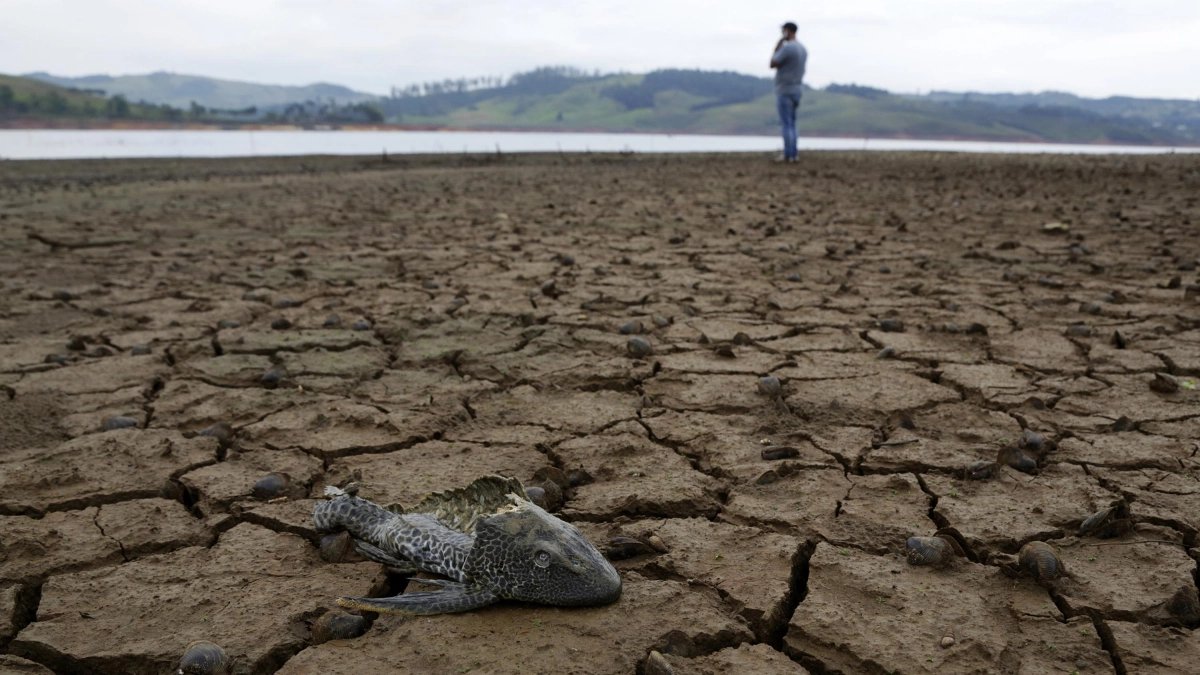
Given the projections of the World Meteorological Organization (WMO) that warn of a high probability of an intense El Niño phenomenon during the second half of 2026, the Government of Valle del Cauca and the Acuavalle company made an urgent call this Friday, June 12, to citizens to adopt measures for the rational and efficient use of drinking water.
The initiative seeks to mitigate the reduction of water sources in the region, anticipating the consolidation of the weather event which is expected to be strongest between the months of July and September.
Authorities recommend saving water during the crisis due to the El Niño phenomenon. Photo:Flor Díaz Ospino – EL TIEMPO
Mitigation campaigns and recommendations for efficient consumption
Jorge Enrique Sánchez, manager of Acuavalle, explained that the current weather phenomenon generates a direct impact on the availability of water resources. For this reason, and working in coordination with Governor Dilian Francisca Toro, the operating entity has initiated various awareness campaigns aimed at the community, with the aim of promote responsible practices that minimize water waste in homes.
Among the recommendations given by the authorities to users, the importance of reuse water collected during household choressuch as washing dishes and showering.
Likewise, it is advisable to reduce bathing time to a maximum of four minutes and restrict garden watering only at times of lower evaporation, specifically at 6:00 am or 6:00 pm
Compliance with these operational and preventive consumption guidelines requires joint action between citizens, the departmental government and municipal mayors.
It is important to highlight that, currently, Acuavalle provides the aqueduct service to more than 255,000 subscribers and the sewage service to more than 197,000 users, distributed in 33 municipalities in the region.
Authorities recommend adjusting measures to save the vital liquid. Photo:THE TIME
Global reach and climatic characteristics of El Niño
According to WMO data collected by local authorities, the El Niño phenomenon is a climatic event with an average duration of between 9 and 12 months, characterized by an increase in the temperature of the equatorial pacific ocean surfacein its central and eastern areas. Its frequency of appearance ranges in cycles of two to seven years.
At a global level, the international organization points out that this phenomenon usually causes a increase in rain in regions such as southern South America and the United States, while generating drought conditions and prolonged dry seasons in Central Americathe Caribbean, Australia, Indonesia, southern Asia and northern South America, the geographic area where Colombian territory is located.
There is concern about the high temperatures that have been recorded in recent days. Photo:Julián Ríos Monroy. THE TIME
They make official the arrival of the El Niño phenomenon
The El Niño climate phenomenon has already officially begun and could intensify during the coming months until become one of the strongest episodes on record since the middle of the 20th century, as reported this Thursday by the National Oceanic and Atmospheric Administration of the United States (NOAA).
The US agency confirmed that in recent weeks the characteristic conditions of this phenomenon in the equatorial Pacific Oceanwhere sea surface temperatures above usual averages have been recorded.
Details of the climatic phenomenon. Photo:
According to the most recent NOAA report, there is a 63% probability that an earthquake event will develop between November of this year and January of next. El Niño of very strong intensitypotentially ranking among the most powerful observed since the studies began. systematic records in 1950.
However, the declaration made by NOAA does not automatically imply that the phenomenon has been officially declared in all Latin American countries.
Caution should also be taken against possible fires. Photo:Julián Ríos Monroy. THE TIME
Although the US entity monitors the conditions of the central Pacific Ocean and issues global alerts, each nation has meteorological organizations in charge of evaluate the specific impacts on your territory before making an official declaration.
In the case of Colombia, this function corresponds to the Institute of Hydrology, Meteorology and Environmental Studies, while in Peru it is carried out by the Multisectorial Commission in Charge of the National Study of the El Niño Phenomenon and in Ecuador the National Institute of Meteorology and Hydrology.
National authorities use NOAA information as an early warning signal, but they usually officially declare the presence of El Niño when temperature anomalies and changes in weather patterns begin to manifest directly over their respective territories.
This content was written with the assistance of artificial intelligence, based on information from the Government of Valle del Cauca. In addition, it was reviewed by a journalist and an editor.
Check out more news in EL TIEMPO
Details of the disease outbreak in the country. Photo: