Defense Hercules aircraftwhich we regularly visit here in Greenland, gradually has many flight hours in the log book.
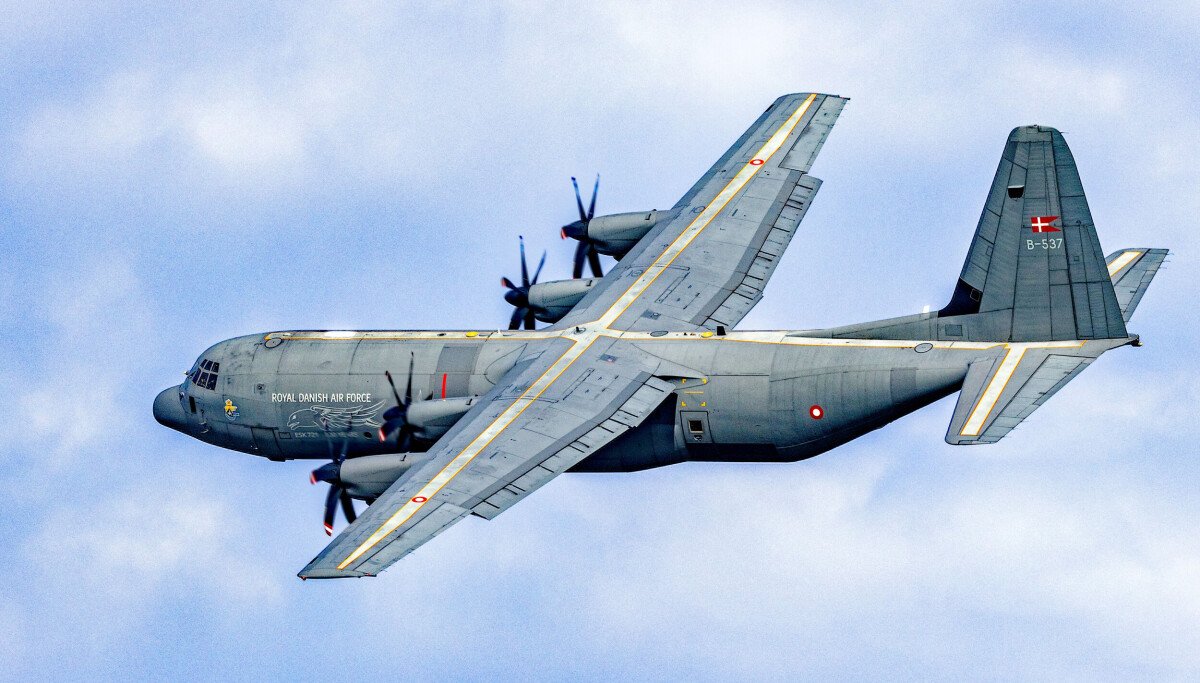
Last weekend, one of them completed a bit of a milestone: 10,000 flight hours. This is the plane with tail number B-537.
Defense Hercules aircraftwhich we regularly visit here in Greenland, gradually has many flight hours in the log book.
Last weekend, one of them completed a bit of a milestone: 10,000 flight hours. This is the plane with tail number B-537.
Like the three other Danish C-130J Hercules, it was delivered to the air force in the period 2004 – 2007, when the four aircraft replaced three aircraft of the C-130H model, which were purchased in 1975.
Since a Hercules aircraft flies at an average speed of 500 km/h, the flight time corresponds to 125 times around the Earth or 6.5 times to the Moon and back.
Over a year in the air
The Hercules aircraft belong to the Air Transport Wing in Aalborg. Here it has been calculated that the 10,000 flight hours correspond to 416 days – that is, over a year in the air in just under twenty years.
– In other words, our pilots, technicians and loadmasters have spent a lot of hours airborne in their flying office, notes the Air Transport Wing on Facebook.
Naturally, this has also resulted in many trips between Denmark and Greenland. Previously, it was mainly to Northeast Greenland and Kangerlussuaq, but due to the changed security policy conditions, it is now quite common to experience the Hercules planes at the civilian airports on the coast.
Due to the gravel runways in North-East Greenland, the Danish Hercules aircraft, together with the Challenger aircraft, are the only ones in the world equipped with a foamy foil coating on the underside, which is to protect against stone chips.
The Danish Hercules aircraft are also used in international missions and are, among other things, used in Africa and Afghanistan.
10,000 hours is really not very many hours for the type of aircraft. Last year, the factory, American Lockheed Martin, changed the aircraft type’s certified lifetime – subject to necessary upgrades along the way – from 90,000 hours to 125,000 hours for the aircraft’s wing structure.

Lots of space
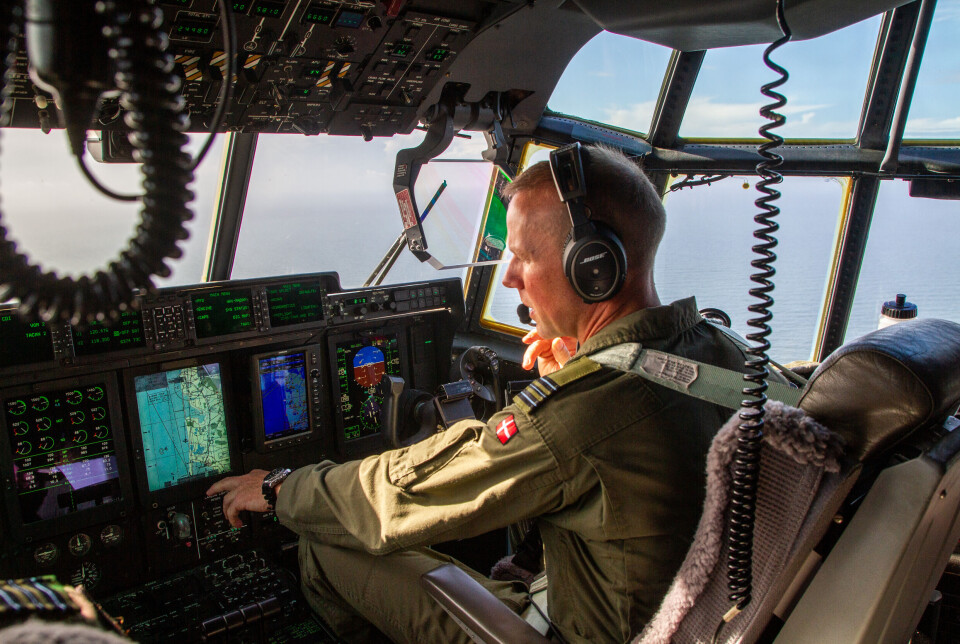
In a C-130J Hercules, there is room for 19 tons of cargo or 120 passengers. On passenger flights, the cabin is equipped with primitive seats that mostly look like something bought in Jysk. But there is a nice high ceiling and also room to walk around.
In addition, the C-130J is equipped with a toilet. This was not the case in the old Hercules aircraft from 1975.
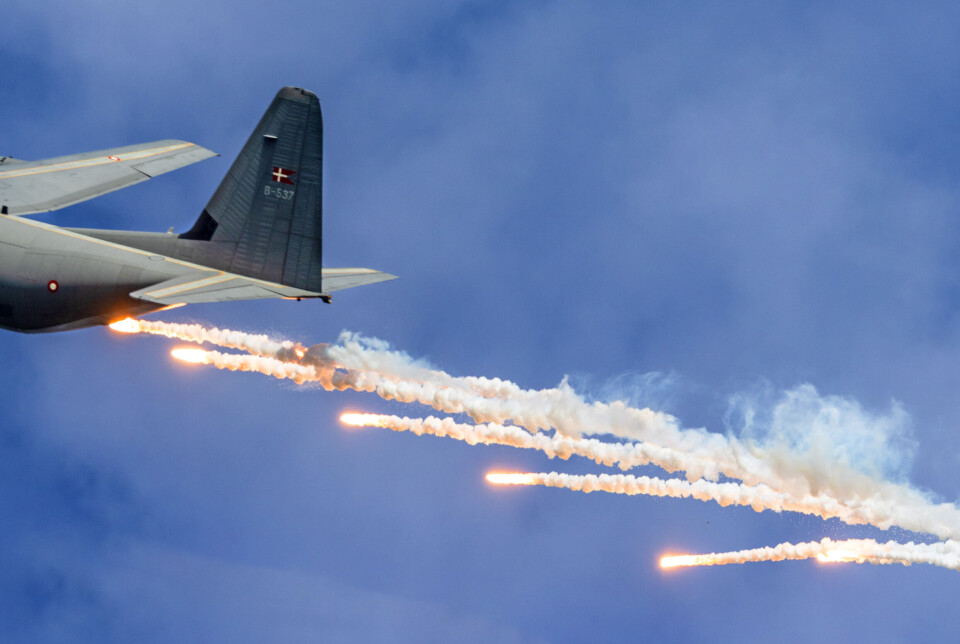
Although the Hercules aircraft are military aircraft, they are unarmed. But they are all equipped with so-called flares, which are fireballs that can be fired from the aircraft to prevent heat-seeking missiles from locking onto the aircraft.
The Hercules aircraft all belong to squadron 721 at Flyvestation Aalborg. It is Denmark’s oldest squadron, which turns 100 years old on 12 October. This is also why the B-537 in the photo is emblazoned with a dolphin with wings that is part of the Escadrille 721’a coat of arms.
The Air Force’s four Hercules aircraft have tail numbers: B-536, B-537, B-538 and B-583.