Canned mackerel in the cupboard is as indispensable in many European homes as milk is in fridges. But although mackerel products are common in kitchens, mackerel is no longer so common in the sea.
Over a number of years, the mackerel has been fished so hard that the biologists of the International Council for the Exploration of the Sea ICES sounded the alarm last year and recommended that the quotas for mackerel fishing in the north-eastern part of the Atlantic Ocean be cut significantly this year.
Canned mackerel in the cupboard is as indispensable in many European homes as milk is in fridges. But although mackerel products are common in kitchens, mackerel is no longer so common in the sea.
Over a number of years, the mackerel has been fished so hard that the biologists of the International Council for the Exploration of the Sea ICES sounded the alarm last year and recommended that the quotas for mackerel fishing in the north-eastern part of the Atlantic Ocean be cut significantly this year.
But now there is good news for the mackerel fishermen, from the big mackerel countries Norway and the Faroe Islands to Greenland, which is the smallest player in the game where big money is at stake for the shipping companies.
The marine scientists in ICES now surprisingly estimate that the spawning stock of mackerel this year in the North-East Atlantic is 3.2 million tonnes, which is just above the so-called critical limit.
This leads the International Marine Research Council to recommend a fishery in 2027 that is significantly higher than this year. The announcement from ICES came on Wednesday 30 September.
The critical limit is the lowest the spawning stock is assumed to be at in order to provide a reasonably good recruitment of fish.
ICES thus recommends a mackerel catch that does not exceed 353,000 tonnes next year. For 2026, the recommendation was a maximum of 174,000 tonnes. So on an annual basis, this is a doubling of the advice.
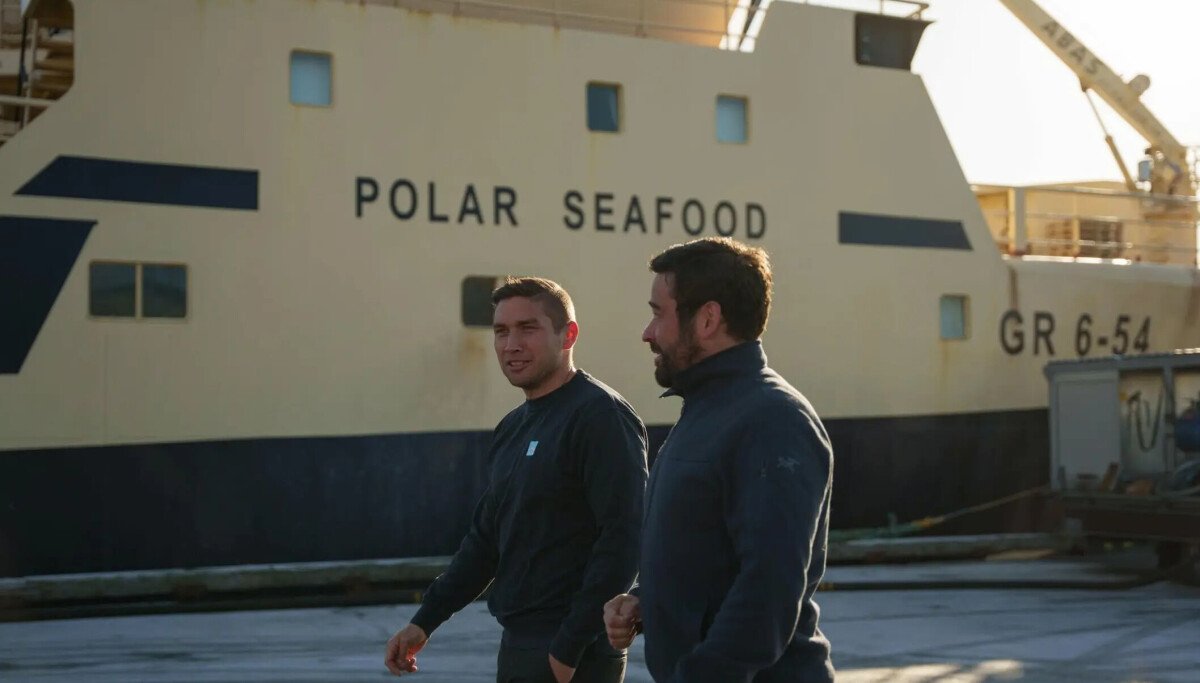
– We are pleased that the marine research council ICES has just assessed that the mackerel’s spawning biomass is now assessed to be above the critical biological limit, says CEO Bent Salling of Polar Seafood Greenland.
The company is one of the Greenlandic shipping companies involved in the mackerel fishery.
It is estimated that 400,000 tonnes of mackerel were caught this year
The marine scientists estimate that around 400,000 tonnes of mackerel have been caught this year, i.e. much more than the biologists’ recommended maximum total catch.
Norway, the Faroe Islands, Great Britain and Iceland entered into a mackerel agreement in December last year with a provisional total quota of just under 300,000 tonnes in 2026, even though, as mentioned, ICES had recommended that catches of North-East Atlantic mackerel this year did not exceed 174,000 tonnes.
The ICES recommendation for 2026 was also a cut of just under 80 percent compared to the total estimated fishery this year. The announcement came after many years of overfishing. Norway and the Faroe Islands in particular have had a large fishery, as the authorities have distributed high quotas.
What significance do you expect ICES’ advice for 2027 will have for Greenlandic shipping companies participating in the mackerel fishery in international waters?
– There has been a large decrease in TAC up to this year. Now we have to see what the biological advice means for next year’s quota, says Bent Salling.
TAC stands for the total allowable catch. In Greenland, it is Naalakkersuisut that sets the mackerel quota, the TAC, and allocates quotas to the shipping companies.
As mentioned, a total catch this year is expected to be around 400,000 tonnes in the North-East Atlantic. This means that in 2027 the countries must limit themselves to much lower quotas this year, compared to what has been fished this year, if they are to follow ICES’ advice.
“If the ICES council for 2027 is followed, there is still a 33 percent risk that the stock will fall below the critical limit in 2028,” writes the Norwegian Institute of Marine Research in a comment.
As we wrote the other day, the summer’s mackerel fishing in international waters is over for Greenlandic shipping companies. Greenland’s 2026 quota for mackerel is 20,376 tonnes compared to 37,502 tonnes last year.
Record high prices
Despite low quotas, the shipping companies have earned very well in 2026. The explanation is that prices for mackerel have been record high. In 2025, prices were also high.
Mackerel has for many years been among the most important fish species in Greenlandic fisheries. Compared to 2025, Greenland’s mackerel quota in 2026 has been reduced by 48 percent. On the other hand, the shipping companies’ income from the sale of the catches has been at the high end.
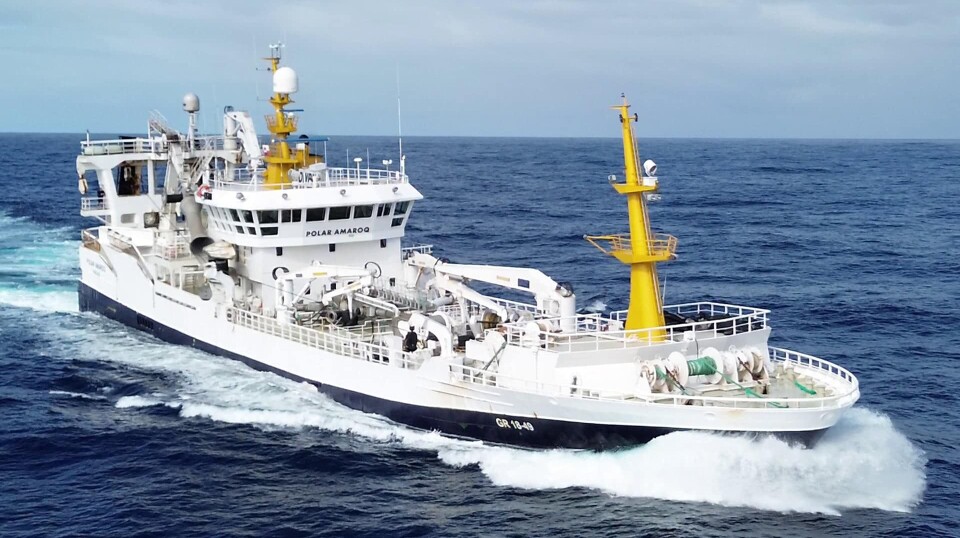
Polar Pelagic has this year fished for mackerel with the vessels Polar Amaroq and Polar Ammassak, while Polar Seafood Greenland fished with the vessel Polar Princess.
Greenland does not want to join the joint agreement
Polar Seafood Greenland is the main shareholder in Polar Pelagic, while the Icelandic Sildavinslan, which is part of the Samherji group, is a minority shareholder.
Royal Greenland is the main shareholder in Pelagic Greenland, while the Icelandic Íséfelag Vestmannaeyja is a minority shareholder. Pelagic Greenland has been fishing for mackerel with the vessel Tasiilaq. Sikuaq Trawl has been fishing for mackerel with the vessel Svend C.
It is Naalakkersuisut that sets Greenland’s TAC for mackerel and allocates quotas to the Greenlandic shipping companies. Over a number of years, Greenland has set their quota equal to 6.5 percent of the TAC, i.e. the maximum permitted total catch.
The coastal states of the Faroe Islands, Norway and Great Britain and Iceland agreed at the end of last year in the British capital London on a joint agreement on mackerel on a long-term management plan for 2025. It built on an agreement from 2024.
The hope of the four coastal states was that the coastal states of Greenland and the EU would join the agreement for this year. But it didn’t work out.
According to a source, Greenland also does not want to join a joint agreement on the 2027 fishery when the coastal states meet later this year in London, Sermitsiaq learns.