On Thursday, 28-year-old Annamaiya Norling sets off on an expedition to map famous shipwrecks.
Danish Annamaiya Norling travels on Thursday with a larger American-Canadian expedition to map and document two famous shipwrecks off Greenland and Canada.
This is written by Videnskab.dk.
On a daily basis, the 28-year-old Dane works as a marine archaeologist at the National Museum, but from Thursday the museum’s setting will be replaced by the strait between Greenland and Newfoundland in Canada.
– It’s absolutely crazy, and I’m really looking forward to it, says Annamaiya Norling to Videnskab.dk.
– It’s a huge opportunity that I never dreamed of getting.
Together with a team of divers, she must go down to a depth of 400 meters in a deep-sea submarine to investigate the historic shipwrecks on the seabed.
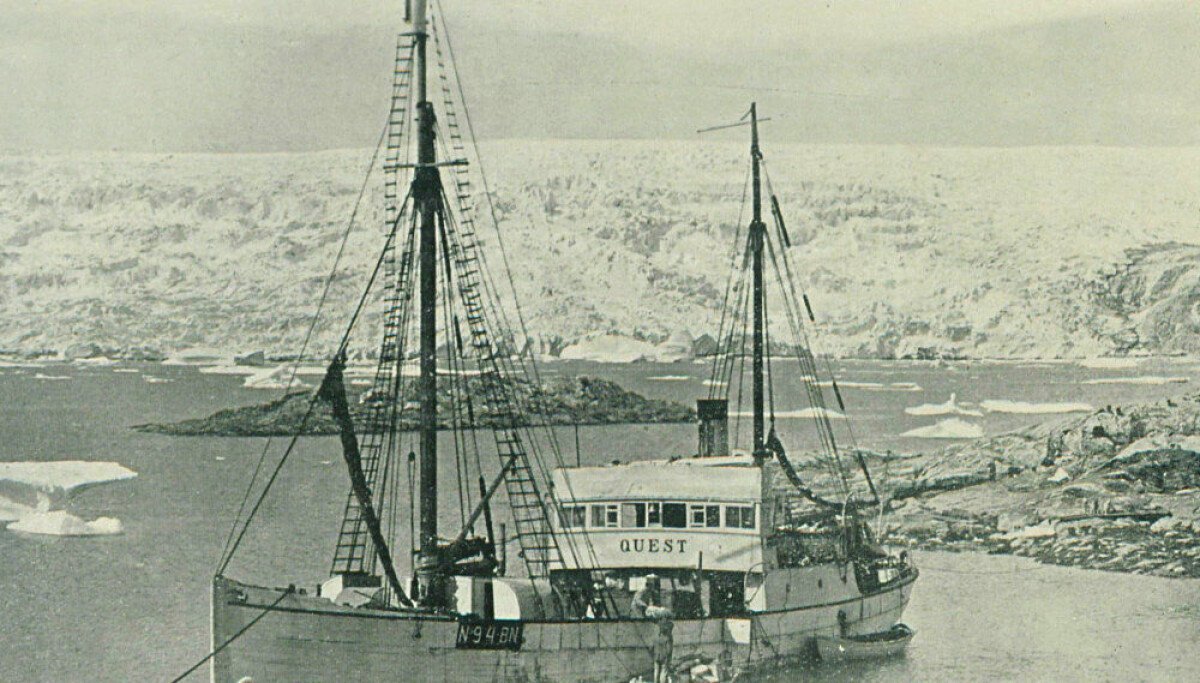
One wreck is the “Quest”, which was the ship on which the British polar explorer Ernest Shackleton headed for Antarctica before he died on board in 1922.
Annamaiya Norling, along with the rest of the team in the submarine, will be among the first people in decades to see with their own eyes the wreck of “Quest” at the bottom of the ocean.
The expedition must also map and document the wreck of “Terra Nova”, which is the ship from polar explorer Robert Scott’s expedition to the South Pole.
In 1912, Scott tried to become the first person in world history to reach the South Pole, but he was overtaken by Norwegian Roald Amundsen.
Scott arrived about a month after Amundsen, but subsequently died in the harsh polar landscape.
Marine archaeologist David Gregory, who is research professor and head of the Njord – Center for Maritime and Submarine Cultural Heritage at the National Museum, believes that the expedition is a fantastic opportunity for a young marine archaeologist like 28-year-old Annamaiya Norling.
– The whole world will follow the expedition, so it will be really exciting, he says to Videnskab.dk.
In addition to the submarine, there will also be several robot-controlled underwater cameras, which will recreate the two shipwrecks digitally with so-called photogrammetry.
In this way, researchers can in future examine the wrecks without diving to the bottom of the sea.
Annamaiya Norling tells Videnskab.dk that she has heard many stories about things that can go wrong.
– But I think the excitement exceeds the fear. I’m looking forward to it most of all, just super, she says.
The expedition’s submarine, which has the name “Alvin”, has previously been used to dive down to the Titanic wreck and has over 5000 dives behind it.
Ritzau/