Madrid/The Cuban Government plans to provide small means of work to families “in vulnerable situations”, pay for courses to young people who do not study or work, and create Social Work directorates in provincial and municipal administrations. The new regulations of the Ministry of Labor and Social Security were published this Thursdayand will come into force in the next seven days.
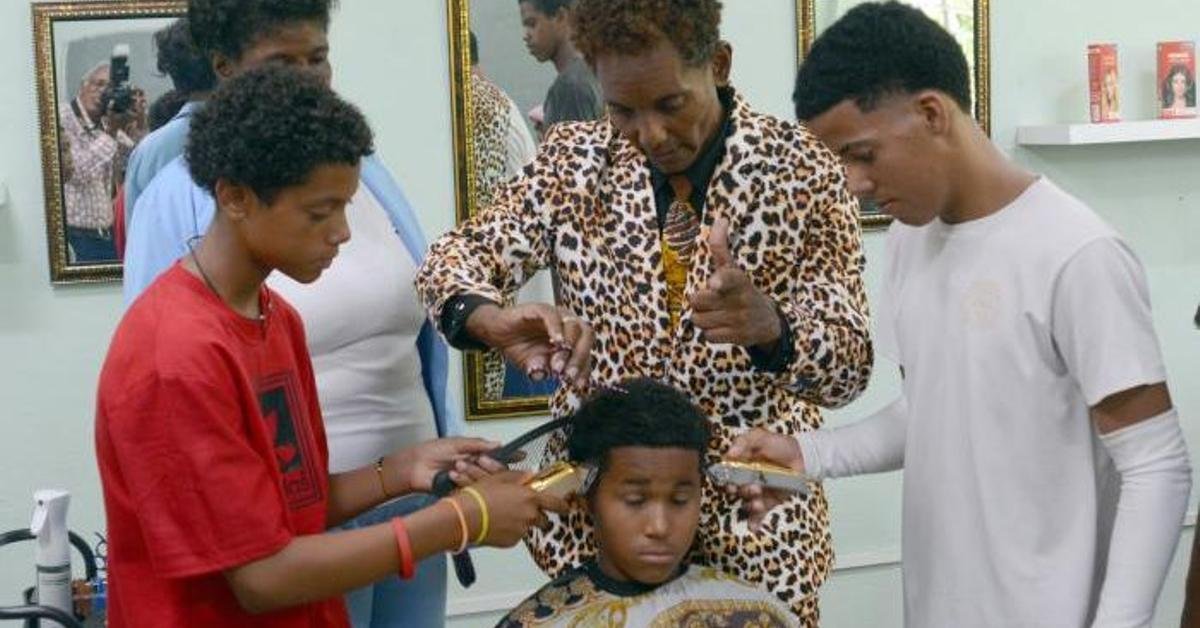
The new legislation establishes a training and preparation program for the labor insertion of young people between 18 and 30 years old who do not study or work. As stated to the official press Antonio Riverón Sánchez, Director of Employment of the Ministry of Labor, the objective is to “facilitate the incorporation of these young people into productive activities” through short courses “that respond to the employment needs of the territories.”
The program plans to pay the equivalent of the minimum wage, 3,210 pesos per month – about four dollars at the informal exchange rate – to young people who attend these trainings. None of the officials cited by Granma recalled that this amount is not enough to buy a carton of eggs and barely a liter of vegetable oil in Cuba.
The courses will last between one and six months, with a minimum of 20 hours of class per week. To receive the monthly income you must attend at least 85% of the classes and pass the evaluations. They may include trades that are needed in each territory, entrepreneurship, small business management and digital skills, explained Riverón.
To receive the monthly income you must attend at least 85% of the classes and pass the evaluations
Those who live in areas with a lot of youth disengagement, women with minor children and low income, people with disabilities and those who face obstacles to studying or working will have priority. The program allows exceptions within the accepted age range. Adolescents from 15 years of age may enter if their “social risk” is justified, and people from 31 to 35 with family care responsibilities.
If the young person is classified as vulnerable, the money will come from conditional social assistance benefits. In the rest of the cases it will be set by the employing entities.
Recipients may have to return the money, in whole or in part, if they abandon the courses without just cause. The same thing happens if they do not join an available job in accordance with what they have learned, or if they quit the job without reason in the first six months.
Another provision focuses on “the provision of small-scale productive assets to people in situations of multidimensional vulnerability.”
Another provision focuses on “the provision of small-scale productive assets to people in situations of multidimensional vulnerability.” It is aimed at households with members “able and willing to work” who commit to complying with an economic inclusion plan.
The director of the Social and Labor Observatory, Maily Morejón Concepción, explained that among the prioritized groups are caregivers, especially women with small children and little income. Also included are unemployed young people, people with disabilities who can carry out an economic activity and those who are “in informal employment.”
The means of work are grouped into three categories: agricultural and agroecological, intended for crafts, transformation and services, and technological or digital support. Each territory may add others. To receive them you have to pass several filters. The application is submitted to the municipal Labor Directorate, on its own initiative, through a social worker or through the employer.
The incentive that the new regulations offer to train is still far from guaranteeing coverage of basic needs
In the same Official Gazette, Decree Law 136 is also presented, which “establishes the bases to strengthen the social work system”; and Decree 182, which regulates the creation and organization of the Social Work directorates of the provincial and municipal administrations.
According to Machín Reyes, director of Social Work at the Ministry of Labor, the standard recognizes the intervention of social workers beyond communities and constituencies, in educational institutions, hospitals, polyclinics and other services. It also establishes coordination mechanisms with state and non-state entities, and a supervision system “aimed at guaranteeing the quality of the interventions and the professional development of these workers.”
The Minister of Labor and Social Security, Jesús Otamendiz Campos, said that the new measures seek to “strengthen social protection and enable people and families in vulnerable situations to generate income through their own work.” According to Otamendi, social assistance must also be conceived as a process of transition towards “economic autonomy” and insisted on the importance of rescuing “the value of work” as the main means of social protection.
The incentive that the new regulations offer to train is still far from guaranteeing coverage of basic needs. The disengagement of young people from work has been admitted by the Cuban authorities for years, as well as the flight of professionals in the state sector, dissatisfied with low salaries and poor working conditions. In July, the minimum wage went up from 2,100 to 3,210 pesos per month, but the Government itself admitted that the new amount “is still not enough.” In effect, the figure places Cuba among the countries with the lowest minimum wages in the world.