Paris/The possibility of suspending TikTok or Snapchat to contain looting in shops has opened a political gap in France. The initiative being considered by the Government raises doubts about its legal viability and criticism from the left, which considers it an affront to freedom of expression.
In one of the most established democracies in the EU, the tension between the preservation of individual and collective freedoms and the need to ensure public order is currently reflected both in the battery of bans on demonstrations during this weekend, and in the role of social networks.
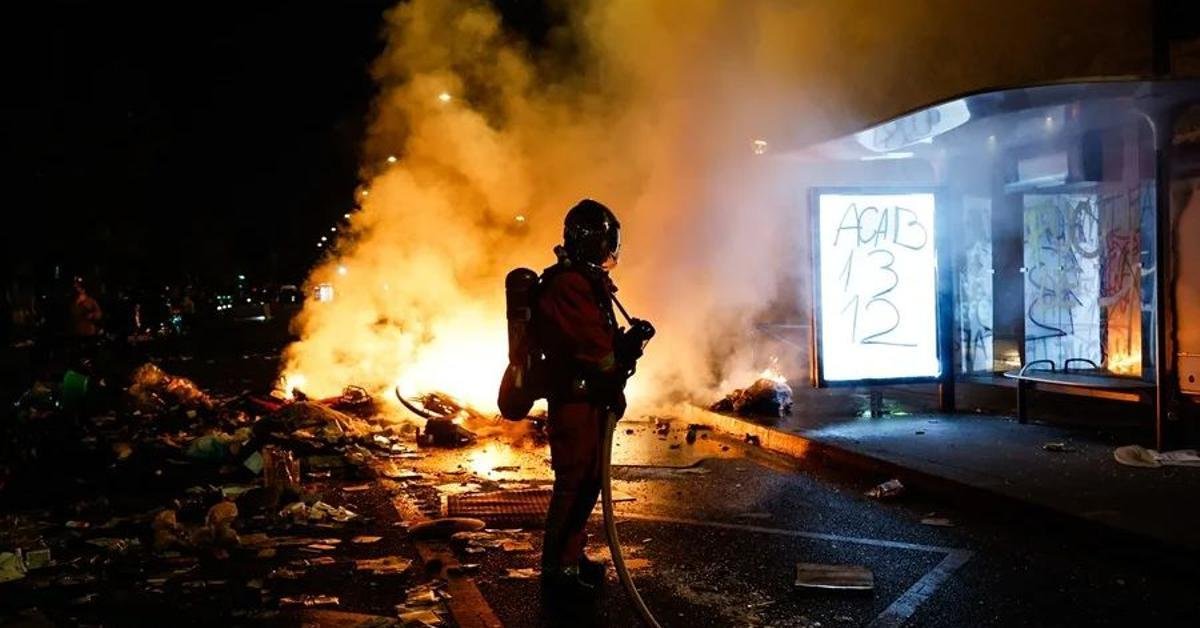
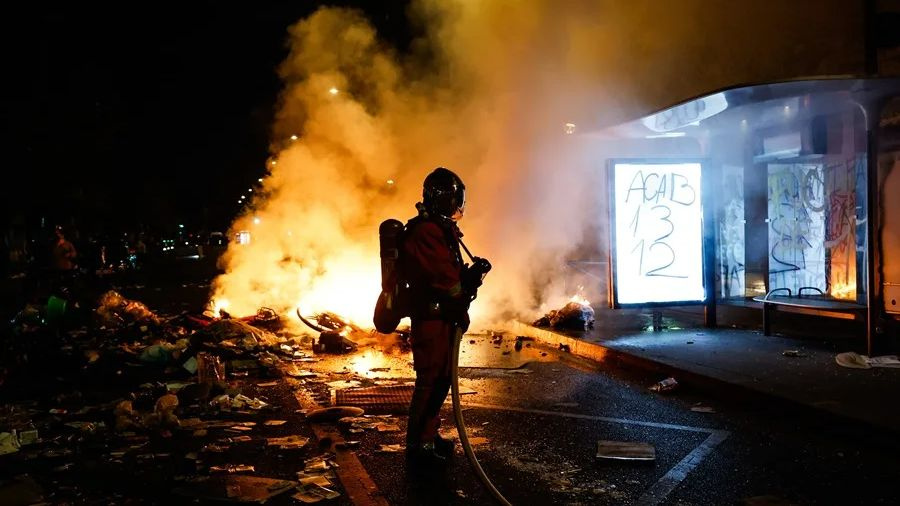
After the scenes of urban violence and looting experienced in various parts of France on October 17 and 18, apart from demonstrations against the rising cost of living, the French Government admitted that it is studying the possibility of suspending the use of networks during the days of mobilization.
For the Executive, the rioters organize the looting in real time, through encrypted messages on platforms such as TikTok or Snapchat. For this reason, the Minister of the Interior of France, Laurent Nuñez, has opened the door to a possible suspension.
For the Executive, the rioters organize the looting in real time, through encrypted messages on platforms such as TikTok or Snapchat
According to CNRS political scientist and public order specialist Sébastien Roché, the French Government would incur “a rather crude analysis” if it decreed such a measure.
“In the recent history of France in 2005 (serious riots in the Parisian periphery), or in May ’68, there were no networks. These are a widely used communication channel today, but social outbreak and collective mobilization can occur perfectly outside of this medium,” Roché said in statements to EFE.
Among the progressive forces, the main left-wing party, La Francia Insumisa (LFI) of leader Jean-Luc Mélenchon, leads the criticism of a possible cut that, according to its complaint, would mean a new authoritarian drift of the Executive, which it compares to dictatorial regimes.
A possible interruption of the networks would also have a difficult fit in the European Digital Services Act (known by its acronym in English, DSA), according to digital law specialists.
“During unrest, we must be able to temporarily and selectively block access to certain platforms to stop the herd effect.”
However, local political leaders, deputies and certain party leaders consider that suspending the platforms will serve not only to make it difficult for young looters to organize, but also to avoid creating a “mimesis” effect that spreads the movement.
The deputy and next presidential candidate from President Emmanuel Macron’s party, former Prime Minister Gabriel Attal, was one of the first leaders to ask the Executive for a temporary restriction on social networks.
“Social networks cannot be the meeting point for vandals or the engine of violent mimicry. During riots, we must be able to temporarily and selectively block access to certain platforms to stop the herd effect,” the young politician, 37, argued in a radio interview.
A position also shared by former European commissioner Thierry Breton, who considered that messaging platforms and applications facilitated the coordination of riots and the dissemination of images of looting, which in turn could encourage others to participate in looting.
This same Friday, the leader of the right-wing Republican party, former Interior Minister Bruno Retailleau, went further and asserted that this suspension would be easier if a state of emergency were decreed, a provision that, for the moment, Macron rules out.
“Social networks cannot be the meeting point for vandals or the engine of violent mimicry”
Despite the political will, the constitutional fit of the measure is not simple. One of the most recent precedents on French territory was that of the riots in the Pacific archipelago of New Caledonia in May 2024.
There, the French authorities decreed the suspension of TikTok – the network in which the rioters were organized, according to the Executive – after having established a state of territorial emergency.
Afterwards, the Council of State viewed the measure as “illegal” and “disproportionate to freedom of expression,” although it admitted that it could be endorsed “under exceptional circumstances” if a series of very strict requirements are met.
Political scientist Roché believes that a temporary suspension of a few hours could be accepted by the courts, without going further.
“It is difficult for me to believe that a general suspension can be accepted, even when Emmanuel Macron has placed his followers in the body that guarantees freedoms, which in France is the Constitutional Council,” he concluded.