When Abelardo de la Espriella assumes the presidency Next August 7, you will meet a yesenergy sector that requires urgent actionyes facing accumulated problems such as loss of gas self-sufficiencythe fall in oil productiondelays in electrical projects, the service crisis in the Caribbean and the El Niño phenomenon.
Given this panorama, the president-elect’s program raises a radical change in the management of public policyensuring that Colombia cannot continue treating this sector with ideological prejudices and improvisationsince the competitiveness, employmentthe stability of public finances and social investment.
The situation in electrical infrastructure is worrying. This year it is expected input of 4,475 megawatts to the system; However, as of June only 6.8 percent have entered of that goal.
This trend comes from behind: in 2024, only 25.3 percent of what was planned was fulfilled and in 2025 the execution fell to an alarming 10.8 percent. As a result, XM projects a firm energy deficit of the -2.3 percent by 2026which will worsen to -4.4 percent in 2027.
READ ALSO

Photo:iStock
For stop this risk of shortagesthe elected government proposes new auctions of reliability charge and modernize energy distribution networks.
Added to this scenario is the critical reality of the service in the Caribbean region. The situation of Afinia and Air-e (intervened since September 2024) remains untenable.
The solution proposed by Abelardo De la Espriella is to permanently lower the fare cost, correcting network damage at its rootthe energy theft, inefficiencies and regulations that “burden excessive burdens on users.”
Also, plan take advantage of the solar, wind and territorial potential of the Caribbean for attract investments that generate employment“turning the region into a useful development platform and far from political slogans.”
READ ALSO

Photo:Courtesy
Reactivation of hydrocarbons
The hydrocarbon panorama is also going through a critical phase. In natural gas, the national production has fallen to historic lowswhich led to the fact that in December 2024 the pThus he would lose his self-sufficiency. Today, the imports to supply homes and industries exceed 32 percent of total demand.
For its part, the oil production It has been below 750,000 barrels per day for seven months. This fall directly affects state incomesince the extraction of oil and gas provides the resources that sustain public finances through Ecopetrol.
From Espriella completely rejects giving up hydrocarbons ahead of time and proposes defend Ecopetrol as a key asset. Your strategy is using gas as a bridge in the energy transitionaccelerating the development of recent discoveries.
READ ALSO
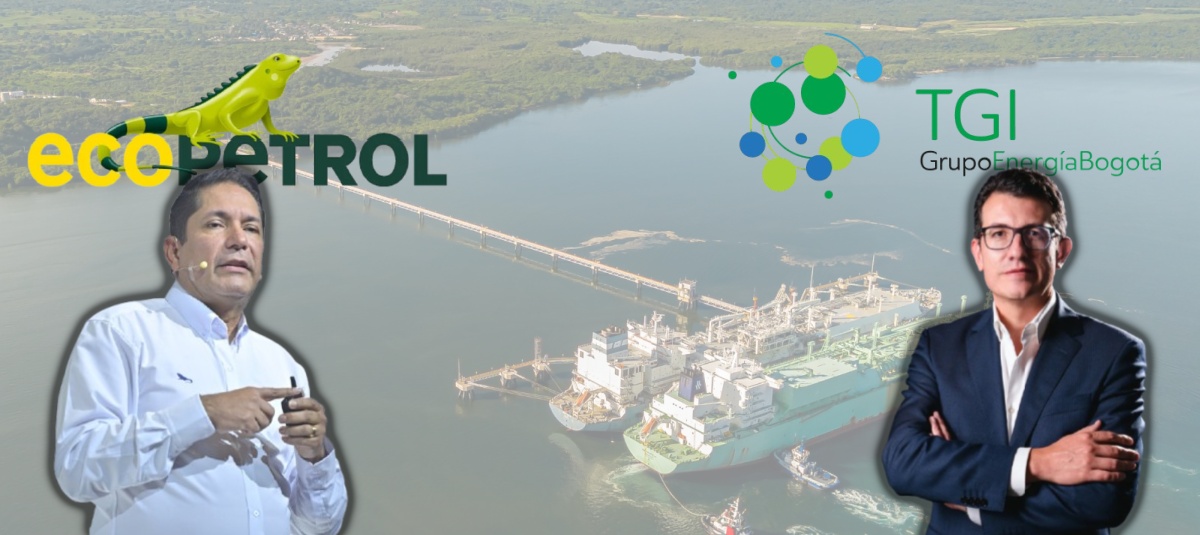
Photo:canva
Furthermore, he warns that letting reserves deplete without looking for new options would force the country to import more gas and other expensive fuels, raising the bills of families and industry.
Being a essential sector to finance health, education and social investmenthis government will seek to reactivate the exploration and production of hydrocarbons through the signing of new contracts.
In parallel, it will promote the solar, wind and water energy, taking advantage of the potential of regions such as La Guajira and the Caribbean. The plan consists of allocating a portion of oil revenues to finance clean sources and environmental protection.
The transition will advance by adding new sources without putting the country’s stability at risk, promoting alternatives such as gas, biomass, geothermal, biofuels and even the study of nuclear energy.
READ ALSO

Photo:EPM
The formula for ‘fracking’
Finally, about the use of fracking (unconventional deposits)he new government proposes a technical position: neither ideological prohibition nor blind permissions. The technique will be developed only under controlled pilot projectsconditioned to five red lines:
- Geographic limits: Total prohibition in moors, groundwater zones, protected areas and ethnic territories.
- Environmental baseline: Independent measurement of the state of water, air and seismic risk before operating.
- Real-time monitoring: Continuous surveillance of technical entities with public information for citizens.
- Suspension clause: If the checks demonstrate irreversible environmental damage, the pilot will stop immediately.
- Social license: Dialogue and prior information with the communities in the areas of influence.