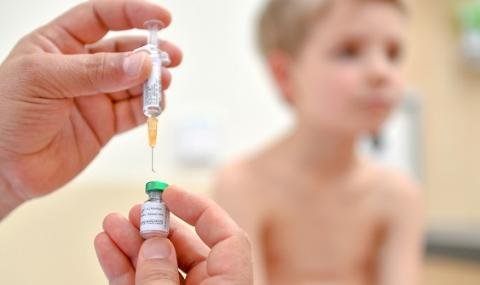
Measles is one of the most contagious diseases. It doesn’t leave much room for error. When enough people are immunized, the virus has a hard time finding a way. However, when vaccinations are delayed, missed or only appear on documents, the infection quickly reaches the most vulnerable.
The Ministry of Health reminds that in case of contact with an infected person, a doctor should be sought immediately. Within up to 72 hours after contact, a vaccine can be administered to prevent the development of the disease.
Since the beginning of the spread in the country, more than 20,000 vaccines against measles, mumps and rubella have been administered. This is an important response, but it comes after outbreaks occur. The real protection is timely immunization. In Bulgaria, it is mandatory – the first dose is given after the age of 13 months, and the second – at 12 years.
Cases are increasing mainly because of the decline in vaccination coverage, experts say. Anti-vaxxer fears and misinformation further erode trust. The result is visible – a preventable disease is spreading again.
Measles is not a harmless “childhood pox.” The first symptoms are high fever, red eyes and cough. The rash starts on the head and spreads over the body and the mucous membrane of the mouth. In severe cases, measles pneumonia may develop. It affects one in several hundred patients. About one in a thousand develop inflammation of the brain.
Therefore, the question is not whether vaccines are needed, but how many more cases are needed to make it clear that refusing immunization is not a personal risk. It affects everyone – babies, people with weakened immune systems and those who cannot be protected for medical reasons.
Claims that vaccines are dangerous or unnecessary continue to circulate in the public domain. Some of them are based on long-disproved theories, others on personal fears, which turn into general mistrust. Social networks amplify this effect by giving visibility to content without scientific value.
The result is real – parents postpone immunizations or refuse vaccines. In some cases, there are also gaps where people are considered immunized according to documents, but are not actually protected.
Refusal to vaccinate is not just a personal choice. It also affects people who cannot be immunized – young children, adults or patients with weakened immunity.
And the simple truth is this: the medical problem has already been solved – there is a vaccine. The challenge remains societal: how to restore trust and curb the spread of misinformation that has real consequences.