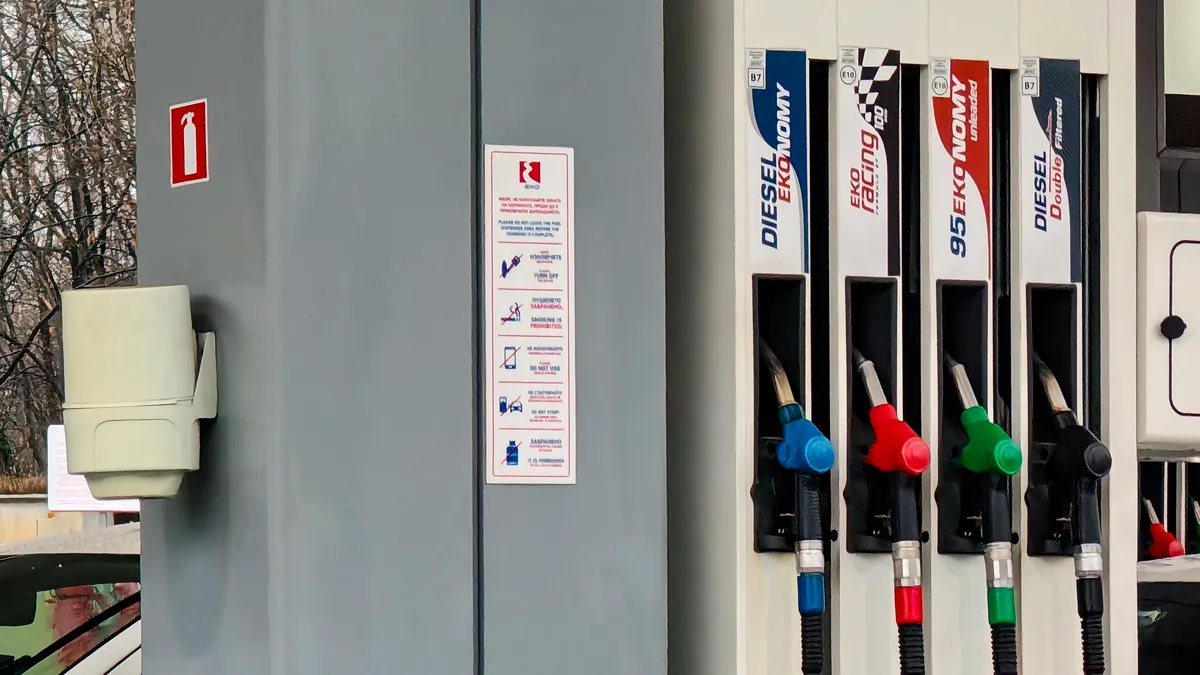
The expert explained that the main reasons for this position of Bulgaria are the “low base” from which the prices start, and the fact that diesel is the most used fuel in the European Union. This leads to stronger price pressure relative to gasoline. Increased demand and changes in foreign trade and exports also have an additional impact. According to the Fuelo platform, diesel in our country has jumped 43% since the beginning of the crisis in the Persian Gulf – the most in the bloc.
According to Tsvetomir Nikolov, the biggest problem is with kerosene.
“The EU has problems with the quantities of kerosene because it is a huge consumer and the local capacity does not satisfy the demand”, Nikolov explained and pointed out that traditionally the main supplies came from refineries in the Middle East, but after the restrictions around the Strait of Hormuz, a search for new suppliers around the world becomes necessary, which makes the process significantly more expensive.
“Prices have doubled there,” he added.
According to him, the shortage of kerosene is already affecting aviation, as some airlines have started to limit or cancel flights.
Nikolov also commented that crude oil pricing is usually based on long-term and relatively stable contracts. According to him, the main problem is not in the price of the raw material per se, but in the global market fluctuations, which can hardly be mastered by both Bulgaria and the European Union.
What is the situation with the big ones?
In Germany, for the second month already, fuel prices remain high, despite the introduced regulations, according to a study by Nova TV. Prices at gas stations continue to be above the psychological limit of 2 euros, which places the country among the three most expensive fuel in the European Union. Higher gasoline prices are only found in Denmark and the Netherlands.
A rule has been introduced in the country that prices can be increased only once a day – at 12:00 noon, but reductions are allowed at any time. Average values are around 2.09 euros for A95 gasoline and 2.15 euros for diesel.
Despite the measure, analysis shows that oil companies have increased their margins, especially on gasoline. Bigger profits were seen at small chains and independent petrol stations, with the highest markups in southern Germany, including Bavaria and Baden-Württemberg.
A new measure comes into effect on Friday – a reduction of the energy tax by 17 eurocents per liter for gasoline and diesel. The expectation is that the effect will not be felt immediately, but gradually. According to calculations by the Federal Office for Road Transport, for the period of the measure, drivers will save an average of around 33 euros for a diesel car and just over 21 euros for a petrol one.
At the same time, in France, diesel prices fell for the second week in a row – by around 15 euro cents per litre, although prices remained high compared to the period before the conflict in the Middle East. The earlier decline was around 8 euro cents.
Due to price fluctuations, there is also increased demand, leading to tension and fear of temporary fuel shortages. Some drivers even go to neighboring countries to charge cheaper.
France has not introduced such far-reaching measures because the government has limited budget options, but there is already a cap on gas station profits. The goal is that when global oil prices fall, this will affect the final prices for consumers more quickly.