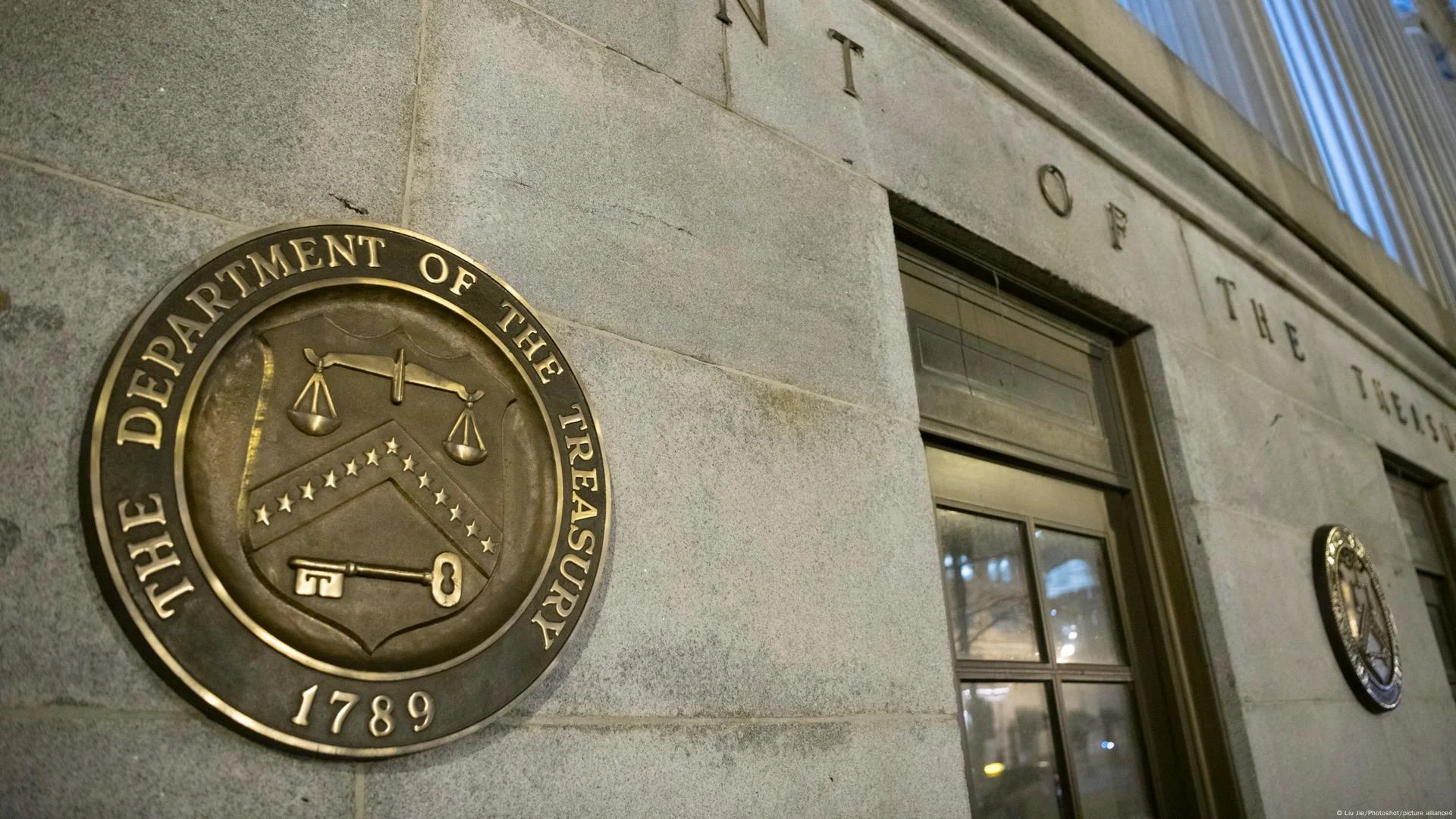
The Office of Foreign Assets Control (Ofac) of the Department of the Treasury of the United States published this Tuesday General License Number 57, which authorizes all financial services transactions involving the Central Bank of Venezuela (BCV), the Bank of Venezuela, the Banco Digital de los Trabajadores and the Banco del Tesoro, as well as entities in which these institutions own 50% or more of a stake.
The measure also covers individuals of the Venezuelan Government blocked only by Executive Order 13884, as long as they are not listed on Ofac’s SDN list. The license is effective immediately and covers a broad list of operations, including opening, maintaining and closing accounts; loans; transfers; the turns; dollar correspondent services; currency exchange; payments with debit and credit cards; digital wallets; remittances; payroll, pension and employment benefits processing, and cybersecurity and fraud prevention services.
American financial institutions can trust in the information of the originator or beneficiary of the transfers to comply with the rule, as long as they do not know or have reason to know that the operation violates the terms.
The measure does not unlock frozen assets nor does it lift sanctions completely. Nor does it authorize transactions with crypto assets, gold or other expressly prohibited activities.
International banks must maintain controls usual compliance procedures.
Economists explain the real scope
Hermes Pérez, former BCV official and university professor, in a thread on The rule generates a favorable impact on the exchange market. Pérez indicates that the license allows the resumption of international operations through the Swift system, reconnecting the country with global banking and the Federal Reserve, opening correspondent accounts, transferring funds and reducing the costs of remittances and exchange operations.
Pérez clarifies that This is not a complete withdrawal of sanctions, but rather an authorization with restrictions.
Alejandro Grisanti, director of Ecoanalítico, pointed out on his social networks that the Previous sanctions on the BCV limited the entire Venezuelan financial system. Grisanti explains that the loss of correspondents and overcompliance reduced the banks’ ability to operate with foreign currencies.
The new license, according to its analysis, reestablishes relations with international banking, eliminates operational obstacles and expands the participation of more institutions in the exchange market. Grisanti adds that this generates greater depth and stability in the system. In addition, he considers that the measure could open the door to the recognition of Venezuela by multilateral organizations such as the IMF, the IDB and the World Bank.
Grisanti warns, however, that the full effect depends on the BCV moving towards a new governance with independence, credibility and technical capacity.
For his part, in an interview with Circuito Éxitos FM, financial expert Asdrúbal Oliveros describes License 57 as a relaxation of sanctions and a “excellent first step.”
Oliveros states that The measure gives depth to the national exchange market and allows a greater number of financial institutions to be incorporated into currency management. “It will help the allocation of foreign currency flow by allowing a greater number of banks to participate. Not only via prepaid cards, but also through transfers and even in the future that these operations can be done in cash or international transactions,” he explained.
Oliveros added that this flexibility improves the efficiency of the system, facilitates transfers, remittances, payments to suppliers and greater access to cash in dollars. According to his criteria, the measure can reduce the exchange gap and contribute to lowering inflation, as long as it is combined with other actions.
However, he warns that the license does not resolve structural imbalances of the economy. Oliveros insists that three coordinated elements are needed: this financial flexibility, fiscal discipline (control of the issuance of bolivars) and a modification in the conditions of the BCV auctions so that the rate better reflects the reality of the market.
General License 57 complements License 56, which authorizes the negotiation of contingent commercial contracts with the Venezuelan Government. Both decisions represent partial and controlled relief from sanctions. Analysts agree that financial reconnection facilitates the flow of foreign currency from oil exports, makes remittances cheaper and contributes to greater exchange and inflation stability, although the final result depends on implementation by international banks and the internal policies of the BCV.