The government has approved the AI strategy of the Liechtenstein state administration. The document is intended to create the framework for how artificial intelligence will be used in public services in the future – responsibly, transparently and always under human control.
The strategy is based on four principles: responsibility, people-centeredness, transparency and efficiency and innovation. AI should support employees without them giving up their responsibility for action. The deployment should be communicated in a comprehensible manner for the population and workforce. The measures are implemented in the areas of people, organization, governance and infrastructure.
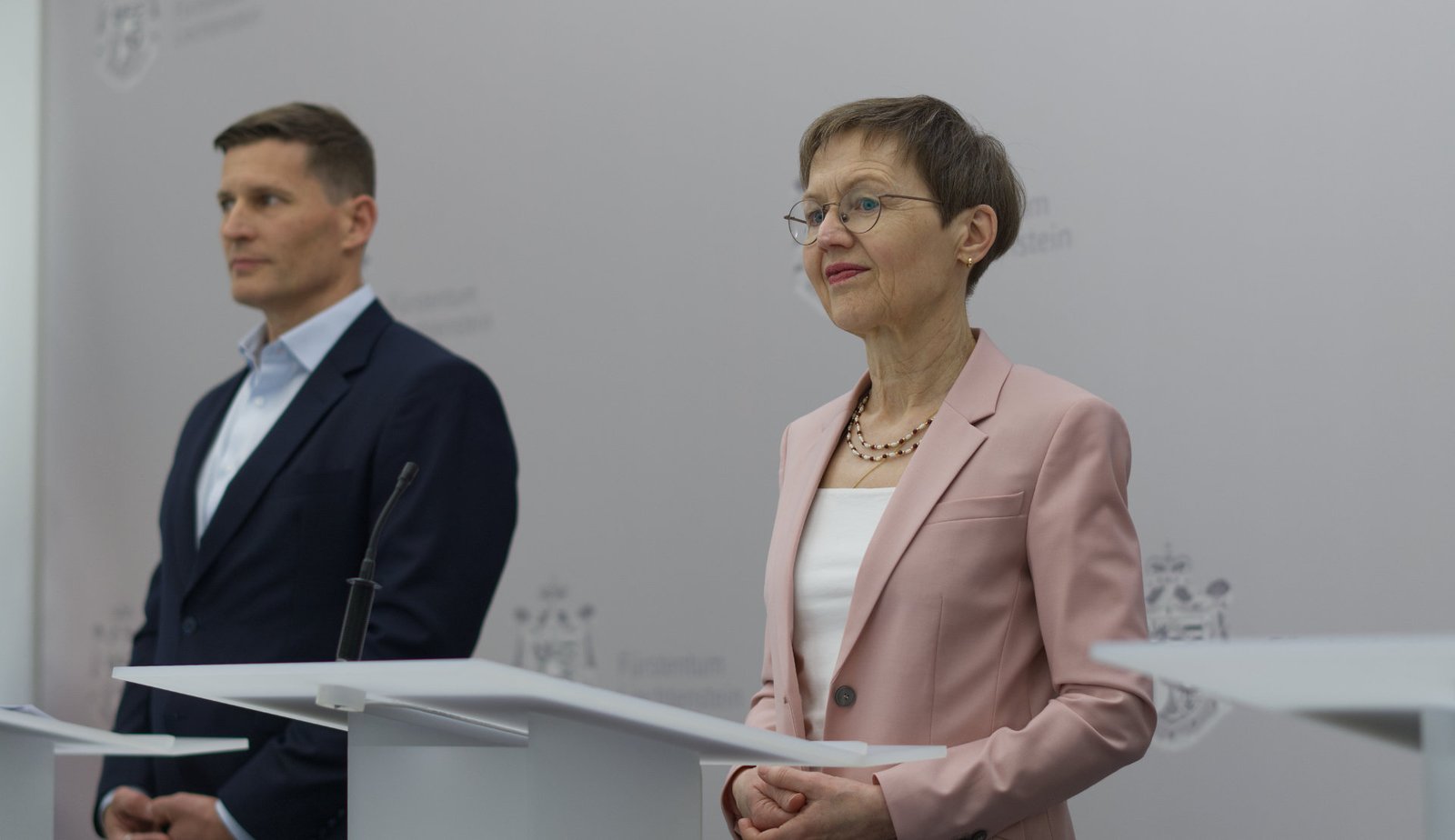
At a media conference today, Prime Minister Brigitte Haas presented this strategy together with Fabian Schmit from the Office for Information Technology, Clara Guerra from the Office for Digital Innovation and Juliane Marold from the APO. What the government still owes, however, are concrete figures.
It was not possible to answer which AI tools the administration wants to use in the future, in which offices their use is planned as a priority and which investments are planned. There was also a lack of assessments of what economic added value the use of AI should bring. First, the specific use cases must be defined, then the investments can be planned, explained Schmid. Until then, it remains unclear whether the effort will actually be worth it for taxpayers.
Use cases that are already being tested include transcription and translation. This also applies to local AI models. There are already further ideas: «A ChatBot for 0-8-15 questions“, the head of government imagines. Simple appointments are also possible for you.
The strategy is open to adjustments, explained the head of government and has no fixed period of validity. A fundamental revision should follow by 2030 at the latest. It remains to be seen whether the framework will become part of everyday life in administration by then.