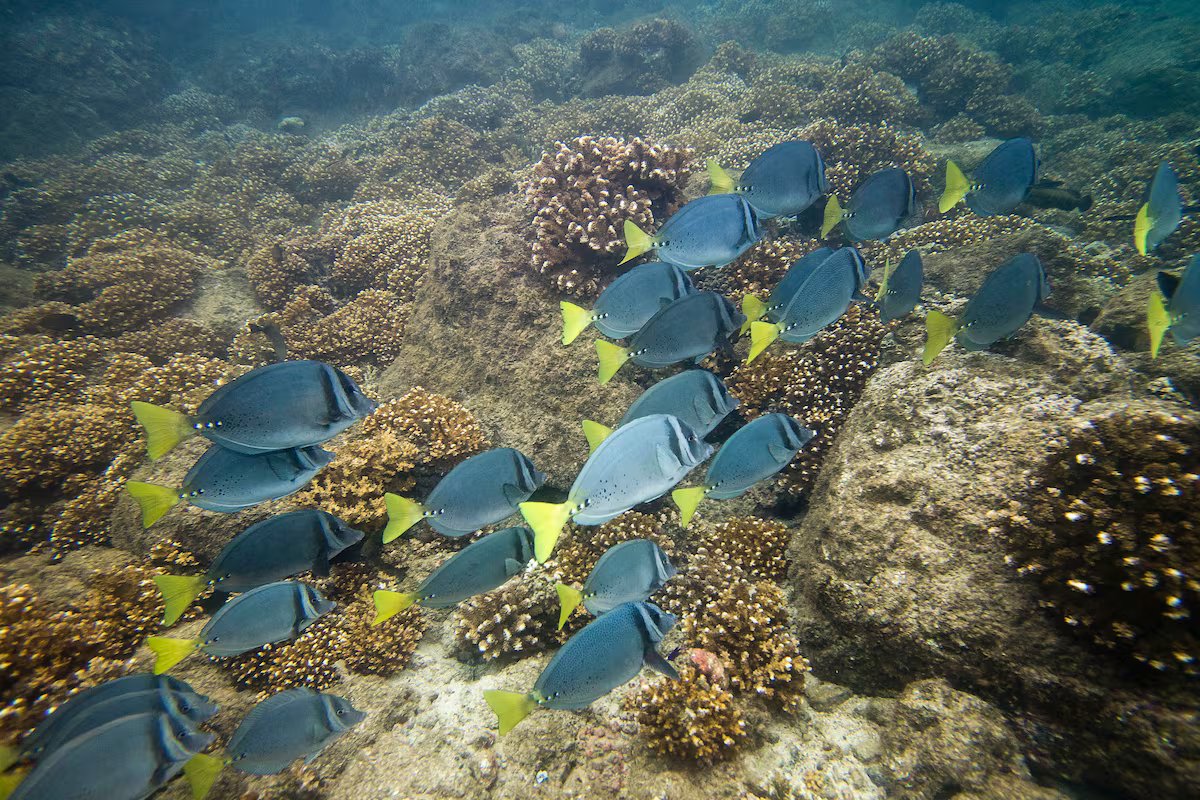
While previously any intervention or construction on reefs and seagrasses was prohibited, the new rule makes these restrictions more flexible.
Panama stands as a unique biological bridge in the region, housing coral reefs on both coasts, with a approximate area of 800 square kilometers (km²) and unique oceanographic and biological characteristics.
However, the National Assembly approved on Wednesday, April 29, in the third debate, bill 571, an initiative promoted by the PRD deputy of Bocas del Toro, Benicio Robinson, which reconfigures the framework for the protection of coral reefs and associated ecosystems. While previously any intervention or construction on reefs and seagrasses was prohibited, the new rule makes these restrictions more flexible.
The power now passes to the Ministry of the Environment, which must define under what conditions interventions in seagrasses and associated ecosystems will be allowed, which dilutes the current restriction. In the case of coral reefs, the prohibition of activities that cause “direct damage” is maintained; However, the wording introduces a nuance: by requiring that the damage be verifiable, it opens room for interpretations about what interventions could be allowed, which already generates tensions between environmentalists and promoters of the law.

This standard was endorsed by the Ministry of the Environment, led by Juan Carlos Navarro.
The reefs
The question now is what is at stake with the approval of this bill in the Legislature and whether the President of the Republic, José Raúl Mulino, like the deputies, will give it the go-ahead, despite warnings from environmentalists about the damage it could cause to the coral reefs that still survive in the country.
Data from the Aquatic Resources Authority of Panama (ARAP) indicate that, on the slope of the Caribbean Sea, the extension of these submerged coral gardens is vast, reaching approximately 754 km². This region is home to notable diversity, with 70 recorded coral species and coverage that, at its most optimal points, can reach up to 75%.
On the contrary, the Panamanian Pacific Ocean presents a reality that is more modest in size, but equally valuable, with reefs that cover about 16 km². In these waters, marked by high levels of nutrients and tides of up to 6 meters, some 26 species of coral adapted to more extreme conditions thrive.
The heart of the coral Caribbean beats in Guna Yala, which concentrates the largest area in the country, with 610 km² of reef formations. This area is fundamental for the stability of the Panamanian marine ecosystem and represents the most extensive and diverse area of the national Caribbean coast.

Other critical regions in the Caribbean include the Bocas del Toro archipelago, with an area of 87.4 km², and the Colón coast, which contributes 48 km². Even smaller areas, such as the Veraguas Shield, with 8.2 km², play a vital role in the connectivity of marine species.
In the Pacific, coral life is grouped mainly in the Gulf of Panama and the Gulf of Chiriquí. In the first, sites such as the Pearl Archipelago, Taboga Island and Iguana Island stand out, while the second is recognized for hosting highly resilient ecosystems.
human pressure
A mandatory mention is the Coiba National Park, located in the Pacific, which has the most important coral reef in the entire eastern Pacific. This site, of global relevance, was recognized by UNESCO as World Heritage in 2005.
Despite their importance, these ecosystems face increasing human pressure from coastal development, dredging, and the extraction of materials for landfill and construction.
Other latent threats include sedimentation due to deforestation, overfishing, and chemical and organic pollution arriving from rivers. Furthermore, the warming of the oceans, linked to the El Niño phenomenon, and the arrival of invasive species, such as lionfish in the Caribbean, put the health of the system in check.
Biologists such as Isaías Ramos and Héctor Guzmán consider that the reform represents a setback compared to the current protection scheme, going from an express prohibition of constructions and impacts – direct and indirect – on corals and seagrasses to a model in which these interventions could be evaluated and eventually approved by the Ministry of the Environment.
In Bocas del Toro, an area linked to Congressman Robinson, the tourism boom and the proliferation of hotels and cabins increase the risk to these ecosystems.