Brussels launches a new initiative for Mediterranean countries with funding of 25 billion euros:
father-in-law
Expressiveness
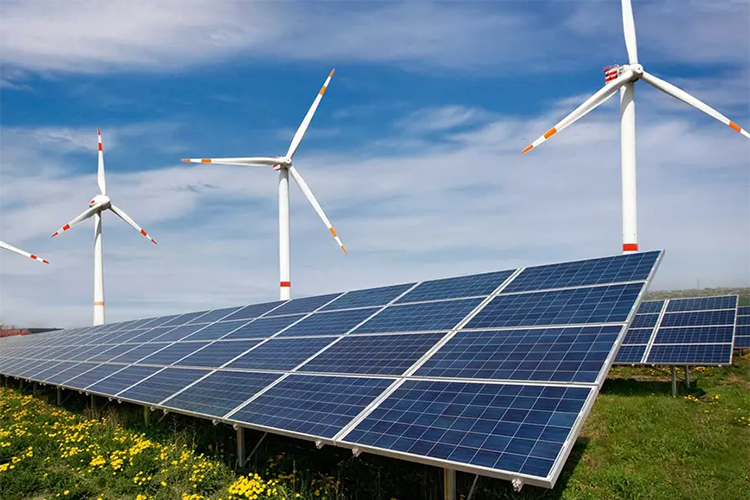
The European Commission has begun moves described as serious to launch a new bet in the field of renewable energies in the Mediterranean region, including Algeria, through a cooperation initiative crossing the southern and northern banks, bearing the name “T-MED,” which aims to mobilize investments that may reach 25 billion euros by the horizon of 2035, within the framework of what Brussels calls the reshaping of the energy map towards clean sources.
In this context, the French newspaper Les Echos quoted an unnamed senior official in the European Commission that “part of Algerian territory alone can cover the energy needs of the European Union,” in reference to the enormous potential that the region abounds in terms of solar radiation and the ability to produce clean electricity at competitive costs.
The European initiative is based on transforming the southern Mediterranean into a “global clean energy pole,” through investments directed at developing solar energy, wind, and green hydrogen projects, in addition to modernizing electricity networks and creating new energy corridors linking the two banks, including projects to repurpose old gas pipelines to transport hydrogen toward Europe.
The European plan also includes launching an investment platform directed to the private sector starting in 2026, supported by European guarantees worth 5 billion euros, which, according to the Commission’s estimates, will mobilize up to an additional 25 billion euros, in addition to a program to speed up administrative procedures and reduce the deadlines for studying projects, which may currently take between 24 and 48 months.
The initiative is also betting on the training aspect, by preparing about 100,000 workers in the fields of clean energies, as well as developing new Euro-Mediterranean industrial partnerships, in an attempt to create an integrated green energy system between Europe and its southern neighbourhood.
The new European plan to develop renewable energies in the Mediterranean region, according to what the same source reported, includes modernizing the energy infrastructure through smart electricity networks and corridors for transporting hydrogen, including projects to repurpose old gas pipelines, similar to the “South H2 Corridor” project, which links Algeria to Europe, within the framework of a broader vision to integrate the countries of the South, including Algeria, within a new energy system linking the two shores.
Last fall, the European Commission revealed, as part of what it called the “New Charter for the Mediterranean,” a broad package of procedures and measures for partnership with Algeria and the countries of the southern Mediterranean, through which the European Union proposed what it describes as a paradigm shift in relations with Algeria and the countries of the southern basin, by supporting their transition towards a clean, productive economy integrated with the European market.
Within this charter, Brussels proposed a huge initiative called Clean Energy and Green Technologies across the Mediterranean (T-MED), whose goal is to create a major investment platform that brings together European institutions, banks, and the private sector to finance projects to produce electricity from the sun and wind, and develop electrical transmission networks and connect them to the North Bank.
The charter also proposes support for the countries of the southern Mediterranean basin in reforming the energy regulatory framework, to facilitate the export of electricity and green hydrogen to Europe, while ensuring that the local economy benefits from technology transfer and labor training.