The Ministry of Foreign Trade reveals 4 loopholes and moves to protect the national economy:
father-in-law
Expressiveness
Splitting small shipments under a ceiling of 100 thousand dinars is within the scope of oversight
The first cases of fraud involved fresh and perishable products and hazardous materials
Instructions to the “Association of Banks” with the involvement of the Bank of Algeria, Customs and the “Algerian Air Force”
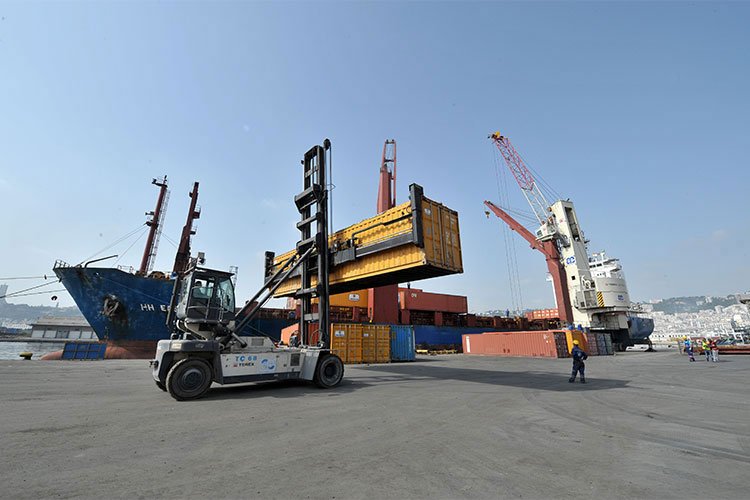
The Ministry of Foreign Trade and Export Promotion took strict measures to tighten control over export operations and protect the country’s hard currency reserves, after it observed a number of practices that took advantage of the facilities granted to exporters outside of hydrocarbons and turned them into outlets to circumvent the rules regulating foreign trade.
Investigations showed the existence of four main loopholes, which included exporting without recovering financial proceeds, dividing shipments to benefit from exemptions, declaring prices that do not reflect the true value of exported goods, as well as practices that raised doubts about transferring part of the funds abroad under the guise of export activity.
These measures fall within a new trend aimed at balancing between continuing to support Algerian exports and encouraging real exporters on the one hand, and ensuring the transparency of commercial operations and monitoring the movement of capital on the other hand. It also reflects the authorities’ will to close the ports that some dealers have exploited for years, and to establish an export system based on recovering export revenues and protecting the national economy from any practices that may lead to the depletion of hard currency.
From splitting shipments to reducing invoices
According to sources related to the file, the battle to diversify exports outside of hydrocarbons is no longer limited to opening markets and encouraging Algerian products to enter international markets. Rather, it has also become linked to confronting fraudulent practices that some dealers have exploited to transform the privileges granted to exporters into tools for smuggling hard currency out of the country.
During recent years, export operations have benefited from a series of administrative and financial facilities aimed at encouraging economic operators to enter foreign markets. However, some parties have turned these privileges into loopholes that have been used to carry out suspicious operations, by splitting shipments, declaring false values, not recovering export proceeds, or reselling Algerian products abroad at prices that raise many question marks.
After expanding the powers of the Minister of Foreign Trade and Export Promotion pursuant to the executive decree issued on May 16, 2026, the ministry moved to a new phase entitled “Controlling exports and protecting the movement of capital in parallel with supporting real exporters.”
In this context, the Ministry sent new instructions to the Professional Association of Banks and Financial Institutions, with the involvement of the Bank of Algeria, Customs, and “Air Algerie” for shipping, which included four measures described as directly targeting the ports that were exploited by what became known as “fake exporters.”
The first loophole was exports without refunding the money, as the first cases of fraud monitored by the ministry’s services related to the system for exports of fresh and perishable products and hazardous materials, which grants exceptional facilities due to the nature of these goods.
However, some dealers took advantage of this flexibility to carry out successive export operations without settling the status of previous operations or returning their financial returns to Algeria, which opened the door to transferring money abroad outside the normal paths of control.
New procedures starting next July 1
To stop this path, the Ministry decided, starting on July 1, 2026, to oblige every exporter concerned with this system to submit the final nationalized invoice for the last export operation before obtaining approval to implement a new operation. This procedure aims to ensure tracking of money flows and ensure the return of export revenues to the national economic cycle.
The second loophole was “small shipments… and large transfers.” One of the most widespread fraudulent methods is that some dealers resort to dividing their exports into several transactions, the value of each of which is less than 100 thousand dinars, which is the ceiling that currently allows for benefiting from the exemption from bank localization.
In this way, it was possible to carry out a large number of operations under the guise of legal exemption, with the difficulty of tracking the true volume of exports and their financial value. To eliminate this practice, the Ministry of Foreign Trade decided to subject all export operations exempt from bank localization to a prior license starting from the first of next July. It is expected that this measure will allow early detection of attempts to split exports or declare values that do not match reality, while strengthening control over the recovery of export proceeds.
Thus, Algerian products were sold for less than their real value
The third loophole was the sale of Algerian products at less than their true value, which is another type of fraud discovered by the authorities related to some exporters who buy ready-made products from Algerian factories and then re-export them at unjustified low prices. Available data indicate that some Algerian products were marketed abroad for less than their prices in the national market, and sometimes even less than their cost of production.
This situation raised doubts about the possibility of using the deliberate reduction of invoices as a mechanism to transfer part of the value of financial transactions abroad. Therefore, the Ministry imposed on exporters to obtain the approval of the producing factory on the declared price upon export, allowing the announced prices to be compared with the real value of the product and preventing any possible manipulation.
The fourth gap was in regulating the internal market and confronting speculation. The new procedures were not limited to the export file only, but extended to regulating import and sales activity on a case-by-case basis. Within the framework of joint coordination between the Ministry of Foreign Trade and Export Promotion and the Ministry of Internal Trade and National Market Control, importers were required to submit advance lists that included the distributors and customers to whom the imported goods would be directed.
This measure aims to track the path of products after they enter the national market, and limit speculation and monopoly, especially in sensitive sectors, in addition to combating the phenomenon of renting commercial records, which in recent years has turned into a source of chaos in some commercial activities.
Encouraging exports in parallel with protecting the national economy
Those who follow economic affairs believe that the new decisions reflect a shift in the philosophy of conducting foreign trade. After years of focusing on increasing exports and encouraging economic customers, the priority today is also directed towards ensuring the transparency of commercial operations and protecting the country’s hard currency reserves.
These measures also confirm that expanding the powers of the Ministry of Foreign Trade and promoting exports was not just a regulatory amendment, but rather a practical step towards imposing greater control on the movement of capital and closing the loopholes that some dealers have exploited for years under the guise of export, allowing the real source that contributes to bringing hard currency to the country to be distinguished from the fictitious source that turns export into a means of depleting it.