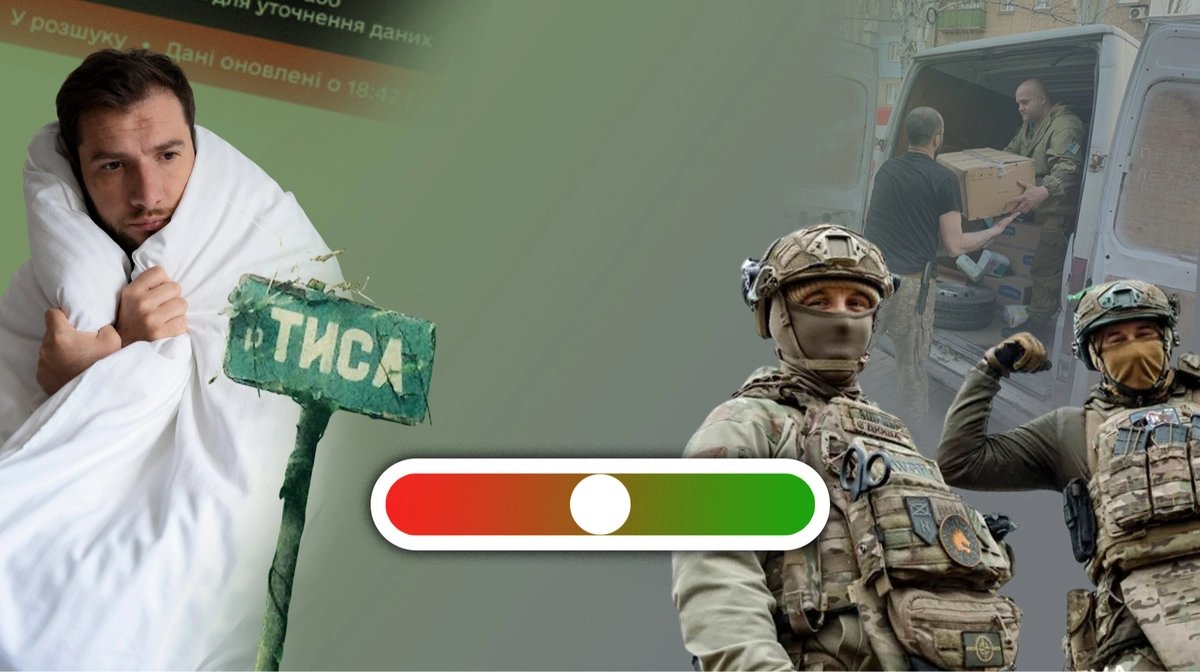
We often say that war will change us.
It is assumed that it is about demography and economy, army and politics. But the peculiarity is that the war first of all changes our faces. The experience gained during the war will be incorporated into our own identity. And it is not only a matter of collective identity, but also of personal identity.
In many ways, our identity is the sum of the events that have happened to us. Reality immerses us in circumstances. Circumstances force decisions. The decisions made become a valuable crossroads. That is why, for the last 12 years, Russian aggression has forced Ukraine to change. It’s just that these changes happen to those who are ready to notice the war.
Advertising:
For example, when the Russian army captured Crimea in 2014, it forced the inhabitants of the peninsula to determine their attitude to what was happening. Forced to form an attitude towards new flags. To answer the question to themselves, to the sounds of which anthem they are ready to stand up. For many, it was a moment of identity acquisition. Those who saw the change of flags on the peninsula as a “homecoming” and those who saw it as annexation could have been best friends until February 2014.
But at the same time, the annexation of Crimea much less often presented Ukrainians on the mainland with a similar choice.Because the events were localized within the region. Because the occupation took place with minimal casualties. If desired, the capture of the peninsula could be overlooked, explaining the events by the fact that these people wanted it themselves. If the event does not provoke any changes in your life, you can easily ignore it.
This was followed by the Russian invasion of Donbas. The beginning of ATO and the start of mobilization. Some people went to the front, others became migrants, and still others volunteered. The war forced all of them to come to terms with the answers to key questions – and therefore became a factor that defined their identity.
Many of those who were not interested in politics before suddenly started. Many of those who did not think about national identity suddenly acquired it. The war took away illusions, and it was difficult to maintain an apolitical view of the world when politics was knocking on your front door. But this wave of changes did not affect everyone, and that phase of the war could be ignored if desired. Because ATO was localized in two regions. Because it was possible to live far from the events and not look back at what was happening.
Four years ago, a full-scale invasion began. Russia is reaching with its missile stumps to every city of the country. In each region, children know what an air raid signal sounds like. And the current phase of the war is also becoming another stage of identity acquisition for Ukraine. When people who had not thought about it before begin to identify with it.
The invasion restarted the process of self-determination on a national scale. You may consider yourself a citizen of the world, but that loses its meaning when it turns out that they are ready to kill you for your citizenship. You may want peaceful coexistence, but it loses its meaning if your neighbor sets himself the task of complete conquest. War is a time of collective identities, and many begin to identify with them the moment rockets hit the city. Threads do not immediately become flags. Notes do not immediately become anthems. Everything has its time.
But this formula has another dimension. Because identity is also the sum of events that did not happen in your life.
If a war has not happened in someone’s life, the lack of this experience will also be recorded in the worldview. If none of the relatives serves in the Armed Forces, this makes it possible to ignore the army discussion. If none of your relatives has become a migrant, you may not notice the problems they face. If reality has not been registered in your life at the level of personal experience and personal experiences, then from reality it turns into a background for you. Which can always be ignored.
The experience of serving in the military can become part of your identity and add new values to your old values. Just as evasion of service can become the main content of your “intra-military” life experience. Just in this case, the content of the new layer of identity will be fear, self-justification and devaluation of those who chose to stretch the pixel.
If you donate to volunteers, the experience of solidarity will be inscribed in your experience of the war. And if you chose not to report, then the wartime experience for you will be self-removal and the formula “let them stop stealing, and the money will appear.”
War – like any other traumatic experience – affects the identity of the people who experience it. But the edition of this imprint depends on the chosen behavior model. Some choose action, others choose inaction. Someone – solidarity, and someone – elimination. The circumstances of our lives become the arena for change, but the format of these changes depends on our own decisions.
People – not rational beings, but those who rationalize. They first make decisions, and then build a foundation of explanations and justifications for them after the fact. Everyone wants to feel on the right side of history and ethics, and therefore few are ready to admit their mistakes. It is easier for the majority to justify their choice with the general imperfection of circumstances and the lack of alternatives.
You may feel that your wartime decisions affect you now. But in fact you are choosing ethics for the future. The answer to the question “What did you do during the war?” will be the answer to the question about what you will do after it.
Pavlo Kazarin, for UP