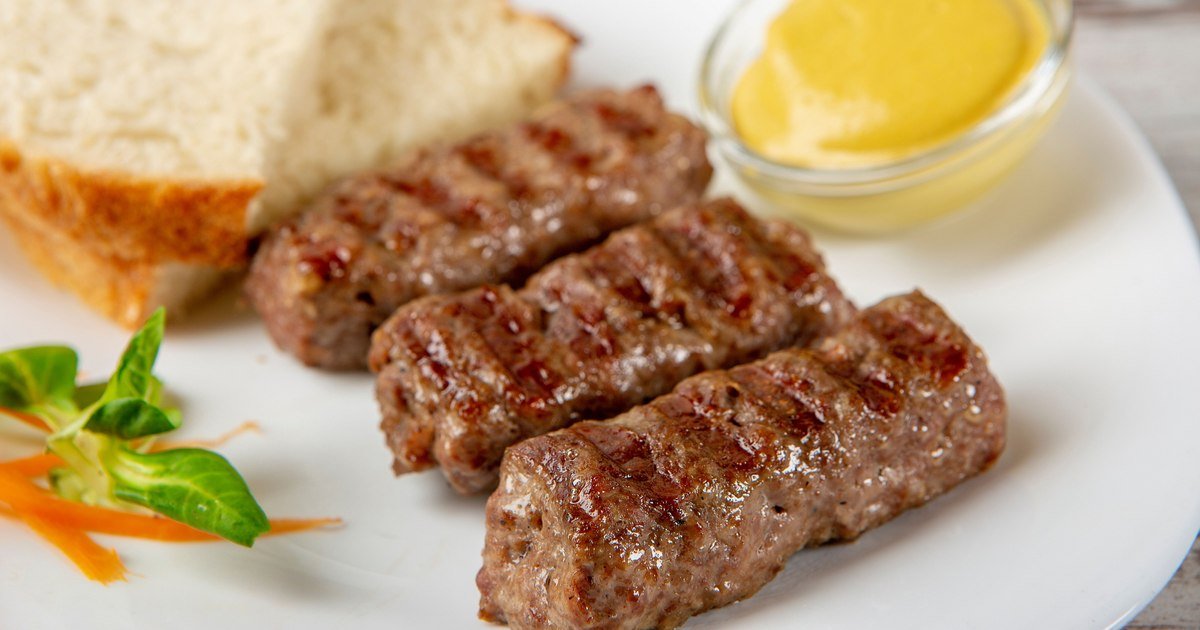
Grilled mititii are the absolute culinary symbol of the May 1 holiday. At the same time, it is already the most sought-after dish of country, summer parties in Romania. Although it has oriental origins and is spread throughout the Balkan area, the Romanian honeysuckle remains unique due to its secrets.

Mustard Mitites PHOTO Shutterstock
Grilled mitites are today a symbol of Romanian gastronomy, although they are not a traditional dish in the strict sense. Peasants from the hamlets, villages and valleys of Muntenia, Oltenia, Moldavia or Transylvania did not heat barbecues for children. This dish, undoubtedly delicious, is rather a brand of urban Romanian cuisine; a symbol of inns and market restaurants, a “must-have” of slum dwellers everywhere, but especially of those in the south of the country.
In any case, the little one has integrated perfectly into our culture: when you say Romania, you automatically think of the little ones on the grill. However, many dispute their Romanian origin. And they have a good reason, because we didn’t invent this dish, nor is it found exclusively among Romanians, being present on barbecues all over the Balkans. However, it is said that the Romanians have perfected this mixture of minced meat, affectionately naming it “mititel”. Here are some variants regarding its history in Romania, but also two recipes worth mentioning.
Grilled delicacies from the Balkans, inspired by Ottoman dishes
The little ones, as we know them in Romania, did not exist in the Ottoman Empire, but they are inspired by some Turkish dishes from the Middle Ages. It is about the famous kebab, a dish made of minced and seasoned meat, made on the grill, but also about kofte, a type of meatballs also made from minced meat. In particular, mutton or a mixture of mutton and beef was used, the Turkic peoples being famous for herding. In addition, the Ottomans being Muslims, the consumption of pork was forbidden to them.
With the 14th century and the conquest of the Balkans, the Ottomans brought their traditional dishes with them. In areas transformed into pashalacs and Islamized, Ottoman culinary traditions were even better represented and spread. The Balkan nations took elements from Ottoman cuisine, such as kebab or kofte, but infused them into their own gastronomy, resulting in original dishes.
For example, dishes similar to Romanian mitites are found in Serbia, Bulgaria, Macedonia, Bosnia and Albania. All kinds of interpretations of the kebab, but with other meats, other spices and other traditions. In Bosnia there is a variant of grilled mitites called “ćevapčići”.
They are basically a reinterpretation of the Turkish kebab, but with different regional variations. Generally, they are all grilled and made from minced meat, a mixture of lamb and beef, to which chickpeas are added.
The most famous are “Sarajevo ćevapi”, which are shaped in a cylindrical shape with a length of seven centimeters. They are usually served with fresh, diced white onions and leeks. There are two more variants, including “Banja Luka ćevapi”, which also contain pork in the mix. Various minced meat dishes similar to mititei and ćevapčići are also found in Bulgaria, Serbia, Albania, North Macedonia, Croatia and Greece.
From sausages to mitites, there was only one missing piece
Mitites were not heard of in the Romanian space until the 19th century. Some are convinced that they were brought to our territory by the Ottomans, others that we took after those ćevapi Serbs or Bosnians. There are also quite balanced ones who say that mititii are a Romanian culinary dish, with oriental inspiration. Who is right? It’s hard to say.
In any case, mitites stormed the city taverns in the 19th century and became, in less than a century, a true national culinary brand. Without little ones on the grill, it’s as if the country parties of the Romanians have no meaning. They may have been invented from the Ottoman kebab, just as they may have been borrowed and autochthonized from the Serbs. But just as likely is the fact that we discovered them by accident, driven by need. Or, more funnily, all the variants be true.
Especially in the context where there is an incredible variation of recipes on the territory of Romania. Some are the little ones from Dedulești in Vâlcea, others from Corabia, Muntești or Transylvania. They are made with either sheep and beef or pork or various other mixtures. As for spices, there is the same variety: in some places more garlic is added, in others allspice or coriander. There are also variants in which they rely on a minimalist taste, i.e. only with salt and pepper. Some prefer them meatier and with a strong smell of sheep, others fluffier and fatter. So, most likely, in certain areas of the country, the little ones appeared with as a source of inspiration kebabin others they were imported through the Balkan chain and, finally, there are places where they appeared by chance, as their own creation.
Hello, here is the story of Iordache Ionescu, from Covaci street no. 3, from Bucharest at the end of the 19th century. That spectacular Romanian Belle Époque, when the capital of our country had become a cosmopolitan place. Iordache transformed a slum tavern into a trendy eatery with a floor and terraces. Including the first floor with a terrace with “bellevue”. Well, Iordache’s success was mostly due to his “patricians,” meaning longer, chubbier, and nicely grilled mitites. Some say that the real Romanian mititel was invented here, in Iordache. And all by accident.
Iordache’s tavern, also nicknamed “La o idee”, was at first sought after for its distinctive sausages, made from a perfect blend of well-seasoned mutton and beef. At one point, however, Iordache suffered a great shame: the number of customers was so great that he ran out of sausages. However, Iordache was not the man to lose himself in nature. He quickly took the minced meat, shaped it into a sausage shape, but much shorter, and grilled it. The effect was incredible. Everyone was asking for his “sausage without a stick”. The customers would still call them “little people”. Iordache, haughtily, called them “the patricians.” He found a way to make them fluffier, meatier, longer. And the news spread everywhere.
“Iordache from Covaci was the master of that Olympus with ambrosia and nectar, where the philosopher’s stomach inspired the mind and heart so many ideas of genius and so many beautiful feelings. After a meal, a breakfast, or after a breakfast extended until after the meal or vice versa, the one who had eaten at Iordache was satisfied with himself and with the world and life, but especially with Iordache! (…) In Covaci, noble carriages stopped, in front of a poor taverns: La Rogojina was the “restaurant” of the famous Iordache. The son of a peasant from Ciochina commune, Ialomița county, Iordache was the tutor of his uncle, Constantin Ionescu, with whom he had befriended. The Mitites – “to the famous Mitites” – and the patricians they invented produced, if not produce, many great inventions today. The invention was addressed to the stomach, which is more accessible than the mind and… better digests the new ideas that concern it! Today, the entire country adopted the invention: the real “renowned” Mitites remained in Iordache!”wrote the “Adevărul” newspaper, on February 8, 1903.
Subsequent mititei they have become so famous that they have become an indispensable dish of Bucharest barbecues in every neighborhood.
“During these years, the Bordeiului garden, which was attached to the old Herăstrauul, on the same road that leads today to the Fronescu Garden, was in its prime. It was customary for the people to spend time in this vast garden at Easter, St. George’s Day and May 1.. (…) Only wine, mititii, cheese, bread, radishes, as well as new pots with a capacity of one liter were sold here. Then there were the mitites. Several open-air grills were grilling the mitites, which the cooks were always making. Tens of thousands of mitites passed from the hands of the cooks to the hands of the grillers and from the grills to the papers that the hungry customers spread.”stated the historian Constantin Bacalbaşa in “Bucharests of yesteryear”.
Fairy tales from the “Beer Chariot”, the secret recipe!
As I mentioned, there are several variants of Romanian mititei recipes. One of the most famous, a true classic, the closest to Iordache’s, is the one preserved since the beginning of the 20th century and prepared at the famous “Carul cu bere”, Ion Căbășanu’s restaurant, opened in 1879 on Calea Victoriei no. 2. The recipe was revealed, in great secrecy, by the restaurant’s chef to Măriuța, the wife of a Romanian officer, who had spent her youth with “Iancu Caragiale” in famous breweries.
“Take beef from the neck, without removing the fat, and pass it through the machine twice, so as to shred it as well and as evenly as possible. If the meat is too lean, some beef tallow will be added, or, failing that, even sheep’s tallow, about 100 to 150 grams to each kilogram of meat. Under no circumstances should bacon, ribs, or pork be taken, which only spoil the taste and take away the wonderful flavor of the mitites. Boil a broth of beef bones with marrow, which drains well, from 500 g of bones for each kilogram of meat. Prepare the spices and seasonings as follows: 8 g of finely ground pepper, 12 g of finely ground dried thyme, 4 g of finely ground allspice, finely ground coriander, 2 g of finely ground Turkish cumin, 1 g of finely ground star anise, 8 g of baking soda, 1 teaspoon of lemon juice, 1 tablespoon of butter, 1 good head of aromatic garlic and not the hot one. For quantities greater than five kilograms, one extra measure of the spices will be added for every five kilograms of meat mentioned.
Knead the meat in a suitable vessel for an hour, adding the sodium bicarbonate at the beginning, which is extinguished with lemon juice. Add half of the bone broth and all the other spices except the garlic gradually, evenly and a little at a time. The mixture is covered and left to cool for a day and a night, after which it is taken out, left for a few hours to settle and kneaded once more, for half an hour, with the rest of the bone broth. A garlic paste is made with warm water from one head for each kilogram of meat, which is left to steep for half an hour. Squeeze the juice in a cheesecloth, add the juice and knead the mixture once more for a quarter of an hour. Refrigerate again until the next day. Three hours before being fried and served, the mitites are removed from the cold to warm and soften; then form patties the size of a thumb in length and two fingers in thickness, grease them with oil on all sides and let them rise for an hour. They are fried on hot embers of wood or coal, smearing them from time to time with mujdei, so that they get a brown crust all around. The grillers turn each mittel only three times until it is toasted. When fried, the mitites will shrink a little, hence their name. Do not let it soak in too much, so as not to dry out the juice that contains the flavor of the spices. If they are fried on too low a heat, the mititas fall too hard, dry out, lose their aromatic juice and become dry”