 |
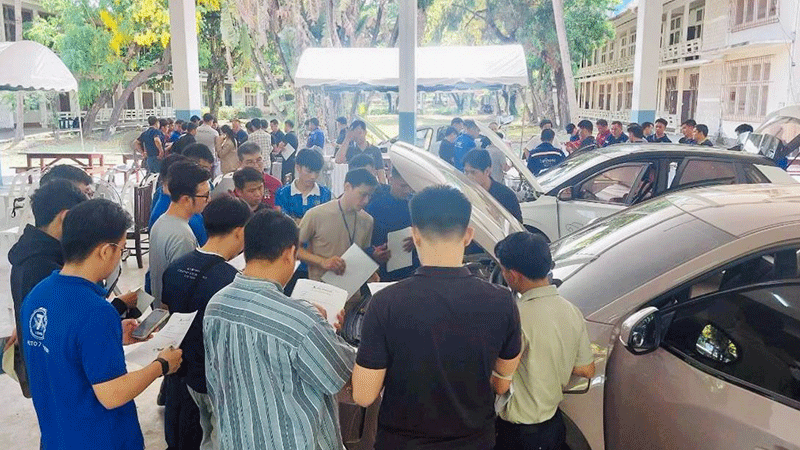
| Lao technicians observe the repair of electric vehicles at the Faculty of Engineering in Vientiane. |
From wrenches to watts: Laos charges up its workforce for the EV revolution
On the streets of Vientiane, the quiet hum of electric vehicles (EVs) is quickly replacing the roar of combustion engines. Driven by soaring fuel costs and a government push for a greener future, Laos is witnessing an unprecedented EV boom. But as thousands of new cars hit the road, a critical question looms: Who is going to fix them?
While some EV dealers operate their own service centres, they might be struggling to keep pace with the surging demand. Much like traditional gas-powered cars, EVs will eventually need a broad network of independent repair shops to stay on the road. However, most general mechanics currently lack the specialised expertise to handle complex electric systems.
To bridge this high-tech gap, a hands-on training workshop titled “Small Battery Electric Vehicle (BEV) Maintenance and Skill Development for Technicians to Support the Electric Vehicle Industry” took place in Vientiane this week.
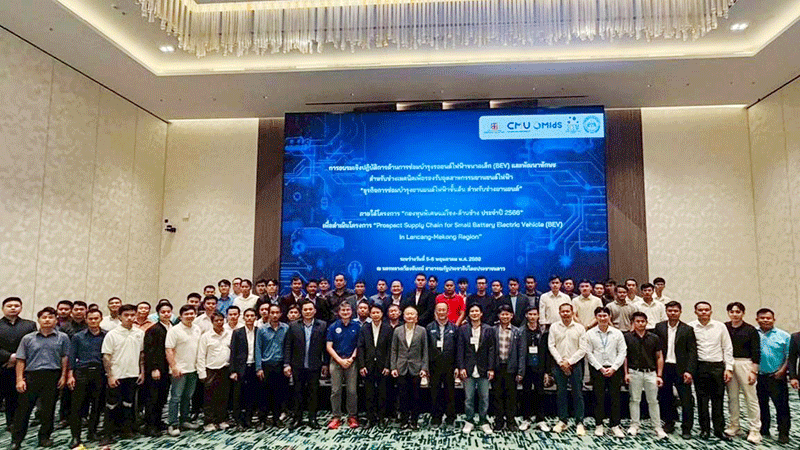 |
| Technicians attend a Small Battery Electric Vehicle Maintenance workshop in Vientiane. |
The event marks a turning point for the nation’s automotive industry, transforming traditional mechanics into digital-age technicians.
According to a presentation delivered at the workshop, the government has cleared the path for EV adoption with attractive incentives: zero percent import tax, a tiny 3 percent consumption tax, and no quota limits. The goal is ambitious—for electric vehicles to comprise 1 percent of all vehicles by 2025, rising to 30 percent by 2030.
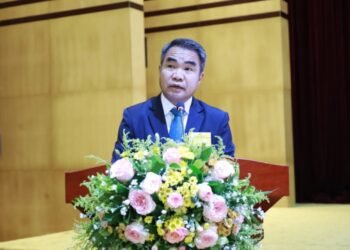
The Dean of Faculty of Engineering at the National University of Laos, Assoc. Prof. Dr Khampaseuth Thepvongsa said “This is the first time we’ve organised specialised EV training. As the government promotes EV use, this knowledge is no longer optional—it’s essential. EVs are the way to achieve true energy efficiency.”
The opportunity doesn’t stop at maintenance.
Dean Multidisciplinary and Interdisciplinary School, Chiang Mai University, Prof. Dr Apichat Sopadang, noted that as the number of EVs increases, so does the demand for diagnostic specialists.
But the opportunity extends beyond the repair bay. Experts attending the workshop highlighted a “second life” for EV components. For example, old batteries that are no longer fit for cars can be recycled into power banks for solar energy storage—a potential goldmine for savvy local entrepreneurs looking to enter the circular economy.
Despite the excitement, the road ahead has hurdles. Dr Apichat noted that while Laos produces plenty of power, the national grid needs significant upgrades to meet the charging demands of a 30 percent EV fleet. Furthermore, the complexity of these cars requires a level of diagnostic skill that requires many more technicians to be trained.
The two-day workshop, held on May 5-6, wasn’t just about brochures and lectures. Led by Assistant Professor Dr Anucha Promwangkwa from Chiang Mai University’s Faculty of Engineering, the programme was divided between the lecture hall and the “grease-stained reality” of the workshop floor.
On Day 1, in a session titled “The Anatomy of an EV”, technicians took a deep dive into components traditional mechanics rarely see—lithium-ion battery arrays, controllers, and regenerative braking systems.
On Day 2, in a session titled “Live Diagnostics”, under the guidance of Mr Weerasak Paenphuang of WPEV Co., Ltd., participants got their hands dirty. They stripped down electric drivetrains and learned how to troubleshoot the complex software that acts as the “brain” of a modern Small Battery Electric Vehicle (BEV).
As the workshop wrapped up, more than 50 participants—mostly from the energy and automation sectors—stepped back into their workforce with the mind and momentum for EV skill development.
The project, titled “Prospect Supply Chain for Small BEV in the Lancang-Mekong Region”,recognises that for the industry to survive, a skilled workforce is non-negotiable.
By investing in human capital, this initiative ensures that the transition to green energy creates new, high-paying jobs rather than leaving traditional workers behind.
In a world where fuel prices are unpredictable and climate mandates are tightening, Laos is proving that it doesn’t just want to drive the cars of the future; it wants to be the one that knows how to build, maintain, and power them.
The project is supported by the Lancang-Mekong Cooperation Special Fund and implemented by the Supply Chain and Engineering Management Research Unit at the Faculty of Engineering at Chiang Mai University. Its mission is to design a resilient EV supply chain and upskill regional technicians for the green economy.
By Times Reporters
(Latest Update May 8, 2026)