KPL
On May 6, in Vientiane, the Prime Minister outlined key priorities for the Ministry of Public Works and Transport (PWT) during the implementation of the 2026–2030 five-year national development plan, focusing on infrastructure, urban development, transportation modernization, environmental management, and digital transformation.
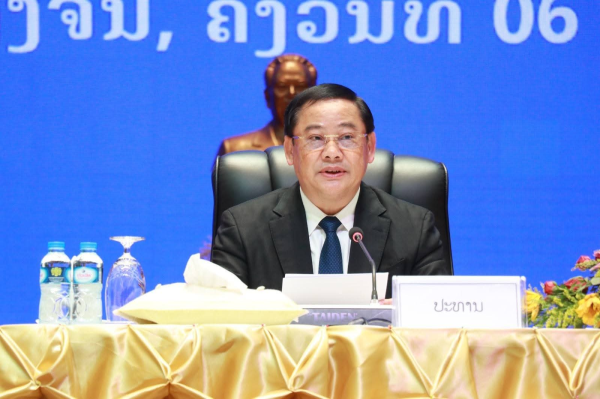
(KPL) On May 6, in Vientiane, the Prime Minister outlined key priorities for the Ministry of Public Works and Transport (PWT) during the implementation of the 2026–2030 five-year national development plan, focusing on infrastructure, urban development, transportation modernization, environmental management, and digital transformation.
The Prime Minister instructed the sector to prioritize systematic upgrades and maintenance of major economic corridors, particularly Road 13 North and Road 13 South, to strengthen domestic and regional connectivity.
Authorities were also directed to strictly regulate modified vehicles and overloaded trucks in order to reduce road damage and extend the lifespan of national infrastructure.
In addition, the ministry was encouraged to coordinate with relevant sectors to improve roads connecting tourism destinations and agricultural production areas.
The government called for stronger efforts to address urban flooding, wastewater treatment, and city cleanliness as part of the development of greener and more livable cities.
Special attention was given to the management of electronic waste, particularly expired electric vehicle (EV) batteries, as Laos gradually transitions toward environmentally friendly transportation systems.
Local authorities were also encouraged to promote solar-powered street lighting and alternative energy solutions.
The Prime Minister emphasized the effective use of the annual 200–300 billion kip budget allocated for waterway development projects, especially for border protection and river infrastructure.
The Mekong River and its tributaries were identified as important alternative transport routes that could help reduce pressure on land transportation networks.
Authorities were instructed to strengthen safety standards for tourist and passenger boats and tighten regulations on sand and gravel dredging activities to prevent illegal gold mining.
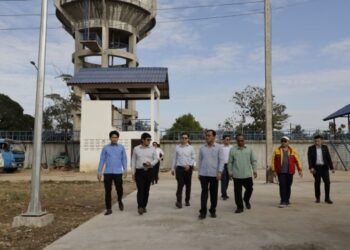
The government ordered urgent action to solve water shortages in major urban centers, including Vientiane, Pakse, Luang Prabang, and Kaysone Phomvihane through state investment and Public-Private Partnership (PPP/BOT) mechanisms.
Modern technology will also be introduced to detect leaks and reduce non-revenue water losses before distribution to consumers.
The Prime Minister instructed relevant authorities to accelerate reforms within Lao Airlines and begin long-term planning for a new airport in Vientiane, as Wattay International Airport is facing increasing congestion.
The ministry was instructed to strengthen the management of passenger transport services and coordinate closely with public security authorities to strictly enforce traffic laws, especially regarding drunk driving, speeding, and unsafe transportation of construction materials.
The government reaffirmed its commitment to advancing the Laos–Vietnam railway project and studying the feasibility of a railway link connecting Khammouane, Champassak, and the Cambodia border.
The Prime Minister also emphasized the importance of linking Laos’ railway network with regional systems connected to Phnom Penh, Ho Chi Minh City, and Bangkok to strengthen regional logistics and maximize national revenue.
The Prime Minister called for the adoption of Artificial Intelligence (AI) and modern digital technologies to improve infrastructure management, enhance administrative efficiency, and promote greater transparency and faster public services.